
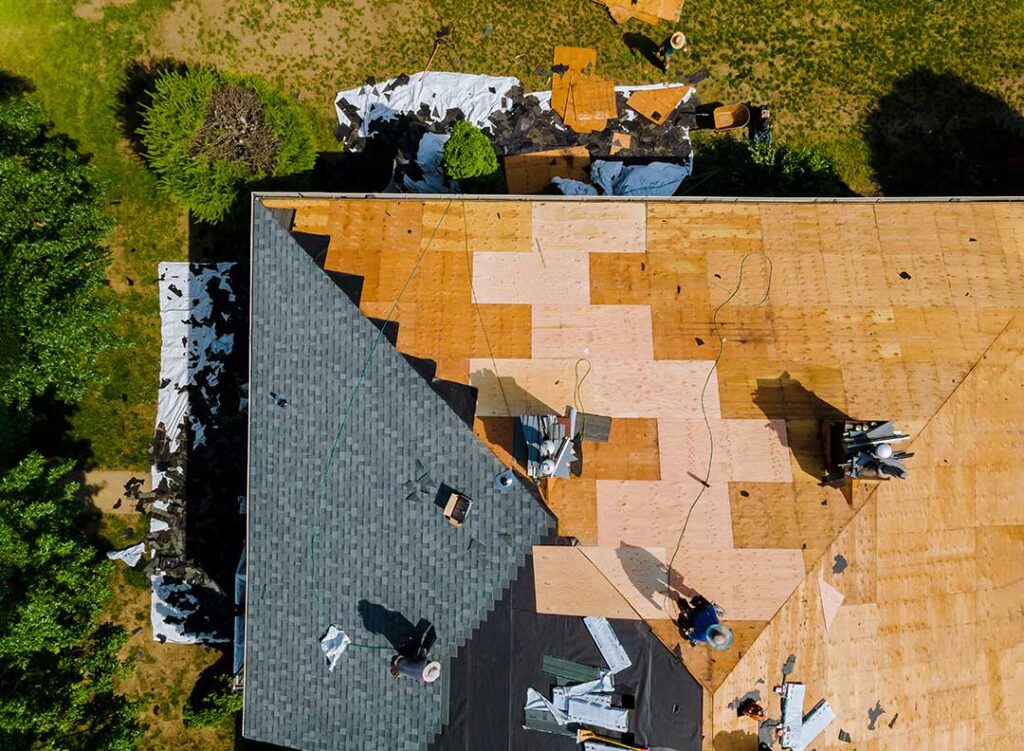
Hanging seasonal lights can be done safely when the work is planned around ladder stability, electrical protection, and the condition of the roof. The safest approach is to keep as much work as possible at ground level and avoid walking on a roof whenever practical.
Is it safe to stand on the roof while hanging lights?
Usually, no. Walking on a roof adds fall risk and can damage shingles, flashing, ridge caps, or other roof components. Snow, frost, damp leaves, and cold temperatures make roof surfaces especially unpredictable during the winter decorating season.
For most homes, lights can be attached along the lower roof edge from a properly positioned ladder. A roof should not be used as a work platform unless the person has appropriate fall-protection equipment, training, and a safe access plan. Steep roofs, tall homes, fragile roofing materials, and icy conditions are not suitable for casual decorating.
In Greene, NY, late-fall and winter weather can change quickly. A roof that appears dry in the morning may become slick from frost, freezing drizzle, or shaded ice later in the day. Postpone the work if the roof edge, ladder location, or ground is wet, icy, snowy, or unstable.
What should be checked before putting up lights?
Inspect the lights and the work area before climbing. Do not wait until a ladder is already in place to discover a problem.
Check each light string for:
- Frayed, cracked, melted, or exposed wiring
- Loose sockets, damaged plugs, or missing bulbs
- Brittle insulation caused by age or storage
- Signs of water entry
- Labels indicating whether the lights are approved for outdoor use
Use outdoor-rated lights and extension cords outdoors. Decorative lighting should be safety-certified, and the electrical load should be appropriate for the circuit and cord. LED strings generally produce less heat and use less electricity than older incandescent strings, but they still require inspection and proper installation.
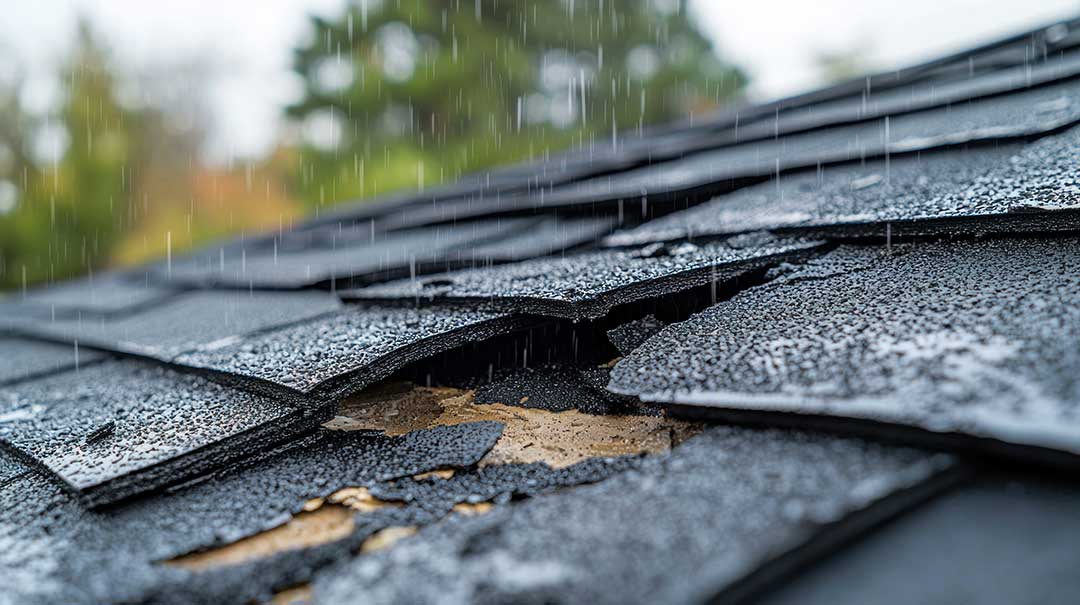
Examine the roof edge, gutters, fascia, and downspouts as well. Do not attach lights to loose gutters, damaged trim, exposed roofing nails, or deteriorated wood. If a gutter is sagging or pulling away from the house, adding clips or wiring can make the damage worse.
Which clips or fasteners are safest?
Use removable plastic light clips designed for the type of installation. Clips that attach to the edge of a shingle, gutter, or fascia are preferable to nails, screws, staples, or improvised wire.
Avoid anything that punctures roofing materials or compresses the light cord. Staples can cut or pinch insulation, creating a shock or fire hazard. Nails and screws can also create openings where water may enter the roof assembly.
Lights should be supported at regular intervals so their weight does not pull on one connection. Keep the cord from resting against sharp metal edges, abrasive surfaces, hot exhaust vents, or areas where ice may form. Do not place cords where they can be caught by doors, windows, or moving garage components.
Gutters should not be treated as handholds, ladders, or structural supports. They are designed to manage water, not to carry a person’s weight.
How should a ladder be positioned?
A stable ladder is essential. Set it on firm, level ground that is clear of snow, ice, mud, toys, tools, and loose gravel. Never place a ladder on a box, bucket, bench, roof surface, or other object to gain height.
For an extension ladder:
- Use a fiberglass or other nonconductive ladder, especially near electrical service lines.
- Set the feet on level, solid ground.
- Keep the ladder away from overhead wires and electrical equipment.
- Position it at the manufacturer’s recommended angle.
- Extend it above the roof edge if it will be used to step onto a roof, while maintaining a secure handhold.
- Have another adult stabilize the base when conditions are less than ideal.
Keep the body centered between the ladder rails. Do not lean sideways to reach the next section of roofline. Climb down and reposition the ladder instead. Maintain three points of contact whenever possible, and avoid carrying a bulky bundle of lights while climbing.
A step ladder should be fully opened with its spreaders locked. Never stand on the top cap or the highest step marked as unsafe.
How can electrical risks be reduced?
Outdoor lighting should be connected to a ground-fault circuit interrupter, commonly called a GFCI. A GFCI can shut off power quickly if electricity begins flowing through an unintended path, such as a person or wet surface.
Before connecting the lights:
- Confirm that the outlet and cord are rated for outdoor use.
- Keep plugs and connections elevated away from puddles, snow, and melting ice.
- Use weather-resistant covers where connections are exposed.
- Avoid overloading outlets or connecting more light strings than the instructions allow.
- Do not run cords beneath rugs, mats, heavy objects, or piles of snow.
- Unplug the lights before changing bulbs, adjusting clips, or repairing anything.
- Turn off the display before leaving the home or going to sleep.
A circuit breaker that trips repeatedly is a warning, not an inconvenience. Disconnect the decorations and identify the problem before restoring power. Do not bypass a breaker or use a higher-rated fuse.
What should be avoided around the roof?
Never work near overhead power lines with a ladder, extension cord, light pole, or other long object. Keep people, equipment, and materials well away from energized lines. The danger exists even if the line is not touched directly.
Do not attach lights to chimneys, plumbing vents, skylight frames, satellite equipment, or roof-mounted electrical components unless the attachment method is specifically designed for that purpose. Do not cover vents or block drainage paths.
Avoid decorating during high winds. Moving light strings can catch on branches, gutters, or nearby structures, while wind-driven snow and ice can pull clips loose. In winter, check the display after a storm and remove any section that has become loose, sagging, or buried.
Is it safer to install lights from the ground?
Yes, whenever the design allows it. Ground-level options include outlining lower architectural features, wrapping sturdy porch supports, or using a telescoping installation pole designed for light clips. These methods reduce ladder time and eliminate the need to step onto the roof.
A second person can pass materials, watch the ladder, and keep children and pets away from the work area. That person should not be expected to catch someone who falls; the ladder and setup must be stable on their own.
Stop immediately if dizziness, numb hands, fatigue, wind, ice, or poor visibility develops. A decoration is not worth taking a fall or creating roof damage. For steep, high, icy, or visibly deteriorated roofs, leaving the work off the roof is the safest choice.
IMAGE_ALT:
Adult using a fiberglass ladder to attach outdoor lights with plastic clips along a roof edge on a clear winter day.
