
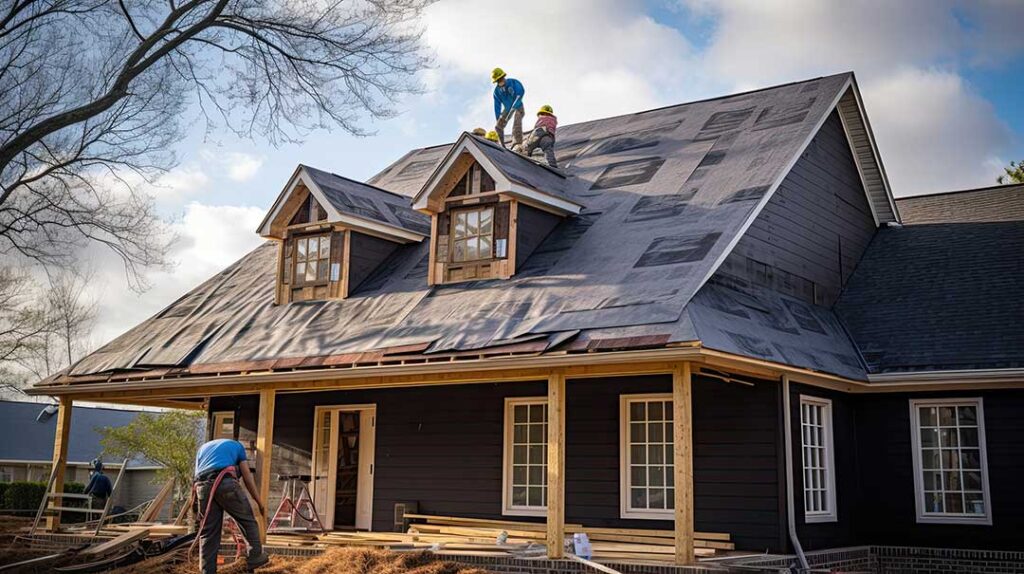
Why roofing misconceptions matter in Greene, NY
Roofing advice is often passed along as simple rules: a roof lasts a certain number of years, shingles can be installed over anything, or a small leak is harmless. Some of these statements contain a little truth, but they can lead homeowners to overlook warning signs or make unsuitable repairs.
In Greene, seasonal changes, winter snow, ice, wind, summer heat, and falling branches can all affect a roof differently. Understanding what is true—and what is not—makes it easier to recognize problems before they spread into the roof deck, insulation, ceilings, or walls.
Does a roof always need to be replaced after 20 years?
No. A roof’s age is useful information, but it does not determine its condition by itself.
The expected service life depends on the roofing material, installation quality, ventilation, sun exposure, moisture levels, storm history, and maintenance. A roof that is 20 years old may still be performing adequately, while a newer roof may develop problems because of poor flashing, damaged shingles, inadequate attic ventilation, or installation over a deteriorated surface.
Age should be considered along with signs such as:
- Curling, cracked, brittle, or missing shingles
- Exposed fasteners or areas where shingles have become loose
- Granules collecting in gutters or near downspouts
- Repeated leaks around chimneys, skylights, or roof penetrations
- Sagging areas or visible unevenness
- Damp insulation, staining, or musty odors in the attic
A roof does not become unsafe simply because it reaches a particular birthday. Condition, drainage, and structural support matter more than a calendar number.
Can a small roof leak wait until spring?
A small leak can become a larger problem even when the interior stain looks minor.
Water may travel along rafters, roof decking, insulation, wiring, or ceiling materials before appearing indoors. A stain may remain the same size for a while and then suddenly expand after wind-driven rain, snowmelt, or a period of repeated wet weather.
Temporary measures, such as placing a container under a drip or covering an exposed area, may limit immediate damage. They do not correct the source. The visible entry point inside the building may also be several feet away from the exterior defect.
Particular caution is needed when water is near electrical fixtures, when the ceiling is bulging, or when roof decking appears soft. Those conditions can involve safety risks beyond ordinary maintenance.
Do new shingles always need to be installed over a bare roof deck?
No. In some situations, an additional layer of roofing may be allowed, but covering an existing roof is not automatically appropriate.
A roof-over can conceal damaged decking, worn flashing, trapped moisture, and poor ventilation. Added weight may also matter, especially when snow and ice accumulate during winter. Multiple layers can make future inspection and removal more difficult.
Before another layer is added, the roof structure and existing covering need to be evaluated. Local building requirements may also apply. In Greene, roofing permits are required for roof replacement and roof recover work, so homeowners should verify the current local requirements before work begins.
A bare roof deck is not always necessary, but the existing roof must be sound, dry, properly attached, and suitable for the proposed covering.
Does attic ventilation cause heat loss?
Proper attic ventilation is not intended to remove heated indoor air. Its purpose is to manage temperature and moisture in the roof assembly.
A balanced system commonly uses lower intake ventilation, such as soffit openings, together with higher exhaust ventilation. The attic floor should also be properly air-sealed and insulated so warm, moist household air does not escape into the attic.
Poorly designed ventilation can create problems. For example, exhaust vents may draw air from the living space if intake paths are blocked, or vents may be installed without enough insulation and air sealing below them.
In a cold climate, a well-designed roof assembly helps limit condensation and reduces the conditions that contribute to ice dams. Ventilation is only one part of that system; insulation, air sealing, roof geometry, and exterior weather protection all work together.
Are ice dams caused only by heavy snow?
No. Ice dams are usually caused by a combination of snow cover, uneven roof temperatures, heat escaping from the building, and outdoor conditions that allow meltwater to refreeze near the eaves.
A roof can develop an ice dam even after a modest snowfall if warm areas of the roof melt snow while colder overhangs remain below freezing. The backed-up water may move beneath shingles and enter the roof assembly.
Common contributing factors include:
- Inadequate attic insulation
- Air leakage around attic hatches, light fixtures, or plumbing openings
- Blocked or poorly planned ventilation
- Uneven roof exposure to sunlight
- Gutters or roof edges that allow water to refreeze
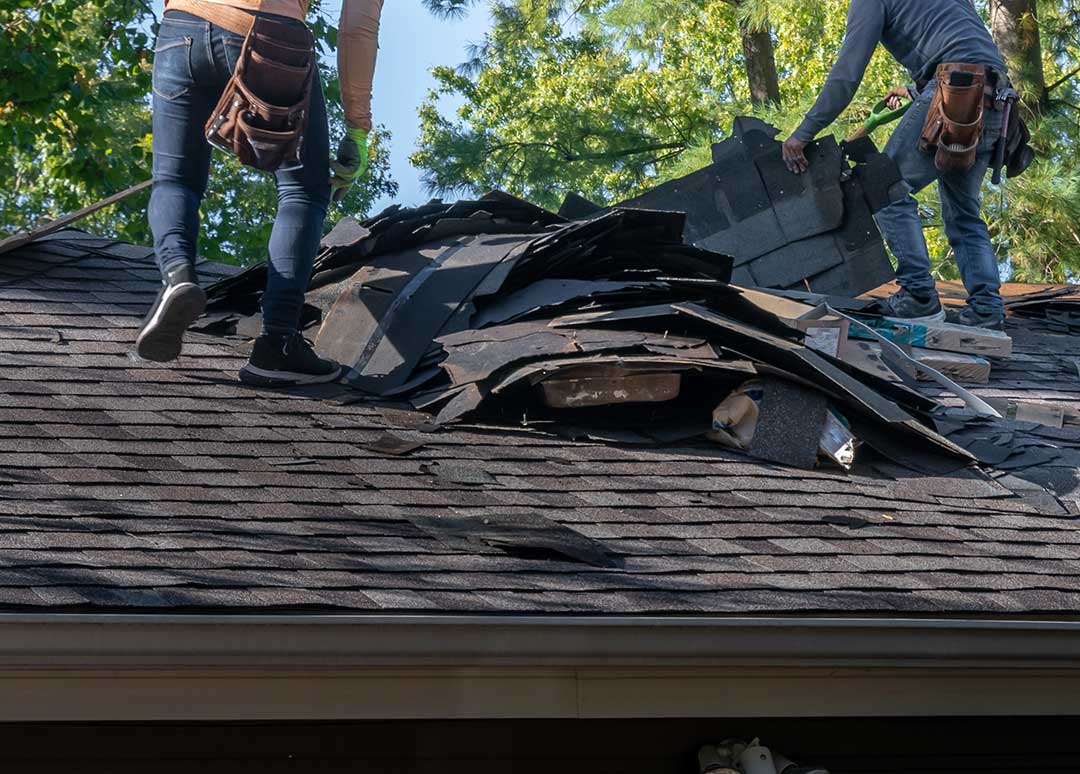
Removing snow from a roof can be hazardous, and chopping at ice can damage shingles and flashing. Prevention generally involves improving the roof and attic assembly rather than treating each ice dam as an isolated event.
Do gutters protect the roof from all water damage?
Gutters help control runoff, but they cannot prevent every type of roof leak.
A roof can leak because of damaged flashing, failed sealant, cracked vent boots, deteriorated shingles, improperly installed valleys, or water entering around a chimney. Gutters mainly collect water that has already traveled down the roof and direct it away from walls and foundations.
Clogged or sagging gutters can contribute to overflow, especially during heavy rain or rapid snowmelt. Ice in gutters can also create additional weight and interfere with drainage. However, clean gutters do not correct defects higher on the roof.
Gutter maintenance is valuable, but it should not be treated as a substitute for inspecting the roof covering and flashing.
Are dark roof shingles always hotter and less efficient?
Color can affect surface temperature, but it is not the only factor controlling energy performance.
Roof pitch, shade, roof orientation, insulation, attic ventilation, air sealing, and the roofing material itself may have a greater practical effect than color alone. A well-insulated and properly air-sealed attic generally matters more to indoor comfort than choosing between two similar shingle colors.
Dark surfaces may absorb more solar energy under strong sunlight, while lighter surfaces may reflect more. In a cold, snowy climate, however, winter heat loss is often strongly influenced by insulation and air leakage rather than shingle color.
Roof color should be considered as part of the whole building system, not as a stand-alone measure of efficiency.
Does every roof problem require complete replacement?
No. Many roofing problems are localized.
A damaged pipe boot, loose flashing, a few missing shingles, or a small section of wind damage may be repairable. The key question is whether the surrounding materials remain sound and whether the repair can restore reliable water shedding.
Replacement becomes more likely when damage is widespread, the roof deck is deteriorated, leaks are recurring in multiple areas, or the existing covering has reached the practical end of its service life.
The most useful evaluation identifies the source of the problem, the extent of hidden damage, and whether the remaining roof can reasonably perform after a repair. A single interior stain does not automatically prove that the entire roof has failed.
Can homeowners inspect a roof safely from the ground?
Often, a ground-level inspection can reveal useful information without climbing.
Binoculars may help identify missing shingles, sagging, exposed flashing, damaged vents, or debris buildup. Looking into the attic can reveal daylight through the roof deck, damp insulation, mold-like odors, or water marks. Checking after major wind, rain, or snow events can also reveal changes.
Walking on a roof is different. Slippery surfaces, steep slopes, weak decking, hidden damage, and icy conditions create fall hazards. Roof access should not be treated as routine household maintenance, particularly during winter or after storm damage.
Understanding these misconceptions helps residents judge roofing conditions more accurately. A roof is not just a layer of shingles: it is a system that includes drainage, flashing, ventilation, insulation, structural support, and weather protection.
