
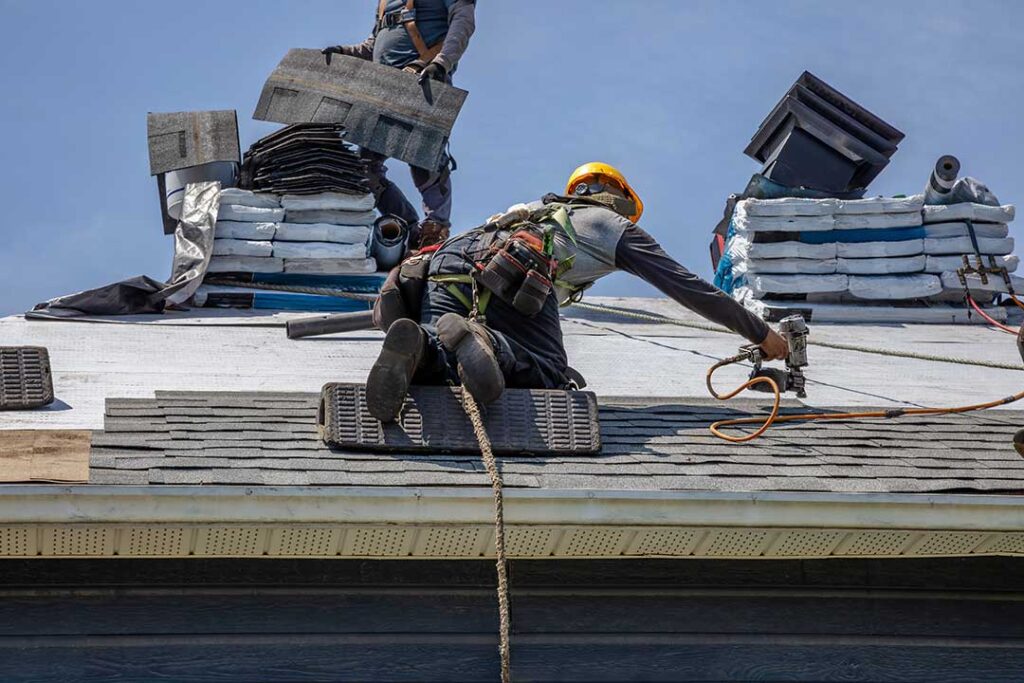
Solar panels can work well on many homes in Greene, NY, but the roof should be evaluated before the panels are designed around it. Roof age, remaining service life, structural capacity, snow and wind exposure, shading, ventilation, and future repair access all affect whether a rooftop system is a sensible fit.
Is the existing roof suitable for solar panels?
A roof should generally be in good condition, structurally sound, and expected to last for many years before panels are installed. Solar equipment can remain in place for two decades or more, so installing it on a roof near the end of its service life may create avoidable costs later.
Look for warning signs such as:
- Missing, cracked, curling, or badly weathered shingles
- Soft areas or visible sagging
- Water stains in the attic or upper floors
- Damaged flashing around chimneys, vents, and roof edges
- Repeated leaks or previous patching
- Moss or moisture problems that have affected the roof surface
A roof does not need to be new to support solar panels, but its condition should be considered honestly. Replacing roofing beneath an existing solar array usually requires removing and reinstalling at least part of the system. That work can be more complicated than completing the roof first.
For many households, the most practical sequence is to address major roof repairs or replacement before the solar layout is finalized.
How much extra weight do solar panels add?
Solar panels, racking, and mounting hardware add permanent weight to the roof. The exact amount depends on the equipment and attachment method, but the structural review must consider more than the panels alone.
In Greene, roof design also needs to account for seasonal snow and local wind conditions. A roof that has safely supported its existing roofing may still require closer review once a new permanent load is added. Snow can accumulate unevenly around roof edges, higher roof sections, dormers, and areas where panels change the way snow slides.
The mounting points matter as well. Loads are transferred through specific attachments into the roof framing, and those areas must be protected from water intrusion. A sound installation depends on proper attachment to structural members, suitable flashing, and a design that accounts for the roof’s framing and covering.
Homeowners should receive clear information about:
- The total weight of the proposed array
- How many roof attachment points will be used
- Where those attachments will be located
- Whether the existing framing requires reinforcement
- How the system is designed for snow and wind loads
If the roof has unusual framing, multiple layers of roofing, visible movement, or previous structural alterations, a more detailed structural review may be necessary for safety and code compliance.
Will solar panels cause roof leaks?
Solar panels do not automatically cause leaks. Most leakage problems are linked to poor attachment details, damaged roofing, inadequate flashing, or installation over a roof that already had weaknesses.
Any roof penetration must be sealed in a way that remains watertight through seasonal temperature changes, heavy rain, snow, ice, and freeze-thaw cycles. The mounting system should be compatible with the roofing material, and fasteners should be installed into appropriate structural members rather than only into the roof sheathing.
Areas that deserve special attention include:
- Flashing around penetrations
- Valleys and roof-to-wall transitions
- Chimneys, plumbing vents, and attic vents
- Low-slope sections where water drains slowly
- Locations where snow or ice may slide against equipment
A useful question is not simply whether the panels are “waterproof,” but how the roof penetrations will be flashed, inspected, and maintained over time.
How do snow and ice affect rooftop solar?
Snow usually does not make rooftop solar impractical, but it can temporarily reduce electricity production. Panels are smooth and often mounted at an angle, allowing some snow to slide off as sunlight warms the surface. Heavy or persistent snow can still cover the array for a period of time.
Snow removal from panels can be hazardous and may damage the equipment or roofing. Climbing onto a snowy or icy roof is especially risky. In many cases, waiting for natural melt is safer than trying to clear the panels manually.
Snow sliding from panels can also create a falling hazard near doors, walkways, decks, lower roofs, and parked vehicles. The design should consider where snow may release and whether barriers or changes in panel placement are needed.
Ice dams are a separate concern. Panels do not eliminate the need for proper attic insulation, air sealing, ventilation, and roof drainage. If a home already experiences ice buildup along the eaves, that problem should be addressed as part of the broader roof and attic evaluation.
Does roof direction or shading matter?
Roof orientation and shading strongly affect solar production. A roof with good exposure to the sun may produce more electricity than a larger roof that is shaded by trees, nearby structures, chimneys, or roof projections.
The layout should account for seasonal changes. A tree that casts limited shade in summer may block more sunlight after leaves fall differently or as the sun travels lower in the winter sky. Nearby trees can also drop branches, leaves, and pine debris onto the roof and panels.
Roof shape matters too. Dormers, valleys, skylights, vents, and multiple roof planes can reduce the usable area or require a more complex layout. Panels should not be placed where future access to essential roof components would be blocked without a clear maintenance plan.
What happens when the roof needs repairs later?
Solar panels do not make future roof maintenance impossible, but they can make it more involved. A repair may require temporary removal of panels, racking, wiring, or related equipment. The scope depends on whether the damaged area is beneath the array and how the system was installed.
Before proceeding, homeowners should understand:
- Which parts of the roof will be covered
- How future roof repairs will be handled
- Whether removal and reinstallation are included in any written agreement
- Who is responsible for damage caused during later work
- How equipment warranties may be affected by roof repairs
Keeping records of the roof condition, panel layout, attachment locations, and equipment can simplify future maintenance.
Are permits and inspections required?
Rooftop solar involves structural, electrical, fire-safety, and sometimes utility requirements. Permit and inspection procedures apply, and the exact process can depend on the project and local authority.
A compliant design should address roof access, pathways, equipment placement, emergency responder access, wiring, disconnects, and structural loads. The permitting process is not merely paperwork; it helps confirm that the system is installed in a way that protects the home and its occupants.
Homeowners should ask for a written explanation of which permits are required, who submits them, and what inspections must be completed before the system is placed into operation.
What if the roof is not a good candidate?
A home may still be able to use solar even if the roof is shaded, aging, poorly oriented, or structurally unsuitable. Possible alternatives include a ground-mounted system, a different building on the property, or participation in a community solar program.
Energy efficiency improvements may also be worth considering before sizing a solar system. Air sealing, insulation, and improvements to heating and cooling efficiency can reduce household electricity use and help produce a more accurate estimate of future energy needs.
The central question is not simply whether panels can be attached to a roof. It is whether the roof, attic, structure, drainage, and long-term maintenance plan are all suitable for the equipment. For homes in Greene, careful attention to winter conditions and roof durability can help prevent avoidable problems later.
