
How does weather affect a roof in Greene, NY?
Weather affects a roof through repeated exposure to moisture, temperature changes, snow, ice, wind, and sunlight. In Greene, NY, the most demanding conditions usually come from winter freeze-thaw cycles, accumulated snow, spring rain, summer storms, and the gradual wear caused by changing seasons.
A roof rarely fails because of one ordinary rainstorm or one cold night. Problems are more often caused by repeated stress combined with age, poor drainage, damaged flashing, inadequate ventilation, or small defects that allow moisture to enter.
Understanding how each type of weather affects roofing materials makes it easier to recognize trouble before a minor issue becomes interior water damage.
What does winter weather do to a roof?
Winter weather can add weight, create ice dams, and make existing weaknesses more serious. Snow itself is not automatically dangerous, but heavy, wet snow and uneven drifts can place significant pressure on roof framing.
Wind may push snow into valleys, behind higher roof sections, or against dormers and other raised features. These areas can carry more weight than the rest of the roof. Warning signs of excessive loading may include:
- Sagging roof lines
- Cracked or shifting ceiling materials
- Doors that suddenly stick
- New wall or ceiling cracks
- Unusual creaking or popping sounds
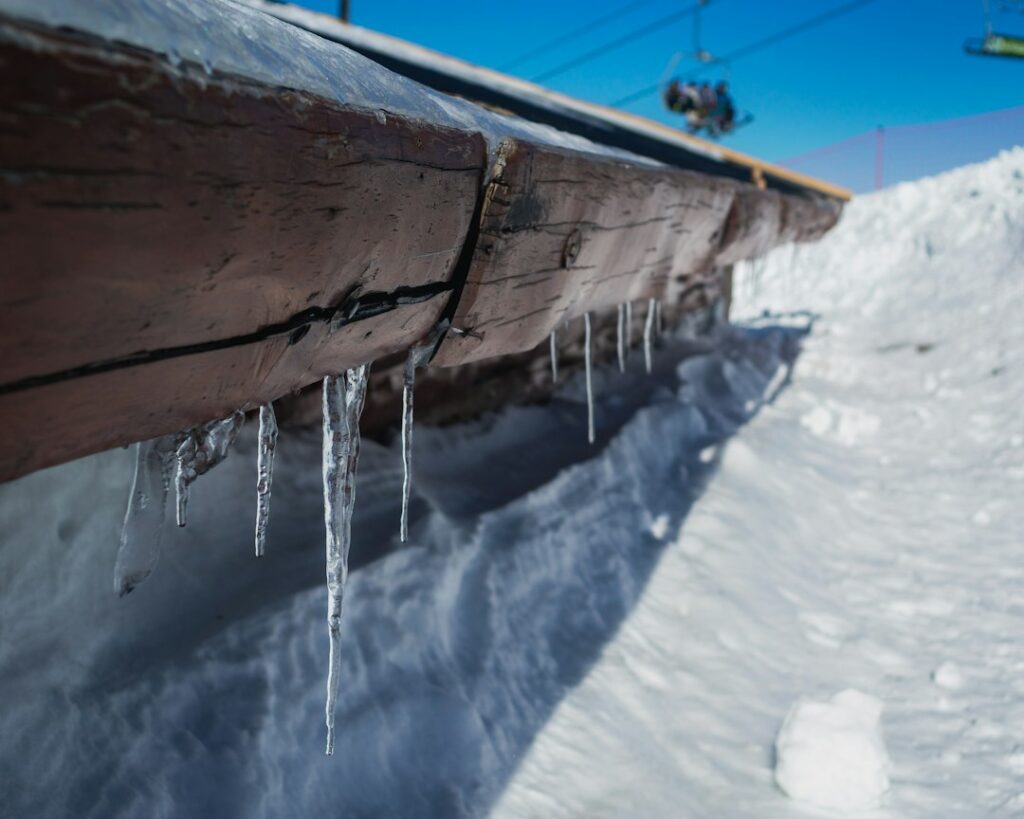
Ice can also form around roof edges, valleys, gutters, and downspouts. As temperatures rise during the day and fall below freezing at night, water may melt and refreeze repeatedly. This process can loosen roofing materials, block drainage, and force water into areas that normally remain dry.
Snow and ice should not be removed by climbing onto a slippery roof. Roof surfaces become especially hazardous during winter, and improvised tools can damage shingles, flashing, gutters, or the roof surface.
Why do ice dams form?
An ice dam forms when snow melts on a warmer section of the roof and then refreezes near a colder roof edge. The resulting ridge of ice can block normal drainage, allowing meltwater to collect beneath shingles or around flashing.
Ice dams are often linked to uneven roof temperatures. Heat escaping from the living space can warm portions of the roof deck, while the overhanging eaves remain cold. Inadequate attic insulation, air leaks around ceiling penetrations, blocked soffit vents, and poor airflow can all contribute.
Icicles do not always mean an ice dam is present, but large icicles combined with thick ice along the eaves deserve attention. Indoor clues may include:
- Water stains near exterior walls or ceilings
- Damp attic insulation
- Peeling paint near the upper edge of a room
- Musty odors
- Wet roof framing
- Mold growth
The long-term solution is usually related to controlling attic heat loss and improving the roof assembly, not simply removing visible ice. Ice-barrier underlayment is also required in areas with a history of ice formation under New York residential building requirements, but it cannot correct every ventilation or insulation problem.
How do spring rain and thawing affect roofing?
Spring combines melting snow, frequent rain, saturated ground, and rapid temperature changes. Water may enter through small openings that were hidden by snow or ice during winter.
Flashing around chimneys, vent pipes, skylights, walls, and roof valleys is particularly important because these areas interrupt the main roofing surface. If flashing has shifted, corroded, cracked, or separated, spring runoff can reach the roof deck and attic.
Gutters and downspouts also matter during thawing. Ice can pull gutters out of alignment, while winter debris may block outlets. Water that cannot drain properly may back up against the roof edge, spill onto siding, or collect near the foundation.
After winter, visible checks from the ground can include:
- Missing, lifted, or curled shingles
- Sagging gutters
- Downspouts that discharge too close to the foundation
- Dark stains on roof sections
- Exposed fasteners or metal
- Branches resting on the roof
- Loose flashing around roof penetrations
A roof does not need to be completely covered with damage to develop a leak. Water often travels along rafters, insulation, or roof decking before appearing indoors.
Can summer heat damage a roof?
Summer heat causes roofing materials to expand, while cooler nights cause them to contract. Over many seasons, this movement can contribute to cracked sealant, loosened fasteners, brittle shingles, and deterioration around flashing.
Dark roofing surfaces can become much hotter than the surrounding air. Heat is not usually a problem by itself, but excessive attic temperatures may indicate insufficient ventilation or poor insulation. A hot attic can accelerate material aging and increase cooling demands.
Sunlight also breaks down exposed roofing materials over time. Shingles may lose granules, fade unevenly, or become less flexible. Small granules in gutters are not always a sign of immediate failure, but a sudden increase in granule loss may indicate aging or surface damage.
Summer is also a useful time to look for winter-related problems because the roof is easier to observe without snow and ice. However, walking on roofing materials can still cause damage, especially when shingles are hot, brittle, or already weakened.

How do wind, thunderstorms, and hail affect a roof?
Strong wind can lift shingle edges, loosen ridge caps, damage flashing, and move branches onto the roof. Wind-driven rain is especially troublesome because it can enter beneath lifted materials or around poorly sealed penetrations.
Thunderstorms may cause short-duration but concentrated damage. Hail can bruise asphalt shingles without creating an obvious hole. A hail bruise may look like a dark or soft depression, and the damage may not be visible from the ground.
After a severe storm, look for:
- Shingles in the yard or driveway
- Exposed underlayment
- Bent vents or flashing
- Broken skylight components
- Fallen branches
- Water stains that appear hours after the storm
- Gutter dents or separated sections
Any roof opening that allows rain into the attic should be treated as an urgent water-management problem. Temporary protection may be necessary until conditions are safe for a proper repair.
Which roof areas need the most attention?
The broad field of the roof is often less vulnerable than its transitions and edges. Weather-related problems commonly begin at:
- Valleys where water and snow concentrate
- Eaves where ice can form
- Rakes and ridge caps exposed to wind
- Chimneys, skylights, and vent pipes
- Roof-to-wall intersections
- Areas beneath overhanging trees
- Low-slope sections that drain slowly
- Gutters and downspouts
Homes with older roofing, multiple roof additions, enclosed porches, or complex roof shapes may have more drainage transitions to monitor. Detached garages and sheds can also experience damage, especially when their roofs are lightly built or exposed to drifting snow.
When does weather damage require immediate attention?
Prompt action is justified when there is active leaking, visible structural sagging, a large branch on the roof, widespread shingle loss, exposed roof decking, or heavy snow and ice that appears unevenly distributed.
Stay away from areas below hanging ice, unstable branches, or visibly sagging roof sections. Water near electrical fixtures should be treated as a safety concern, and the affected circuit should only be shut off if it can be done safely.
Routine observation is most useful when it is done from the ground, attic, or other safe locations. Keeping gutters clear, maintaining attic airflow, trimming branches away from the roof, and checking for signs of leakage after major storms can help reveal weather-related damage before it spreads.
