
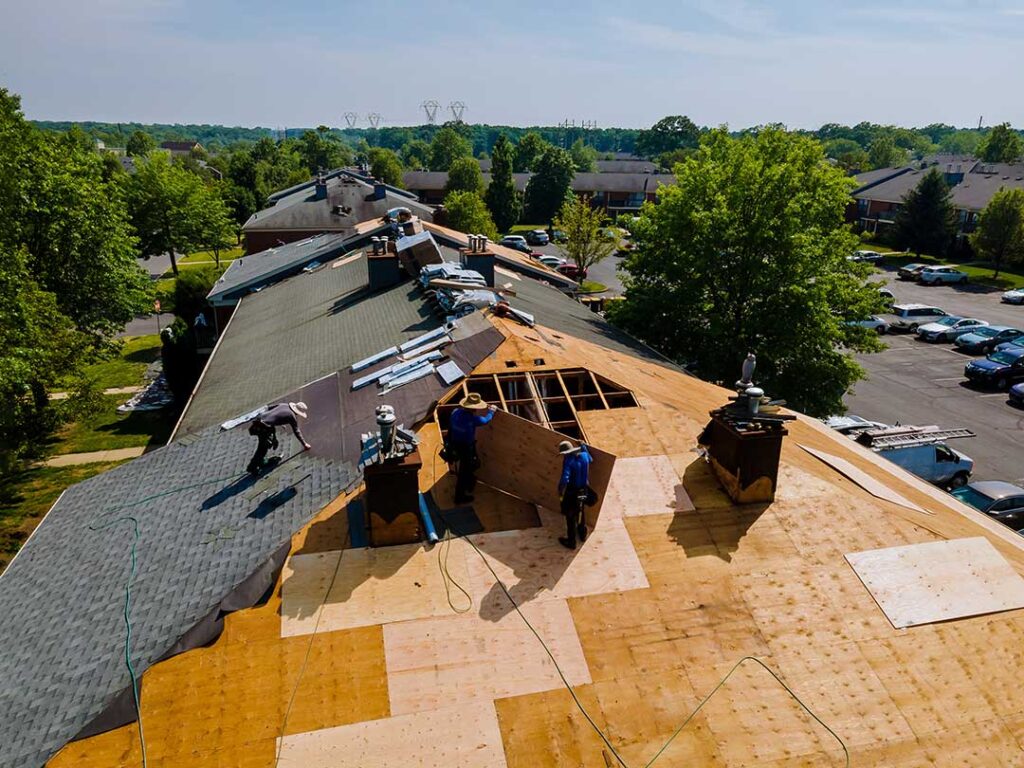
Hurricanes and tropical storms can affect Greene, NY through strong wind, heavy rain, falling branches, and extended power outages, even when the center of a storm does not pass directly overhead. Preparing the roof means reducing loose materials, keeping water-management systems clear, and identifying weak points before severe weather arrives.
What should homeowners check before hurricane season?
The most useful preparation is a careful inspection from the ground, followed by limited checks in the attic and around the roofline. Look for conditions that could allow wind or rain to enter.
From the ground, check for:
- Missing, lifted, cracked, or curled shingles
- Loose flashing around chimneys, vents, skylights, and roof edges
- Sagging areas along the roofline
- Damaged or detached gutters and downspouts
- Tree limbs touching or hanging over the roof
- Exposed nails, gaps, or visible deterioration around roof penetrations
Do not climb onto a wet, steep, or visibly damaged roof. A roof can become slippery well before rain begins, and walking on fragile roofing materials can create additional damage. Any inspection involving steep slopes, unstable surfaces, electrical hazards, or storm damage should be handled by a qualified roofing professional.
Why are roof edges and flashing especially vulnerable?
Wind pressure is often greatest at roof edges, corners, ridges, and overhangs. These areas can lift first if shingles, drip edges, fascia, or soffits are loose. Flashing is also critical because it directs water away from joints where the roof meets a chimney, wall, vent, or skylight.
Before severe weather:
- Check whether metal flashing has separated from masonry or siding.
- Look for gaps in sealant around vents and other roof penetrations.
- Make sure edge metal is secure and not bent away from the roof.
- Inspect soffits and fascia for loose sections or openings.
- Confirm that attic vents are intact and not allowing wind-driven rain inside.
Replacing a few missing shingles may not solve a larger problem if the underlayment, decking, or flashing is already compromised. Small visible defects can signal a broader weakness, particularly on older roofs or roofs that have experienced repeated freeze-thaw cycles.
How should gutters and downspouts be prepared?
Clean gutters and downspouts help move intense rainfall away from the roof and foundation. Clogged systems can cause water to back up beneath shingles, spill over roof edges, or collect near exterior walls.
Before hurricane season, remove leaves, roof granules, twigs, and other debris. Then check that:
- Gutters are firmly attached and do not sag.
- Downspouts discharge water away from the foundation.
- Elbows and outlets are not blocked.
- Extensions remain connected during heavy rain.
- Water does not pour onto walkways, basement stairwells, or low areas beside the home.
In Greene, seasonal leaf buildup and winter ice can loosen fasteners or pull gutters away from the fascia. A system that appears adequate during light rain may overflow during a tropical storm, so testing with a garden hose can reveal blocked sections or poor drainage.
What should be done about trees near the roof?
Branches near the roof can break during wind or become heavy when soaked by rain. Even small limbs can damage shingles, puncture roof membranes, block gutters, or fall onto utility lines.
Inspect trees for dead branches, hanging limbs, cracked trunks, and growth that has begun to contact the roof. Avoid removing large or elevated branches without the proper equipment and experience. Cutting near utility lines is especially hazardous and should not be attempted by homeowners.
Do not focus only on branches directly above the roof. Limbs extending from the side can swing into gables, dormers, gutters, or siding as winds change direction.
How can the attic reveal roof problems?
An attic inspection can identify problems that are not visible from outside. Use a flashlight and look for:
- Damp insulation or water stains
- Darkened wood around roof penetrations
- Daylight visible through the roof deck
- Mold-like growth or musty odors
- Rusted fasteners or damp ventilation components
- Sagging areas in the underside of the roof
A stain does not always show the exact location of an active leak. Water can travel along rafters or roof decking before appearing inside. Marking the edges of an existing stain with a pencil and date can help determine whether it expands after later rainfall.
Do not enter an attic if the floor is incomplete, the space is extremely hot, wiring appears damaged, or structural materials look unstable.
Should vents and roof openings be checked?
Yes. Roof vents, plumbing vents, skylights, and chimneys create openings in the roof system and require secure flashing. Check from the ground for cracked covers, missing caps, or displaced components. Inside the attic, look for signs of moisture around these areas.
Roof vents should not be sealed shut simply to keep out storm air. Proper ventilation helps control heat and moisture year-round. Blocking vents can contribute to condensation, wood deterioration, and shortened roofing life. Repairs should preserve the roof’s intended ventilation design while correcting damaged or loose components.
What should homeowners do before a storm is forecast?
Once a storm is approaching, preparation should focus on loose objects and water entry rather than last-minute roof work. Avoid climbing onto the roof or attempting repairs in wind or rain.
Before conditions worsen:
- Clear loose items from porches, decks, and areas beside the home.
- Secure lightweight outdoor furniture and containers.
- Check that gutters and downspouts are unobstructed.
- Move valuables away from attic areas beneath known roof leaks.
- Place tarps, buckets, and towels where they can be reached safely if needed.
- Keep flashlights, batteries, and emergency supplies available.
- Photograph existing roof conditions for household records and insurance documentation.
Do not place tarps over a roof during high winds. A poorly secured tarp can become airborne, damage roofing materials, or create a serious fall hazard.
What if the roof is damaged during the storm?
Safety comes first. Stay away from sagging ceilings, active electrical problems, loose roof sections, and areas where water is entering near lights, outlets, or electrical equipment. If a ceiling begins to bulge from collected water, keep people away from the area and shut off electricity only if the electrical panel can be reached safely without entering standing water.
After the storm passes, inspect from the ground. Look for missing shingles, exposed underlayment, fallen branches, damaged gutters, and new interior stains. Do not climb onto the roof to retrieve materials or make temporary repairs if the surface is wet or unstable.
Emergency covering may be necessary to limit additional water damage, but it should be installed only under safe conditions. A damaged roof can contain hidden structural problems that are not visible from the yard or attic.
Are older roofs automatically unsafe in hurricane season?
Not necessarily. Age alone does not determine how a roof will perform. A well-maintained older roof may be more dependable than a newer roof with poor installation, loose flashing, blocked drainage, or neglected storm damage.
The key questions are whether the roof has secure edges, intact shingles or membrane, sound decking, functioning drainage, and no unresolved leaks. Homes with previous wind damage, repeated repairs, or visible sagging deserve closer attention before hurricane season begins.
Preparation is most effective when completed during calm, dry weather. Early inspection gives homeowners time to address loose materials, drainage problems, attic moisture, and nearby tree hazards before tropical-storm conditions make roof access unsafe.
