
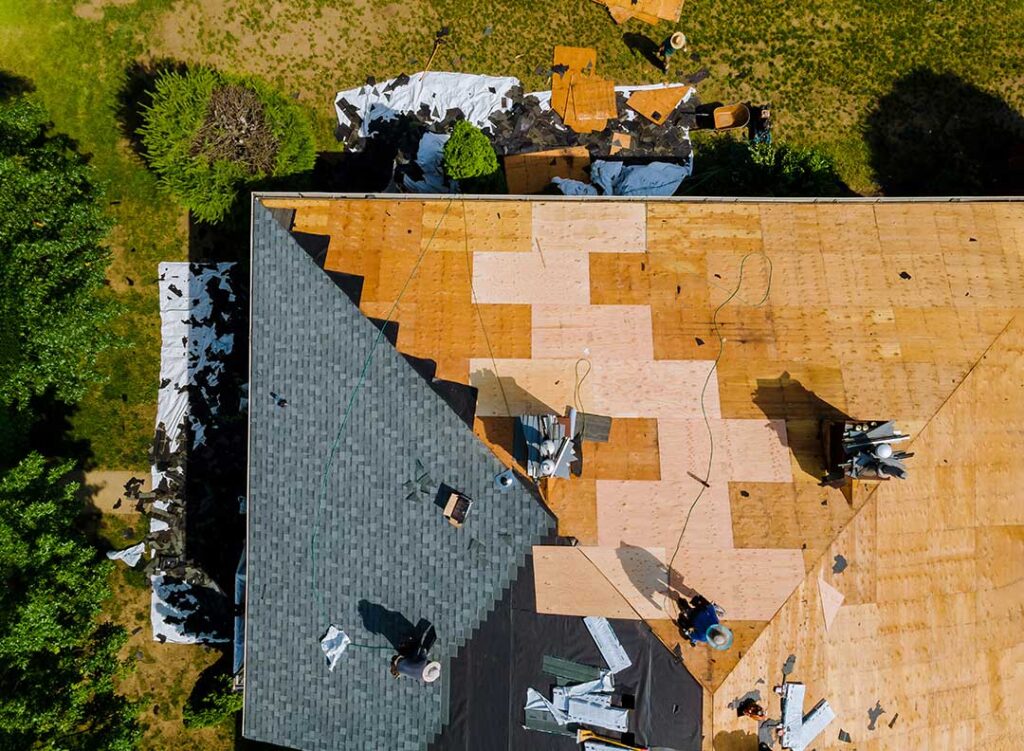
Roof decking is the structural layer beneath roofing materials. It is usually made from plywood or oriented strand board and rests across the roof framing. Shingles, underlayment, and flashing may look intact while the decking below has already weakened from moisture, age, or repeated weather exposure.
For households in Greene, NY, seasonal snow, ice, rain, wind, and freeze-thaw cycles can place recurring stress on this hidden part of the roof. Recognizing early warning signs can help prevent isolated decking damage from becoming a larger structural or interior repair.
What does roof decking do?
Roof decking creates the continuous surface that supports the underlayment and shingles. It also helps transfer the weight of roofing materials, snow, and maintenance activity to the rafters or trusses below.
Sound decking should remain firm, dry, and securely fastened. If it becomes soft, swollen, cracked, delaminated, or pulled away from the framing, the roof covering may no longer have a stable base.
Decking is not the same as shingles. A roof can have relatively good-looking shingles while the wood beneath them is deteriorating. The reverse can also occur: older shingles may show wear while the decking remains structurally sound.
What are the clearest signs of damaged roof decking?
The most reliable signs usually appear as changes in the roof surface, attic, or ceiling. Several symptoms deserve particular attention:
- Sagging areas on the roof plane
- A soft or springy feeling underfoot, if the roof is accessed safely
- Visible dips, waves, or uneven sections beneath the shingles
- Water stains or damp wood in the attic
- Mold-like growth, dark discoloration, or musty odors
- Plywood or OSB edges that appear swollen or separated
- Shingle areas that look uneven, raised, or prematurely worn
- Nails or fasteners that seem to back out repeatedly
- Interior ceiling stains that return after drying
A single sign does not always prove that the decking needs replacement. For example, a wavy roof may result from installation problems, aging underlayment, or uneven framing. However, visible unevenness combined with moisture evidence is more concerning than either symptom by itself.
How can attic conditions reveal a decking problem?
The attic often provides the clearest view of the underside of the roof decking. Inspecting from inside the attic is generally safer than walking on the roof, although insulation, low headroom, exposed nails, and limited ventilation can create hazards.
Look for:
- Water marks near roof penetrations, valleys, eaves, and chimney areas
- Darkened wood that stays discolored after dry weather
- Soft spots or areas that crumble when lightly touched
- Rusted nails or damp fasteners
- Mold-like spotting on the decking or nearby framing
- Daylight showing through unintended gaps
- Insulation that is wet, compressed, or stained
- Condensation on the underside of the roof during cold weather
Not every dark mark means the roof is leaking. Poor attic ventilation can create condensation that dampens the decking from below. Bathroom or kitchen exhaust that ends in the attic can also add moisture. A qualified inspection may be needed to distinguish an active roof leak from an indoor-air or ventilation problem.
Can ceiling stains mean the decking is failing?
Ceiling stains often indicate that water has entered somewhere above the finished surface, but they do not identify the exact failure point. Water can travel along rafters or the underside of the decking before appearing far from the original leak.
A brown or yellow ceiling mark may result from:
- Damaged or missing shingles
- Failed flashing
- An ice dam
- A leaking vent, skylight, or roof edge
- Deteriorated underlayment
- Wet or rotting roof decking
A stain that grows, feels damp, or returns after rain or snowmelt suggests ongoing moisture entry. Even if the ceiling dries, the decking may remain wet or weakened. Painting over the stain without identifying the source can hide a continuing problem.
Why do snow and freeze-thaw cycles matter?
Cold-weather conditions can expose weaknesses in roofing assemblies. Snow adds temporary weight, while melting and refreezing can keep roof materials wet for extended periods. Ice dams may force water beneath shingles and toward the roof edge, where decking and fascia are vulnerable.
Repeated freezing and thawing can also enlarge small gaps around fasteners, flashing, and roof penetrations. Over time, trapped moisture may cause wood fibers to swell, separate, or decay.
This does not mean every older roof has damaged decking after a snowy season. The level of risk depends on roof design, drainage, ventilation, maintenance history, previous leaks, and how long moisture remained in the assembly.
Does a soft spot always mean the whole roof deck must be replaced?
No. Roof decking damage is often limited to specific sections rather than the entire roof. Affected areas may be found around valleys, eaves, roof penetrations, or locations where a leak persisted.
Replacement decisions depend on the condition of the wood and the way it is attached to the framing. A small area with surface staining may remain structurally adequate after the moisture source is corrected. Wood that is soft, crumbling, delaminated, or unable to hold fasteners generally requires more serious attention.
Adding new material over weak decking is not a dependable repair. The underlying surface must be capable of supporting the new roofing system and accepting fasteners securely.
What should residents avoid doing?
Roof decking can be damaged further by unnecessary traffic. Walking over visibly sagging, wet, or soft areas creates a fall risk and may break through weakened wood. Roof work is especially hazardous during snow, ice, high wind, or wet conditions.
Avoid these common mistakes:
- Assuming shingles are the only part of the roof that matters
- Covering an interior stain before finding the moisture source
- Using attic storage to press against weakened decking
- Ignoring a musty odor because no active dripping is visible
- Judging structural condition from ground level alone
- Treating recurring leaks as isolated cosmetic problems
If the roof structure appears unstable, if daylight is visible through a damaged area, or if water is near electrical wiring, keep clear of the area and address the safety hazard promptly. Structural movement, a large ceiling bulge, or active water entry during a storm warrants immediate attention.
How often should roof decking be checked?
A basic attic observation twice a year, preferably in spring and fall, can reveal changes before they become severe. Additional checks are sensible after major wind, heavy snow, ice buildup, or a known roof leak.
Look at the underside of the roof for new stains, dampness, sagging, or changes in wood texture. From the ground, binoculars can help identify dips, lifted shingles, or uneven roof lines without requiring anyone to climb.
Roof decking is hidden, but its warning signs are often visible through the roof surface, attic, or ceilings. Early recognition of moisture and structural changes gives property owners more information before routine roof maintenance turns into a larger repair.
