
What is roof decking?
Roof decking is the structural surface installed over a roof’s rafters or trusses and beneath the underlayment and shingles. It creates the solid plane that supports the roofing layers and helps transfer the weight of snow, ice, wind, and maintenance activity to the roof framing.
In most homes, decking is made from plywood or oriented strand board, commonly called OSB. Older houses may contain solid wood boards installed one at a time, especially beneath older roof systems. The type, thickness, condition, and installation of the decking all affect how well the roof performs.
Roof decking is not the same as shingles. Shingles protect against direct exposure to rain and sunlight, while the decking provides much of the roof’s underlying structural support.
Why does roof decking matter?
Sound decking helps keep the roof surface even, supports fasteners, and reduces the risk of movement between roofing materials. Damaged decking can allow moisture to reach the attic, weaken attachment points, and create soft or uneven areas beneath the finished roof.
Decking also influences how reliably roofing nails hold. If the wood is deteriorated, excessively thin, split, or poorly supported, nails may not grip securely. That can contribute to loose shingles, lifted edges, or premature roof failure during severe weather.
For homes in Greene, NY, seasonal changes make decking condition especially relevant. Repeated wetting and drying, winter snow, ice formation, and spring rain can expose weaknesses that may not be obvious from the ground.
What materials are used for roof decking?
The three most common decking types are plywood, OSB, and solid wood boards.
Plywood is made from thin wood layers bonded together. It is generally stable and strong when properly installed, although prolonged moisture exposure can cause swelling, delamination, or softening.
OSB is manufactured from compressed wood strands and is widely used in modern roof construction. It performs well when kept dry, but exposed edges can swell if water enters through damaged roofing or inadequate flashing.
Solid wood boards are often found on older homes. These boards may be narrow or irregularly spaced, and some may have knots, cracks, or age-related decay. Their condition must be evaluated individually rather than judged only by the age of the roof.
A roof can contain more than one decking material if sections have been repaired or replaced over time.
How can someone tell if roof decking is damaged?
Some signs appear inside the attic, while others become visible from the exterior. Interior warning signs include:
- Dark stains or water marks on the underside of the roof
- Soft, crumbly, or discolored wood
- A musty odor near the roof structure
- Daylight visible through unexpected gaps
- Sagging between rafters or trusses
- Damp insulation beneath roof leaks
From outside, possible clues include a visibly uneven roof surface, areas that dip between framing members, or shingles that appear wavy or poorly supported. These signs do not always prove that the decking is damaged, since ventilation, framing, underlayment, and shingle installation can also affect the roof’s appearance.
A small attic inspection after heavy rain or snowmelt can reveal problems earlier than an exterior inspection alone. Attic access should be approached carefully because insulation, nails, wiring, and limited walking surfaces may create hazards.
Does a roof leak always mean the decking must be replaced?
No. A roof leak does not automatically require deck replacement. If water entered recently and the decking remains firm, dry, and structurally sound, the leak may be corrected without removing large areas of wood.
Replacement becomes more likely when the decking is soft, swollen, delaminated, mold-damaged, heavily stained with continuing moisture, or unable to hold roofing fasteners. The source of the leak also matters. Water may have entered through damaged shingles, flashing, a roof penetration, an ice-related backup, or a ventilation problem.
A stain on the attic side of the decking can remain after the wood has dried. The key questions are whether the material has lost strength and whether moisture is still entering.
How is damaged decking repaired?
Decking repairs usually involve removing the roofing materials above the affected area, inspecting the wood and framing, and cutting out sections that no longer provide adequate support. Replacement panels or boards are then installed with proper spacing, fastening, and support at their edges.
A localized repair may be appropriate when damage is limited to one leak or a small area near a roof edge, valley, chimney, skylight, or other penetration. Larger replacement areas may be necessary when long-term moisture exposure has affected multiple sections or when the existing decking is broadly deteriorated.
The new material should match the structural requirements of the roof. Simply covering weak wood with new roofing does not restore the roof’s underlying strength.
Can new shingles be installed over damaged decking?
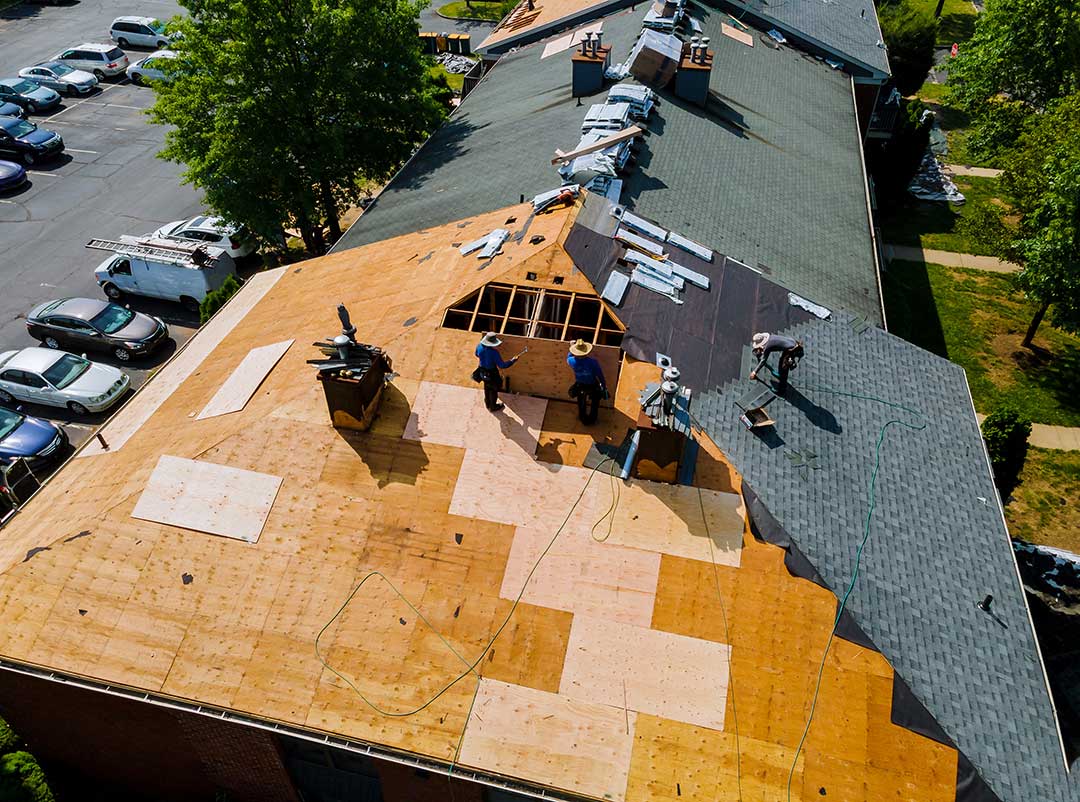
Roofing materials should not be installed over decking that is too weak, wet, or unstable. Shingles may hide the problem temporarily, but the underlying deterioration can continue and may prevent nails from fastening correctly.
Covering damaged decking can also make future leak detection more difficult. If the wood has absorbed moisture, trapped wet areas may dry slowly, particularly when insulation and limited attic airflow are present.
This does not mean every old or stained board must be removed. Decking that is weathered but still solid may remain serviceable, depending on its condition and the requirements of the roofing system. The decision should be based on strength, moisture, fastening ability, and the extent of the damage.
How does winter weather affect roof decking?
Snow and ice generally do not damage sound decking by themselves, but they add weight and increase the consequences of existing weaknesses. Persistent moisture can enter through small roofing defects, flashing failures, or ice-related backups at the eaves.
Freezing and thawing can also enlarge cracks and openings. Water that reaches the decking may freeze, expand, and later move into the wood as temperatures rise. Repeated cycles can worsen swelling, edge deterioration, and fastener movement.
After a winter with substantial snow or repeated freeze-thaw conditions, attic signs such as fresh staining, damp insulation, or sagging deserve attention. Removing snow from a roof is not a routine do-it-yourself task because walking on steep or icy roofing can cause injury and may damage the roof surface.
What should homeowners ask about roof decking during a replacement?
Useful questions focus on condition rather than sales claims:
- What areas of decking are visibly damaged?
- Is the damage caused by an active leak, condensation, or long-term exposure?
- Can the existing wood hold roofing fasteners securely?
- Are the roof rafters or trusses also affected?
- Will any replacement material be properly supported at its edges?
- Are ventilation or flashing problems contributing to the damage?
- How will wet insulation or interior moisture be handled?
Photographs from the attic or exposed roof areas can make the condition easier to understand. A clear explanation should distinguish confirmed damage from areas that are simply being inspected as a precaution.
What is the most common misconception about roof decking?
A common misconception is that shingles are the roof’s entire protective system. Shingles are highly visible, but they depend on sound decking, underlayment, flashing, ventilation, and structural framing beneath them.
Another misconception is that every leak requires a complete roof replacement. Some leaks are localized and can be corrected with targeted repairs. Conversely, a roof may look acceptable from the ground while hidden decking damage has developed underneath.
Understanding the difference between surface wear and structural deterioration helps residents make more informed decisions about roof maintenance, especially in older homes and properties exposed to repeated seasonal moisture.
