
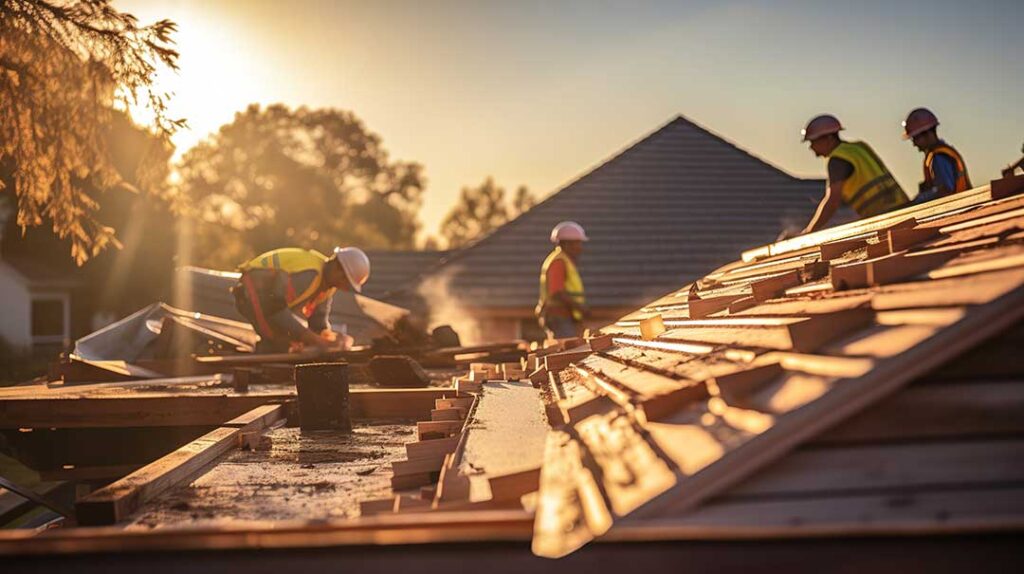
Humidity affects roofing materials by slowing drying, increasing condensation, and creating conditions that support mold, algae, corrosion, and wood decay. In Greene, NY, these effects can become more noticeable during damp summers, rainy periods, and seasonal temperature changes.
What does humidity do to a roof?
Humidity is the amount of water vapor in the air. A roof is exposed to that moisture from both directions: outside air can keep surfaces damp, while warm indoor air can rise into the attic and condense beneath the roof deck.
A single humid day usually does not damage a sound roof. Problems develop when moisture remains trapped or roofing materials stay wet repeatedly without enough time to dry. Over time, this can affect shingles, underlayment, flashing, fasteners, insulation, sheathing, and attic framing.
Humidity becomes more concerning when combined with:
- Poor attic ventilation
- Inadequate insulation
- Roof leaks
- Blocked soffit or ridge vents
- Shaded roof surfaces
- Repeated rain, fog, or heavy dew
- Warm indoor air escaping into the attic
How does humidity affect asphalt shingles?
Asphalt shingles are designed to withstand rain and changing weather, but high humidity can contribute to gradual deterioration. Moisture may collect beneath the shingle surface or around exposed edges, especially if the roof does not dry properly.
Persistent dampness can encourage algae growth, which may appear as dark streaks or discoloration. Algae does not always mean the shingles are failing, but it can hold additional moisture against the roof surface and affect appearance. Moss is more concerning because it can lift shingle edges and interfere with water drainage.
Humidity also increases the chance that small weaknesses become larger problems. If shingles are already brittle, curled, cracked, or missing protective granules, repeated wetting and drying can accelerate wear.
A humid environment does not automatically mean a roof needs replacement. The more useful questions are whether the roof is shedding water properly, whether the materials are drying between wet periods, and whether there is evidence of leakage or structural damage.
Can humidity cause condensation in an attic?
Yes. Attic condensation is one of the most common ways indoor humidity affects a roof system. During cold weather, warm air from the living space can enter the attic through ceiling gaps, light fixtures, plumbing penetrations, attic hatches, or poorly sealed ductwork.
When that warm air meets a cold roof deck or roofing fastener, water vapor may condense into liquid water. This can create damp insulation, wet roof sheathing, rusty nails, staining, and eventually wood decay.
Condensation is sometimes mistaken for a roof leak because both problems can leave water marks. A leak is usually connected to rain or melting snow and may appear in a specific area. Condensation can be more widespread, with dampness affecting several parts of the attic during cold or humid conditions.
Signs of attic condensation include:
- Frost on the underside of the roof deck
- Water droplets on nails or metal fasteners
- Damp insulation
- Musty odors
- Darkened or stained wood
- Peeling paint near the ceiling
- Mold-like growth on roof sheathing
Why does attic ventilation matter?
Ventilation helps move humid air out of the attic and allows the roof assembly to dry. Intake ventilation near the lower roof edge works with exhaust ventilation near the upper roof area to support steady airflow.
Ventilation alone cannot correct every moisture problem. If air is leaking from the living space into the attic, the source of the moisture must also be addressed. Adding vents without sealing major air leaks may provide limited improvement.
A properly functioning attic generally needs:
- Clear intake paths at the eaves
- Unblocked exhaust ventilation
- Adequate air sealing at the ceiling plane
- Sufficient insulation
- Properly vented bathroom and kitchen exhaust fans
- No active roof leaks
Bathroom fans should exhaust outdoors rather than into an attic. Sending warm, moist air into the attic can create condensation even when the roof itself is in good condition.
How are metal roofs affected by humidity?
Metal roofing does not absorb water like wood, but humidity can still contribute to corrosion. The greatest risks occur where moisture remains trapped around fasteners, seams, cut edges, flashing, or areas where different metals meet.
Condensation on the underside of metal panels can also wet the roof deck or insulation. This is especially possible when warm indoor air reaches a cold metal surface.
Protective coatings help resist corrosion, but no coating eliminates the need for proper drainage and ventilation. Leaves, dirt, and debris that hold moisture against metal components can create localized damage. Fasteners with worn or damaged sealing washers may also allow water to enter.
What happens to wood roofing components?
Wood sheathing, rafters, and roof framing can absorb moisture. If the moisture content remains elevated for long periods, wood may swell, soften, decay, or support fungal growth.
Roof decking may become weak around long-term leaks, valleys, chimneys, skylights, plumbing penetrations, or roof edges. The visible roof surface may look acceptable while the wood below has deteriorated.
Warning signs include:
- A soft or spongy area underfoot
- Sagging roof lines
- Ceiling stains
- Exposed or deteriorated decking
- Rusted fasteners
- Persistent musty odors
- Repeated repair of the same leak location
Walking on a visibly weakened roof or entering an unstable attic can be hazardous. Structural concerns, active leaks near electrical equipment, and large areas of suspected mold or decay require careful evaluation rather than casual inspection.
Does humidity affect roofs differently during each season?
Yes. Seasonal patterns create different moisture risks.
During summer, warm humid air can enter a cool attic through air leaks. Shaded roof areas may remain damp after rain, allowing moss and algae to develop more readily.
During autumn, leaves and organic debris can collect in valleys and gutters. These materials retain moisture and may slow drainage.
During winter, indoor humidity can condense on cold roof components. Snow and ice may conceal roof damage, while freeze-thaw cycles can enlarge cracks and openings that allow water to enter.
During spring, melting snow, heavy rain, and blocked drainage can expose weaknesses in flashing, shingles, gutters, and roof edges.
How can residents reduce humidity-related roof problems?
The most useful steps focus on keeping moisture out of the attic and allowing roofing materials to dry.
- Run bathroom exhaust fans during bathing and for a short time afterward.
- Make sure exhaust ducts terminate outdoors.
- Keep attic vents clear of insulation, dust, nests, and debris.
- Check that the attic hatch is weather-stripped and insulated.
- Look for damp insulation, stains, or frost during cold weather.
- Keep gutters and roof drainage paths free of leaves.
- Trim vegetation that keeps roof surfaces shaded and wet.
- Inspect flashing and roof penetrations after major storms.
- Avoid covering attic ventilation openings with stored materials.
- Use kitchen and laundry ventilation to limit indoor moisture.
Roof inspections are safest from the ground when possible. Binoculars can help identify missing shingles, dark moisture marks, sagging areas, or clogged drainage without requiring a person to climb onto the roof.
Humidity is rarely the sole cause of roofing failure. More often, it exposes weaknesses in ventilation, air sealing, drainage, flashing, or existing materials. Understanding that connection helps residents distinguish normal seasonal dampness from conditions that may lead to costly roof and attic damage.
