

Leaving home for several days or weeks means more than locking doors and setting the thermostat. A roof that appears sound from the ground can still have loose shingles, blocked drainage, or vulnerable flashing that becomes a serious problem during summer storms, winter weather, or heavy rain.
A short roof check before vacation can help identify manageable issues before the house is unattended. The goal is not to perform risky repairs, but to look for visible warning signs, protect drainage paths, and make sure someone can recognize trouble while the property is empty.
What should be checked before leaving home?
Before vacation, inspect the roof from the ground and check the attic or uppermost ceiling areas from inside the house. Look for changes that could allow water to enter while no one is home.
From the ground, check for:
- Missing, cracked, curled, or visibly displaced shingles
- Dark patches or areas that appear different from the surrounding roof
- Loose metal around chimneys, plumbing vents, skylights, or roof edges
- Sagging sections along the roofline
- Gutters pulling away from the fascia
- Granules collecting beneath downspouts or around foundation areas
- Tree limbs that touch or hang directly over the roof
Inside the house, look for water stains, peeling paint, damp insulation, musty odors, or daylight visible around attic penetrations. A small stain does not always mean the roof is actively leaking, but it deserves attention before leaving for an extended period.
Why do gutters and downspouts matter during vacation?
Gutters and downspouts control where roof runoff goes. If they are clogged or disconnected, rainwater can spill over roof edges, soak siding, collect near the foundation, or enter around windows and doors.
This is especially relevant in Greene, NY, where seasonal rain, falling leaves, snow, and freeze-thaw conditions can all affect drainage. A gutter that works during light rain may overflow during a short, intense storm.
Before leaving:
- Remove visible leaves, twigs, and compacted debris from accessible gutters.
- Confirm that downspouts remain connected.
- Make sure downspout outlets discharge water away from the foundation.
- Check that extensions have not shifted or become buried.
- Look for standing water in gutters after rainfall, which may indicate poor slope or blockage.
Do not climb onto a roof or use an unstable ladder simply to complete a vacation checklist. Ground-level observations can identify many problems without creating a fall hazard.
Should roof repairs be completed before a trip?
Repairs that address active leaks, missing shingles, exposed underlayment, loose flashing, or damaged roof edges should not be ignored before leaving. Water intrusion can spread through insulation, ceilings, wall cavities, and electrical areas while the house is unattended.
Minor cosmetic concerns may not require immediate action, but conditions that allow water or wind to reach the roof structure are more urgent. A roof does not need to look severely damaged to leak. Wind-driven rain can enter through small openings around flashing, vents, chimneys, and roof penetrations.
If a problem is discovered shortly before departure, avoid improvised patches using household materials. Plastic sheeting, roofing cement applied to the wrong area, or fasteners placed through shingles can create additional damage or give a false sense of security. Unsafe roof access, steep slopes, wet surfaces, ice, and storm damage are situations where qualified help may be necessary for safety and proper repair.
How should a roof be prepared for summer vacation?
Summer travel often coincides with thunderstorms, high winds, heat, and periods of heavy rainfall. Before leaving during warmer months, check trees and roof drainage carefully.
Branches that rest on shingles can rub away protective surfaces and may fall during wind. Dead limbs overhanging the roof are more concerning than healthy branches that simply provide shade. Remove loose debris from roof valleys, gutters, and areas where leaves collect, but do not walk on a steep or fragile roof to do so.
Also check attic ventilation from inside. Excessive heat and moisture in an attic can contribute to deterioration of roof materials, especially when soffit or ridge ventilation is blocked. Signs include damp insulation, mold-like growth, rusted fasteners, or unusually warm attic conditions. These problems may not cause an immediate leak, but they can shorten the life of roofing materials and wood components.
What changes before a winter trip?
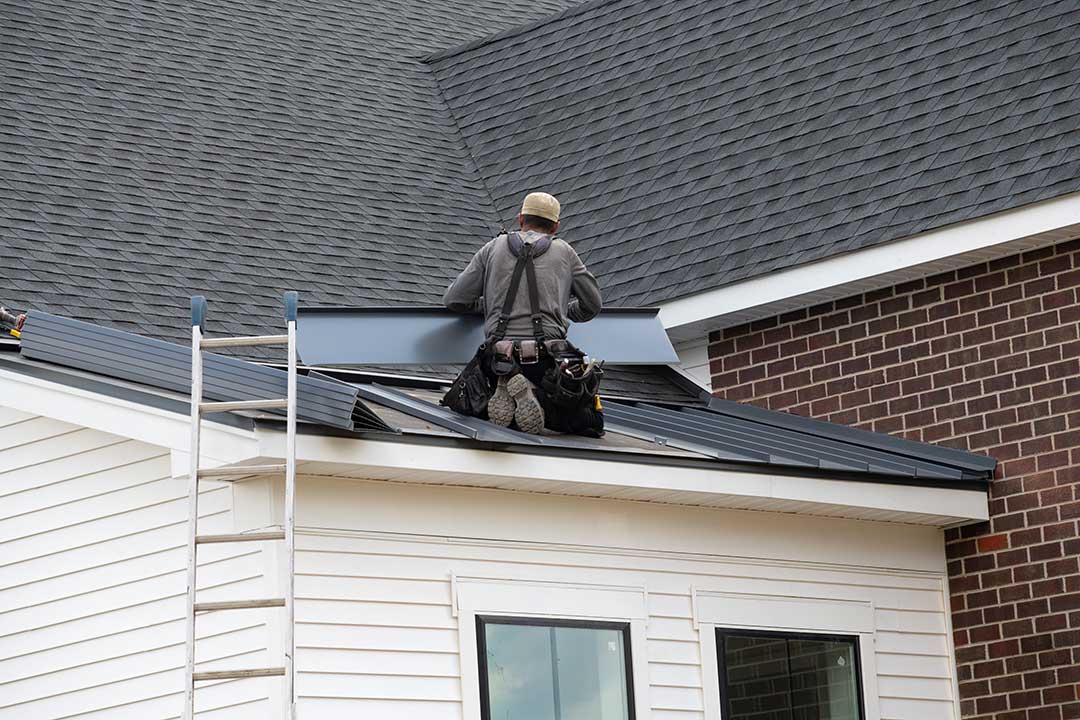
Winter preparation requires attention to snow, ice, freezing temperatures, and drainage. Before leaving for a winter vacation, confirm that gutters are free of heavy debris and that water can move away from the structure. Ice dams can form when warm attic air melts snow on the upper roof and the water refreezes near colder eaves.
Keeping the attic properly insulated and ventilated can reduce uneven roof temperatures, although it cannot eliminate every ice-related problem. Snow should not be removed from a roof by an inexperienced person using a ladder or standing beneath an unstable snow load. Snow sliding from a roof can injure people or damage property below.
Make sure roof-mounted vents, furnace or plumbing exhaust outlets, and attic ventilation openings are not blocked by snow. Blocked exhaust outlets can create indoor safety hazards, while blocked ventilation can increase moisture and ice-related problems.
What should a house sitter know about the roof?
A trusted house sitter or neighbor should know how to recognize a roof-related emergency. Provide clear instructions about where to find the main water shutoff, how to identify a ceiling stain, and who should be contacted if water enters the house.
Useful instructions include:
- Check the attic or upper ceilings after severe weather.
- Look for new dripping, bubbling paint, or wet flooring.
- Report fallen branches, visible roof debris, or sections of siding pulled loose.
- Take photographs from the ground if damage is observed.
- Avoid entering areas with water near light fixtures, outlets, or electrical equipment.
It is also helpful to leave information about the home’s heating settings, known roof concerns, and any areas that should not be accessed. A brief written plan is more reliable than assuming someone will know what to do during a storm.
Can a roof leak be prevented while the house is empty?
No inspection can guarantee that a roof will not leak. Severe wind, falling limbs, ice movement, and sudden weather events can damage even a well-maintained roof.
The practical goal is to reduce known vulnerabilities before departure and make early detection possible. Clear gutters, secure loose exterior materials, trimmed hazardous branches, working smoke and carbon monoxide alarms, and a person checking the property after major weather all reduce the chance that a small problem will go unnoticed.
For longer absences, a periodic exterior check is particularly useful after heavy rain, strong wind, or a significant snowfall. The check does not require walking on the roof. Ground-level observations of shingles, gutters, downspouts, roof edges, and interior ceilings can reveal whether further attention is needed.
What should be done when returning from vacation?
After returning, inspect ceilings, upper walls, attic areas, gutters, and the ground around the foundation. Look for new stains, damp odors, fallen roof materials, excessive granules, displaced downspouts, or branches that may have struck the roof.
Do not assume a dry ceiling means the roof had no damage. Some leaks appear only during wind-driven rain or may remain hidden until insulation and framing become saturated. Any new evidence of water entry should be documented and addressed before the next extended absence.
A few minutes of observation before and after a trip can provide useful information about the roof’s condition and help prevent an overlooked maintenance issue from becoming a larger problem.
