
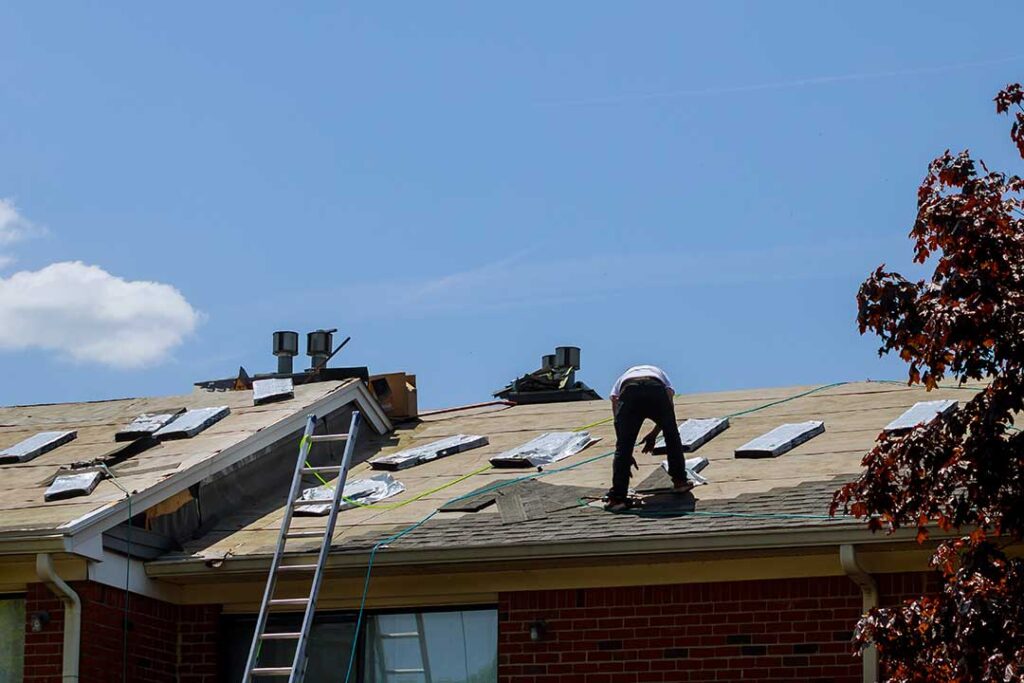
What does hail damage on a roof look like?
In Greene, NY, hail damage may appear as small dark marks, chipped roofing granules, cracked shingles, exposed underlayment, or dents in metal components. Some damage is obvious after a storm, while other problems are subtle and may not cause a leak immediately.
Hailstones can strike roofing materials with enough force to:
- Remove protective granules from asphalt shingles
- Bruise or crack the fiberglass mat beneath the shingle surface
- Split older, brittle shingles
- Dent metal flashing, vents, gutters, and downspouts
- Damage ridge caps and exposed roof edges
- Break skylight coverings or other roof-mounted materials
A roof does not need to have large holes to be seriously affected. Small areas of impact can reduce a shingle’s ability to shed water and resist future freezing, wind, and moisture.
How can asphalt shingle damage be identified from the ground?
Ground-level inspection can reveal warning signs, but it cannot confirm every type of hail damage. From the yard, look for uneven roof surfaces, missing shingles, scattered dark patches, or an unusual amount of roofing material in gutters and around the foundation.
After a storm, residents may notice:
- Shingle pieces on the ground
- Loose or displaced ridge caps
- New dark spots that appear in groups
- Shingles with lifted, broken, or curled edges
- Granules collecting in downspouts or near drain outlets
- Newly exposed light-colored areas on the shingle surface
Hail marks are often irregularly distributed rather than forming a neat line. Damage may be concentrated on the roof slope facing the direction of the storm, although wind can move hail and affect more than one side.
A pair of binoculars can make a ground inspection safer and more useful. Walking on a wet, steep, or damaged roof creates fall and structural hazards and is not necessary for an initial check.
What do hail impact marks look like up close?
Close-up hail marks often look like shallow circular depressions or bruised areas. On asphalt shingles, the damaged spot may feel soft, appear discolored, or show missing granules. A bruise may not be visible from the ground because the shingle surface can remain mostly intact.
Useful signs include:
- A roughly round impact area
- Granules missing from a localized spot
- A dark or exposed patch beneath the granules
- Cracks radiating from an impact point
- A soft or spongy section under gentle finger pressure
- A fractured seal strip or weakened shingle tab
Do not press hard on a questionable area. Older shingles can break during inspection, and damaged granules may come loose even when the underlying damage is not yet obvious.
Hail damage can resemble normal aging, manufacturing variation, or wear from branches. The pattern matters. Widespread uniform granule loss is more consistent with aging, while scattered depressions and impact marks may point to hail.
Can gutters, vents, and siding help confirm a hail event?
Yes. Roof accessories and nearby exterior surfaces can provide useful evidence when shingle damage is difficult to see. Metal components may show dents or small dimples, especially on soft aluminum flashing, vents, gutters, and downspouts.
Check for:
- Fresh dents on metal vent covers
- Dimpled gutters or downspouts
- Chips in painted metal surfaces
- Damage to window screens or exterior trim
- Small impact marks on siding
- Broken or bruised outdoor fixtures
- Leaves, branches, or debris lodged against roof edges
These signs do not automatically prove that the roof has been damaged. A dented gutter may have resulted from a fallen branch, and siding marks may come from windblown debris. However, matching impact marks across several exposed surfaces strengthen the possibility that hail affected the roof as well.
Is every dark spot on a shingle hail damage?
No. Dark spots can have several causes, including normal granule loss, algae growth, trapped moisture, foot traffic, falling branches, or manufacturing defects.
Hail-related marks are more likely when they are:
- Newly visible after a storm
- Scattered across multiple shingles
- Associated with missing granules
- Soft or bruised rather than simply discolored
- Located on both shingles and roof accessories
- Found on the storm-facing roof slope

Algae stains generally spread across larger areas and may appear as broad dark or greenish streaks. Mechanical damage often creates scratches, straight lines, or concentrated breaks. Hail impacts tend to be more rounded and localized.
Photographs taken from the ground can document the roof’s condition without creating additional damage. Include wide views of each roof slope, close views of accessible exterior components, and pictures of debris or damaged screens.
Can hail damage cause a leak right away?
Sometimes, but not always. A large impact, cracked shingle, damaged flashing detail, or broken vent can allow water to enter during the next rainfall. Smaller bruises may remain hidden until repeated wetting, freezing, and thawing weaken the material.
After a hailstorm, inspect the attic if it can be reached safely. Look for:
- Damp insulation
- Water staining on roof decking
- Darkened wood
- Dripping or wet areas
- Musty odors
- Daylight visible through the roof surface
Attic evidence may appear away from the exact point of exterior damage because water can travel along decking, framing, or insulation before becoming visible. A dry attic does not prove that the roof is undamaged; it only means that an active interior leak was not found at that time.
Place a container under an active drip and move valuables away from the area. Avoid climbing onto the roof to cover damage during unsafe weather. Temporary interior measures can limit damage while conditions remain wet or unstable.
When is a roof inspection necessary?
A closer inspection is warranted when hail has caused visible exterior damage, when water is entering the building, or when the roof contains loose, cracked, or missing materials. Safety concerns also justify outside help, particularly on steep roofs, multistory homes, wet surfaces, or roofs with structural damage.
A qualified inspector should be able to distinguish hail bruising from ordinary aging and explain whether the observed condition affects water-shedding performance. The inspection should include shingles, ridge caps, flashing, vents, valleys, gutters, and any roof-mounted equipment.
Residents should be cautious of anyone who appears immediately after a storm and pressures them to make quick decisions. Useful documentation is more valuable than rushing. Keep photographs, note the approximate storm date, record interior leaks, and preserve damaged pieces if they can be collected safely.
How can roof damage be reduced after future hailstorms?
Hail risk cannot be eliminated, but routine roof care can make storm damage easier to detect and prevent small problems from becoming larger ones.
Helpful habits include:
- Keep gutters clear so leaks and overflow are easier to identify
- Trim branches that could add impact from falling limbs
- Check attic ventilation and moisture conditions
- Replace visibly loose or missing roof components promptly
- Inspect after severe thunderstorms, especially before winter
- Keep records of roof repairs and previous storm damage
- Avoid walking on shingles unless necessary and safe
Greene, NY experiences seasonal weather changes that can place repeated stress on roofing materials. Freeze-thaw cycles, strong winds, heavy rain, and snow can worsen an impact that initially appears minor. Prompt documentation and careful observation are often enough to determine whether a closer inspection is needed.
