

What is a roof penetration?
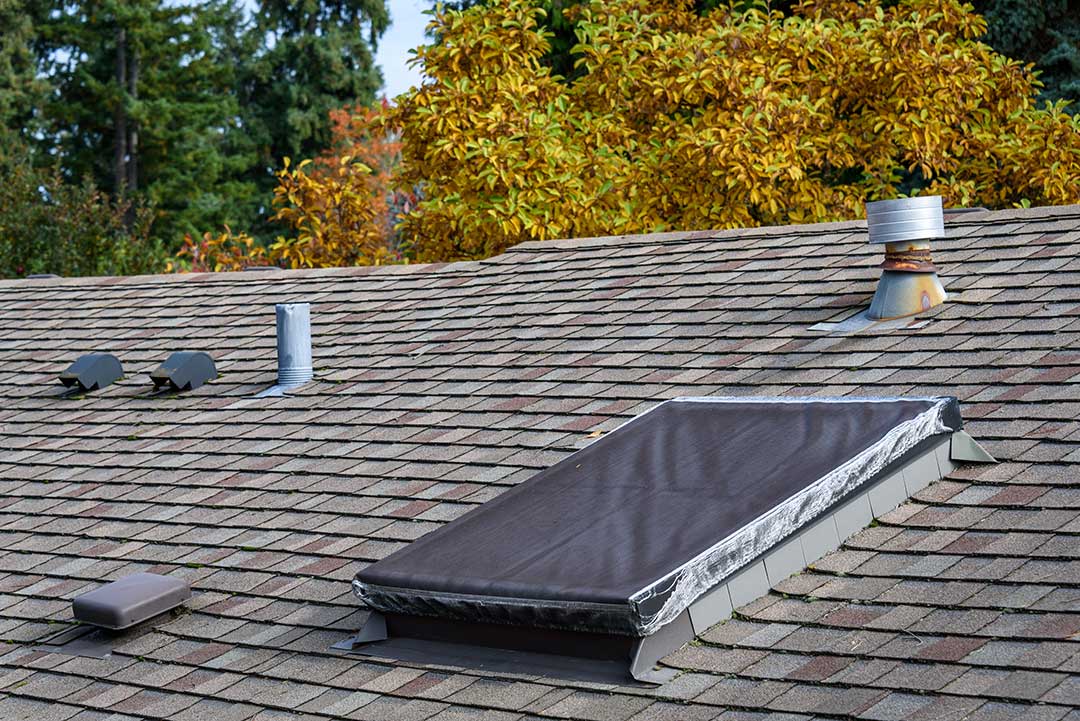
A roof penetration is any object, opening, or fitting that passes through the roofing system. Common examples include plumbing vent pipes, chimneys, skylights, attic vents, exhaust fans, satellite equipment, electrical conduits, and brackets for exterior fixtures.
Each penetration interrupts the roof’s continuous water-shedding surface. Proper sealing requires more than spreading caulk around the opening. The roof must use compatible flashing, an effective water-shedding design, and a sealant suited to the roofing material and weather exposure.
In Greene, NY, roof penetrations must withstand repeated wetting, freezing temperatures, snow, ice, wind-driven rain, and seasonal movement. A repair that appears sound during mild weather can fail after several freeze-thaw cycles.
Why do roof penetrations leak?
Most leaks around penetrations result from one of four problems: damaged flashing, failed sealant, incorrect installation, or water traveling beneath the roofing before entering the building.
Sealant is often blamed first, but it is not always the main defense. Caulk can close a small joint, but it cannot correct a missing flashing flange, an improperly installed pipe boot, or a penetration placed where water naturally collects.
Common causes include:
- Cracked, dried, or separated sealant
- Rusted or bent metal flashing
- Deteriorated rubber or flexible pipe boots
- Fasteners installed in exposed locations
- Loose roofing around the penetration
- Debris trapped behind a chimney or curb
- Snow and ice movement
- Expansion and contraction of metal components
- Improper overlap between flashing layers
Water may also appear far from the actual opening. Roof sheathing, underlayment, insulation, and framing can allow moisture to travel horizontally before it becomes visible on a ceiling.
What is the correct way to seal a roof penetration?
The correct method is to create a layered water-shedding system. Flashing should direct water around the penetration, while sealants reinforce joints and protect vulnerable edges.
A basic sequence is:
1. Inspect the penetration and the surrounding roofing.
2. Remove loose, cracked, or failed materials.
3. Check the roof deck and underlayment for moisture damage.
4. Install or repair the appropriate flashing.
5. Integrate the flashing with the roofing material.
6. Apply compatible sealant only where the design requires it.
7. Test the area carefully rather than relying on appearance alone.
For an asphalt-shingle roof, a plumbing vent usually relies on a pipe boot or metal flashing that extends beneath the shingles above the pipe and over the shingles below it. The upper portion must shed water onto the roofing below. Sealant may be used around the pipe collar or at specific joints, but the flashing should not depend entirely on a bead of caulk.
A chimney, skylight, or roof curb requires a more complex arrangement. Step flashing, counterflashing, head flashing, and side flashing may all be part of the system. Simply applying roof cement along the perimeter can hide a problem temporarily without stopping water from entering behind the flashing.
How should old sealant be removed?
Old sealant should be removed carefully before new material is applied. New sealant rarely bonds reliably to loose, chalky, oily, wet, or heavily weathered residue.
A practical preparation process includes:
- Removing loose sealant with a plastic scraper or appropriate hand tool
- Brushing away dust, granules, rust, and dirt
- Drying the joint thoroughly
- Checking whether the underlying metal, rubber, or membrane is cracked
- Cleaning only with a method compatible with the roofing material
Sharp tools can damage shingles, membrane roofing, or painted metal. Solvents can also soften some roofing products or leave behind a residue that prevents adhesion. If the substrate is deteriorated, cleaning alone will not provide a lasting repair.
Which sealant should be used?
The sealant must be compatible with both the roofing material and the flashing. Roofing products differ in how they respond to ultraviolet light, temperature changes, standing water, and movement.
A suitable sealant should generally be:
- Rated for exterior roofing exposure
- Compatible with the specific roofing material
- Flexible after curing
- Resistant to water and temperature changes
- Able to bond to clean, dry metal, masonry, rubber, or membrane surfaces as appropriate
Generic household caulk is usually a poor choice for roof work. Some products become brittle outdoors, while others remain soft and collect dirt. Certain solvent-based materials can damage rubber pipe boots or membrane roofing.
The manufacturer’s instructions for the roofing component should control product selection. Mixing incompatible materials can cause swelling, poor adhesion, staining, or premature failure.
Should sealant be applied over the old flashing?
Only if the flashing is sound and the joint is properly prepared. A thick layer of sealant over rust, cracks, or loose flashing is not a dependable repair.
Before sealing, inspect for:
- Holes or pinholes in metal
- Splits in rubber collars
- Gaps at corners
- Lifted shingles
- Missing fasteners
- Corrosion around fastener heads
- Soft or damaged roof decking
- Signs that the penetration has shifted
If the flashing itself is failing, replacement is generally more reliable than adding more material. Sealant can reinforce a properly installed flashing system, but it should not be used to rebuild one that is missing or badly deteriorated.
How can a homeowner inspect a roof penetration safely?
A ground-level inspection can reveal warning signs without requiring anyone to walk on the roof. Look for dark ceiling stains, peeling paint, damp insulation, musty odors, or water that appears after rain or thawing snow.
From the ground, binoculars may help identify:
- Missing or lifted shingles near a penetration
- A visibly cracked pipe boot
- Exposed fasteners
- Rust streaks
- Patches of roof cement
- Debris collecting behind a chimney or curb
- Ice buildup or displaced components
Interior inspection should include the attic when access is available. Moisture marks on the underside of the roof deck may be easier to locate than the ceiling stain below. However, insulation can conceal wet materials, and roof spaces may contain electrical hazards, unstable surfaces, nails, and poor ventilation.
Walking on a steep, wet, icy, or fragile roof creates a serious fall risk. Roof work also becomes more hazardous during winter conditions, after snowfall, or when surfaces are damp from morning frost.
What mistakes commonly shorten the life of a repair?
The most common mistake is treating every leak as a caulking problem. Other frequent errors include applying sealant to a wet surface, blocking drainage paths, covering weep areas, using incompatible materials, and fastening flashing where water can run directly into the hole.
Another problem is sealing the lower edge of a flashing arrangement that is designed to drain. Water needs a controlled path away from the penetration. Sealing every visible gap can trap moisture behind the flashing instead of keeping the roof dry.
Roof penetrations should also be inspected after major weather events. In the local climate, heavy snow, ice buildup, strong wind, and rapid thawing can stress pipe boots, metal flashing, chimney joints, and roof-mounted equipment. A small split found early is easier to address than wet insulation and damaged roof decking discovered months later.
When does sealing require more than a minor repair?
A more extensive repair may be necessary when water damage has reached the roof deck, framing, insulation, or interior finishes. Replacement is also more appropriate when a pipe boot is brittle, flashing is heavily corroded, a skylight curb has shifted, or a chimney has damaged masonry joints.
Safety and building requirements also matter. Structural changes, new roof openings, chimney work, electrical equipment, and ventilation modifications may require specific installation methods or permits. Roof penetrations should never be created casually, since every new opening becomes a long-term maintenance point.
A watertight roof depends on proper layering, compatible materials, sound drainage, and careful inspection. Sealant has a useful role, but the most dependable protection comes from correctly installed flashing that remains integrated with the surrounding roofing system.
