
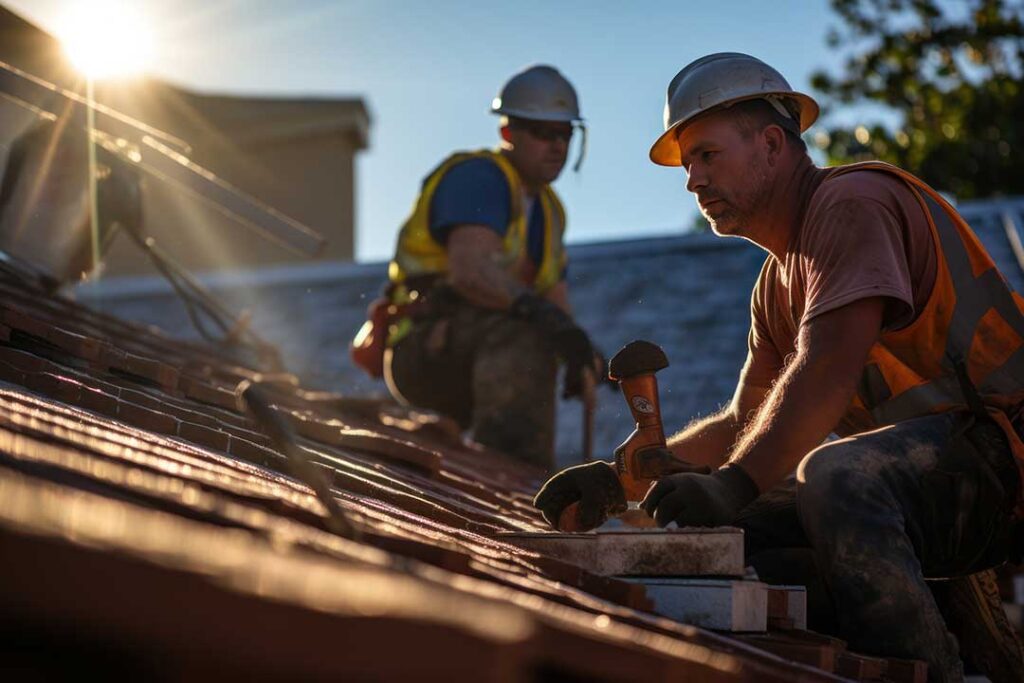
Replacing a roof is a major household expense, and the right financing choice depends on the roof’s condition, the available budget, home equity, credit profile, and how quickly the work must begin. Residents of Greene, NY may have several ways to spread out the cost, but each option carries different interest rates, fees, repayment terms, and risks.
What should be decided before applying for financing?
Start by determining whether the roof needs immediate replacement or whether limited repairs could safely extend its service life. Financing a complete replacement may not be necessary if the problem involves a small flashing failure, isolated leak, or localized storm damage.
A realistic project budget should account for more than shingles or other roof covering. Possible costs include:
- Removal and disposal of the existing roofing
- Decking repairs caused by moisture or rot
- Ice-and-water protection and underlayment
- Ventilation improvements
- Flashing around chimneys, walls, skylights, and roof penetrations
- Gutter or drainage adjustments
- Permit-related costs, where applicable
- Temporary protection if work is delayed by rain, snow, or freezing temperatures
Seasonal weather in the area can affect scheduling. A roof that is leaking during a winter freeze or during repeated spring rain may require temporary protection before permanent work can be completed. That short-term expense should be included in the financial plan rather than treated as an unexpected exception.
Can savings be used instead of a loan?
Cash savings are often the least expensive option because they do not create interest charges, loan fees, or a new monthly obligation. However, using every available dollar can leave a household without funds for heating repairs, insurance deductibles, medical expenses, or other emergencies.
A practical approach may be to use part of the savings and finance the remaining balance. This can lower the amount borrowed while preserving some emergency reserves. The decision should be based on the household’s overall financial stability, not only on the roof’s projected cost.
How does a personal loan work for roofing?
An unsecured personal loan provides a fixed amount that is repaid through regular monthly payments. It generally does not require the home to serve as collateral, which can reduce the risk associated with borrowing against property.
Personal loans may be useful when:
- The project cost is moderate
- The borrower wants predictable payments
- There is limited home equity
- The work must be completed without refinancing a mortgage
- The borrower prefers not to secure new debt against the home
The interest rate and loan term can vary substantially based on credit history, income, existing debt, and the lender’s policies. A longer term may reduce the monthly payment but increase the total interest paid. Comparing the annual percentage rate, origination fees, late charges, and total repayment amount is more informative than comparing monthly payments alone.
Is a home equity loan a good option?
A home equity loan provides a lump sum secured by the equity in the property. It often has a fixed interest rate and a set repayment schedule, making it easier to budget for a defined roof replacement project.
The main advantage is predictable financing for a known expense. The main risk is that the home serves as collateral. If payments cannot be made, the borrower could face serious consequences, including possible foreclosure.
A home equity loan may make sense for a homeowner with substantial equity, stable income, and a clear repayment plan. It may be less suitable for someone whose mortgage payment is already difficult to manage or whose income could change significantly.
Upfront appraisal, underwriting, recording, or other fees may apply. The total cost should be reviewed before signing, including whether the new payment is in addition to the existing mortgage.
What is a HELOC, and how is it different?
A home equity line of credit, or HELOC, works more like a revolving credit account than a traditional loan. The borrower receives a maximum credit limit and can draw funds as needed. This may be useful when the final project cost is uncertain because hidden decking damage or drainage work is discovered after the roof is opened.
HELOCs commonly have adjustable interest rates, so monthly payments can change over time. The available credit may be replenished as the balance is repaid, but the property remains collateral for the debt.
A HELOC can provide flexibility, but it requires careful attention to the draw period, repayment period, interest-rate adjustments, minimum payment rules, and any annual or early-closure fees. It should not be treated as free cash simply because the full credit limit is not used.
Are contractor-arranged financing plans safe?

Some roofing contracts may include financing offered through a third-party lender. These plans can be convenient, but convenience should not replace comparison shopping.
Review the financing separately from the roofing contract. Questions to ask include:
- Is the interest rate fixed or variable?
- Is there a promotional rate that later increases?
- What is the annual percentage rate?
- Are there deferred-interest provisions?
- Is there a prepayment penalty?
- What happens if the project is delayed or canceled?
- Does the lender pay the contractor directly?
- Are loan payments required before the work is substantially complete?
In New York, home improvement work generally requires a written contract containing project details, timing, and payment terms. Progress payments should reasonably correspond to work completed, materials purchased, or other project-related costs. Paying the full amount upfront creates unnecessary financial risk.
Could a government or energy-efficiency program help?
Some government-backed renovation programs can include roof work, but eligibility is limited and the application process may be more involved than a standard home improvement loan.
The Federal Housing Administration’s 203(k) program can finance certain repairs, including roofing, as part of a home purchase or mortgage refinance. It is generally more relevant when several repairs are being combined or when a property is being purchased and renovated, rather than for a straightforward roof replacement on an otherwise stable home.
New York energy-efficiency financing may apply when roofing work is part of a broader energy project, such as insulation, air sealing, solar equipment, or heating improvements. A standard roof replacement by itself may not qualify. These programs can have income, property, contractor, utility, cost-effectiveness, or project-type requirements.
Loans connected to energy improvements are still loans and must be repaid. A projected energy saving should not be assumed to cover the full cost of a roof unless the program’s terms and the home’s expected performance support that conclusion.
What warning signs should homeowners watch for?
A financing arrangement deserves extra scrutiny if it includes pressure to sign immediately, unclear payment terms, unusually high upfront charges, or promises that the roof will “pay for itself.” Be cautious if the financing paperwork is presented before the scope of work is clearly written.
The roof contract should identify the materials, payment schedule, estimated timeline, responsibility for permits, treatment of concealed damage, and procedures for changes. Financing documents should be read independently rather than assuming the roofing contract explains the loan.
For households already struggling with mortgage payments, adding a new secured loan can increase the risk of financial hardship. A nonprofit housing counselor or qualified financial counselor may help evaluate alternatives before additional debt is taken on.
Which financing option is usually the best?
There is no single best option for every household. Cash may cost the least but reduce emergency reserves. A personal loan may offer simpler structure without using the home as collateral. A home equity loan may provide fixed payments at a potentially lower rate but places the property at risk. A HELOC offers flexibility but usually brings variable-rate uncertainty.
The strongest decision is based on the total repayment cost, the stability of the monthly payment, the risk to the home, and whether the household can still manage other expenses during Greene’s colder months and unpredictable weather periods. A roof should protect the home without creating a payment obligation that makes the rest of the household budget unsafe.
