
What roof work is usually safe for a homeowner?
In Greene, NY, some roof-related tasks are reasonable for a careful homeowner, but only when they can be completed from the ground or from a properly positioned ladder. Minor maintenance is very different from walking on a sloped roof, replacing large sections of shingles, or working near the roof edge.
Generally safer tasks include:
- Looking at the roof from the ground with binoculars
- Cleaning leaves and small branches from gutters while standing on stable ground
- Clearing debris from valleys or roof edges with a long-handled tool
- Replacing a loose gutter strap or downspout connection from a ladder
- Sealing a small exposed nail head or minor flashing gap when the work area is low, stable, and easy to reach
- Removing moss or organic debris without climbing onto the roof
Even these jobs require attention to ladder placement, electrical hazards, weather, and falling debris. A task is not automatically safe just because it appears small.
When should you stay off the roof?
Do not climb onto a roof when it is wet, icy, snow-covered, heavily frosted, or visibly damaged. Damp shingles can be slick, and cold-weather roofing materials may become brittle or difficult to walk on. In the local climate, freeze-thaw cycles can also loosen shingles, expose nails, and create weak areas that are not obvious from the ground.
A homeowner should also stay off the roof when:
- Wind is strong enough to move branches, ladders, or loose materials
- Rain or snow is expected during the work period
- The roof has a steep pitch
- The surface is covered with moss, algae, frost, or loose granules
- The roof deck feels soft or appears sagged
- The work requires stepping near an unprotected edge
- The house is more than one story above the ground
- The roof has skylights, fragile panels, or unfamiliar coverings
A roof can be dangerous even when it looks dry. Shingle granules, hidden ice, weak decking, and uneven surfaces can cause a sudden loss of footing.
Is using a ladder safer than walking on the roof?
A ladder is safer only when it is used correctly and the task can be completed without leaning, reaching, or stepping beyond a secure position. Many falls happen during the transition from the ladder to the roof or while a person is carrying tools.
Before using a ladder:
- Set it on firm, level ground.
- Keep the feet clear of ice, mud, snow, and loose gravel.
- Maintain three points of contact while climbing.
- Do not stand on the top step or the highest rungs marked unsafe.
- Keep the ladder away from overhead electrical lines.
- Have another adult stabilize or monitor it when practical.
- Use a tool belt or hoist line instead of carrying loose tools while climbing.
- Never move or “walk” a ladder while standing on it.
The ladder should extend above the landing area when access to a roof edge is unavoidable, but reaching the roof does not make roof access safe. A person still needs proper fall protection, stable footing, and a safe way to work without twisting or overextending.
What roof repairs are poor do-it-yourself projects?
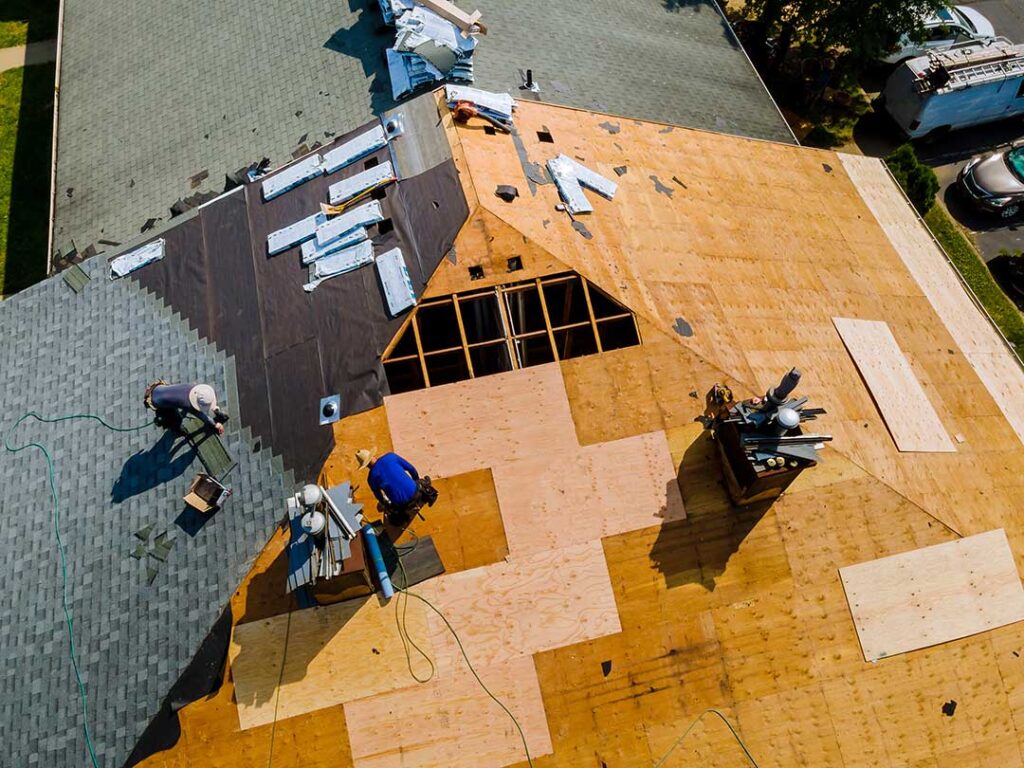
Roof replacement, extensive shingle repair, chimney flashing, valley reconstruction, roof-deck replacement, and repairs involving structural damage are usually poor choices for an untrained homeowner. These jobs involve more than placing new material over an old problem.
For example, a leak around a chimney may come from damaged flashing, deteriorated mortar, an improperly installed cricket, or water traveling beneath the roofing from a higher point. Replacing visible sealant may hide the symptom without correcting the source.
Work becomes especially unsuitable for do-it-yourself repair when it involves:
- A roof edge or steep slope
- Damaged rafters, trusses, or roof decking
- Active water entering living spaces
- Sagging ceilings or roof surfaces
- Fire, storm, or fallen-tree damage
- Multiple leak locations
- Ice dams that have caused concealed damage
- Areas around skylights, vents, or masonry
- Any need for fall-arrest equipment that the homeowner has not been trained to use
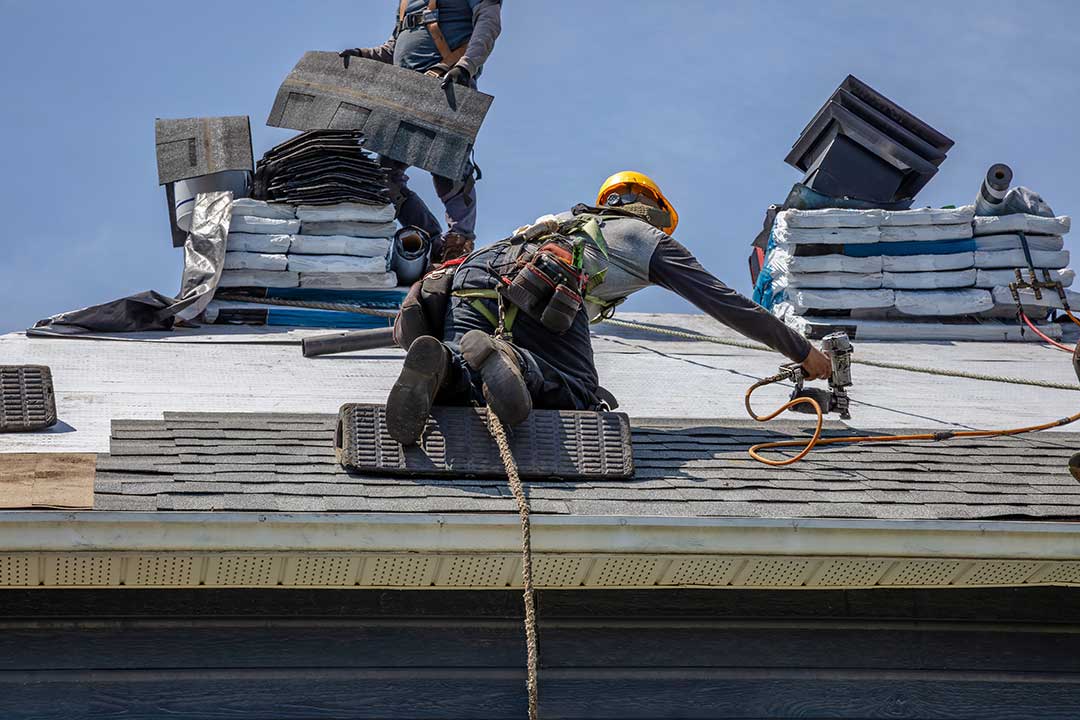
If the roof has been damaged by a storm, avoid climbing up to inspect it immediately. Loose shingles, broken branches, and unstable decking may shift under body weight.
Can a homeowner inspect the roof safely from the ground?
Yes. A ground-level inspection is often the safest first step and can reveal useful information without creating a fall hazard.
Look for:
- Missing, lifted, or curled shingles
- Dark areas that may indicate trapped moisture
- Sagging roof lines
- Damaged flashing around chimneys, vents, and wall intersections
- Granules collecting near downspouts
- Detached gutters or downspouts
- Water stains on soffits or exterior walls
- Branches resting on the roof
- Daylight visible through the attic roof deck
After heavy rain, check the attic from inside the home if it can be reached safely. Look for damp insulation, water stains, mold-like growth, or daylight. Do not step between attic joists unless a secure walking surface is present.
A roof leak may not appear directly above an interior stain. Water can travel along rafters, underlayment, or roof decking before entering the ceiling.
How do Greene’s seasons affect roof work?
Seasonal conditions matter as much as the repair itself. Snow, freezing temperatures, spring wind, summer heat, and autumn debris each create different hazards.
Winter work is particularly risky because snow and ice can hide roof edges and weak spots. Removing snow from a roof can also damage shingles, gutters, vents, and flashing if metal tools are used aggressively. Ice dams should not be chopped apart from the roof edge.
During summer, roofing surfaces can become much hotter than the surrounding air. Heat can lead to dehydration, poor judgment, burns, and fatigue. Early morning may offer more comfortable conditions, but dew can make shingles slippery.
After storms, wait until branches, utility lines, and loose materials have been assessed from the ground. Never approach a roof if a power line may be touching the structure.
What legal or insurance issues should be checked first?
Before beginning roof replacement, structural repair, or major exterior work, check current requirements with the appropriate local building office. Permit rules can vary according to the scope of work, the type of property, and whether structural components are involved.
Homeowners should also review insurance requirements before making temporary or permanent repairs. Photographs from the ground, notes about the date of damage, and records of emergency steps can be useful. Do not discard damaged materials before documentation is complete if an insurance claim may be involved.
Building rules and insurance policies are separate from personal safety. A project may be allowed without a permit and still be too hazardous for do-it-yourself work.
A practical decision rule
A simple rule is useful: if the job can be completed from the ground or from a stable ladder without stepping onto the roof, it may be suitable for a capable homeowner. If the work requires walking on a slope, reaching over an edge, handling damaged structural materials, or working in uncertain weather, the risk has changed substantially.
Roof work should stop immediately if footing becomes uncertain, wind increases, materials shift, or the condition of the roof is different from what was expected. The safest repair is often the one that avoids turning a minor maintenance issue into a fall, a larger leak, or concealed structural damage.
