
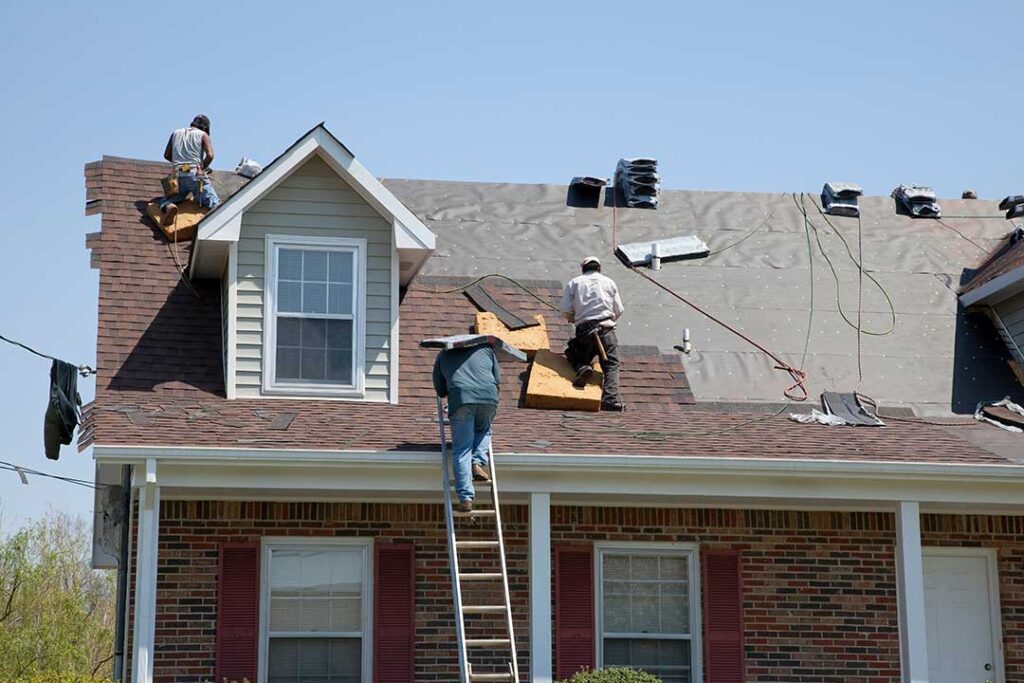
How do pests get into a roof?
Pests usually enter through small openings where roofing materials, siding, vents, chimneys, and trim meet. A gap that seems too narrow for an animal can still admit mice, bats, birds, insects, or young squirrels.
The roof itself is rarely the only route. Animals often reach the roofline by climbing trees, downspouts, masonry, utility lines, or exterior walls. Once they find a weakness, they may enlarge it through chewing, pushing, or repeated use.
Common entry points include:
- Loose or damaged soffits and fascia
- Gaps beneath roof edges
- Broken or missing vent screens
- Openings around plumbing, electrical, or exhaust penetrations
- Damaged flashing around chimneys, dormers, and roof-to-wall intersections
- Missing shingles or exposed roof decking
- Open ridge, gable, or box vents
- Gaps where siding meets the roof
- Uncapped or damaged chimney openings
Older homes may have several small openings caused by settlement, weathering, past repairs, or changes to ventilation systems. Even newer roofs can develop access points if screens loosen, trim separates, or high winds damage exterior components.
Which pests commonly enter through the roof?
Different pests leave different clues, but several types are common in roof and attic spaces.
Squirrels
Squirrels often enter through roof vents, fascia gaps, soffits, and areas where wood has deteriorated. They can chew through some plastic components and enlarge a small opening quickly. Scratching, thumping, and movement during daylight hours may point to squirrel activity.
Squirrels may also bring leaves, insulation, and other materials into an attic to create a nest. Their activity can damage wiring, insulation, ventilation components, and roof decking.
Mice and rats
Rodents can enter through surprisingly small openings. Gaps around vents, pipes, wires, eaves, and roof intersections are common routes. Mice may use openings less than an inch wide, especially when the surrounding material is soft or damaged.
Signs include droppings, a musky odor, shredded insulation, gnaw marks, and light movement in walls or ceilings. Rodents are often active at night, although noises can occur at any time.
Bats
Bats may use narrow gaps near roof peaks, flashing, siding transitions, attic vents, and chimney areas. A bat does not need a large hole; a loose section of trim or a small opening beneath flashing can be enough.
Bats can be difficult to identify because they may enter and leave quietly. Dark staining near a gap, droppings below an opening, or bats emerging around dusk can indicate an entry point.
A suspected bat opening should not be sealed while bats may still be inside. Seasonal restrictions and the presence of dependent young can make exclusion more complicated. Direct handling should also be avoided.
Birds
Birds commonly enter through uncapped chimneys, damaged vent covers, broken screens, and open gable or soffit vents. Nesting material, feathers, droppings, and repeated chirping are typical signs.
A nest near a vent can restrict airflow and create a fire or moisture concern, particularly if it is close to a flue or exhaust outlet. Bird nests should not be disturbed casually if eggs or young are present.
Wasps, bees, and other insects
Insects may enter through roof and wall cavities rather than the attic itself. Openings around flashing, vents, siding, and soffits can provide access to voids where nests are built.
Moisture-damaged wood can also attract carpenter ants and other insects. Insects may not create a visible hole from the outside, but their activity can worsen existing wood damage.
Why are roof pests more noticeable during certain seasons?
Seasonal weather affects both pest behavior and the condition of the roofline. In Greene, cold winters, snow, ice, wind, and repeated freeze-thaw cycles can loosen flashing, separate trim, and stress roofing materials. Spring thaw may reveal openings that were hidden by snow or ice.
Animals may seek attic shelter during cold weather, then become more active in spring when nesting begins. Summer heat can also drive pests toward shaded, protected roof cavities. During autumn, squirrels, mice, and other animals may look for enclosed spaces before colder conditions arrive.
Tree growth is another factor. Branches that touch or overhang a roof can provide a path for squirrels and other animals. Leaves and small branches can also collect around roof edges and vents, hiding damage or holding moisture against roofing materials.
What signs suggest a pest has entered the roof or attic?
Some signs are easy to recognize, while others are mistaken for ordinary roof problems.
Watch for:
- Scratching, chewing, fluttering, or repeated movement sounds
- Droppings or urine stains in the attic
- Disturbed or compressed insulation
- Torn screens or bent vent covers
- Chewed wood, plastic, or wiring
- Nesting materials near vents or roof edges
- Stains beneath a roof opening
- Unusual odors from the attic or upper floors
- Daylight visible through roof or wall gaps
- Animals entering or leaving near dusk or dawn
Water stains and pest damage can occur together. For example, a damaged vent may allow both rain and animals into the same roof cavity. Not every attic stain indicates a leak, and not every roof leak is caused by pests, so the location and pattern of the damage matter.
Can pests enter through a roof that appears to be in good condition?
Yes. A roof can look sound from the ground while still having vulnerable areas at the edges, penetrations, or vents. Many entry points are hidden beneath overlapping trim or occur where two materials meet.
Roof inspections should include more than the shingles. Important areas include:
- Soffit and fascia joints
- Ridge and gable vents
- Chimney flashing and caps
- Dormer corners
- Roof-to-wall transitions
- Plumbing and exhaust vents
- Skylight edges
- Areas beneath overhanging branches
- Attic-side evidence of daylight or damage
A small separation may be difficult to see without close inspection. After strong winds, heavy snow, or ice buildup, checking roofline components can help identify problems before animals establish a nest.
How can homeowners reduce pest entry?
Prevention starts with keeping the roof envelope intact. Damaged screens, loose trim, and gaps around penetrations should be repaired with materials suited to the type of pest. Metal mesh or flashing is generally more resistant to chewing than soft sealants alone.
Useful preventive steps include:
- Keep tree limbs from providing direct access to the roof.
- Replace broken or loose vent screens.
- Keep chimney caps and exterior covers in sound condition.
- Repair deteriorated fascia, soffits, and roof-edge trim.
- Check attic vents after storms and high winds.
- Seal gaps around pipes, wires, and other penetrations.
- Remove leaves and debris that conceal roof damage.
- Store birdseed, pet food, and animal feed in tightly closed containers.
- Keep attic ventilation clear rather than blocking vents with insulation.
Sealing an opening before confirming that animals are out can trap wildlife inside. This is especially concerning with bats, nesting birds, squirrels with young, or larger animals that may become aggressive when confined.
When is a roof pest problem a safety concern?
Professional assistance may be necessary when the problem involves bats, raccoons, bees, suspected electrical damage, contaminated insulation, steep roof access, or an animal that may be trapped inside. Wildlife removal and exclusion can also be subject to seasonal or environmental rules.
Residents should avoid entering a contaminated attic without suitable protection and should not handle bats, dead animals, nests, or droppings with bare hands. If wiring has been chewed, the area should be treated as a potential fire hazard until it is evaluated safely.
The most effective long-term solution is usually a sequence: identify the animal, determine how it entered, allow or arrange safe removal, clean affected areas, and then repair every access point. Closing only the most visible hole may leave another opening available nearby.
