

Roof discoloration can be easy to dismiss, especially after a wet spring or a stretch of humid weather. In Greene, NY, dark patches, green growth, and streaking may appear on roofing materials because moisture remains trapped by shade, leaves, snow, or poor air movement. Learning to distinguish mold and mildew from algae, moss, dirt, and ordinary weathering can help residents decide what needs attention and what does not.
What does mold or mildew on a roof look like?
Mold and mildew usually appear as irregular patches, speckles, or fuzzy-looking growth on surfaces that stay damp. On a roof, the color may range from white and gray to green, brown, or black.
Common signs include:
- Dark spots that seem to spread over time
- Greenish or gray areas in shaded sections
- A musty odor near the attic or upper floors
- Streaks or blotches beneath roof edges, vents, or areas where water drains slowly
- Growth concentrated around piles of leaves, branches, or other organic debris
- Discoloration that remains after a dry period
Mold is a type of fungus that often grows where moisture and organic material are present. Mildew is also fungal growth, but it is generally flatter and more powdery or surface-level. In everyday roof inspections, the terms are sometimes used interchangeably because visual identification alone is not always conclusive.
A dark roof streak is not automatically mold. It may be algae, which commonly creates black or blue-green discoloration without the fuzzy texture associated with some forms of mold.
How can mold be distinguished from algae, moss, and dirt?
The location, texture, and pattern of the growth provide useful clues, but they do not always provide a definite diagnosis.
Algae often creates flat black, blue-green, or brown streaks. It may follow the direction of water runoff and spread gradually across shingle surfaces.
Moss usually looks thicker and more three-dimensional. It can form soft green clumps along shingle edges, in valleys, or near roof areas shaded by trees. Moss may lift the edges of shingles as it grows underneath them.
Mold or mildew may look patchy, dusty, powdery, or fuzzy. It is more likely to be associated with damp wood, trapped debris, or a moisture problem inside the roof system.
Dirt and soot generally appear as thin surface deposits. They may collect along roof edges, below chimneys or vents, or in areas exposed to airborne particles. Dirt often washes away or changes noticeably after rainfall.
Do not scrape or disturb suspicious growth aggressively. Brushing can loosen roofing granules, spread spores, or damage older shingles. A visual inspection from ground level is safer than walking on a roof without appropriate equipment and training.
Where does roof mold commonly develop?
Mold and mildew are most likely where moisture dries slowly. On residential roofs, that often includes:
- North-facing or heavily shaded roof slopes
- Areas beneath overhanging branches
- Valleys where leaves and needles collect
- Roof sections near poorly vented attics
- Spots below plumbing vents, roof penetrations, or damaged flashing
- Areas where gutters overflow or remain clogged
- Sections with low pitch where water drains slowly
- Places where snow stays longer than on surrounding roof surfaces
Greene’s seasonal pattern can create repeated wetting and drying cycles. Rain, humid summer air, fallen leaves, and winter snow can all contribute to extended dampness. Roofs surrounded by mature trees may need closer observation because organic debris holds moisture against shingles.
Can roof mold cause damage?
Surface growth does not always mean the roof is failing, but persistent moisture can contribute to damage over time. Moss is especially concerning when it grows beneath shingle edges because it can lift, curl, or separate them. Mold associated with wet sheathing, attic insulation, or framing may indicate a leak or inadequate ventilation.
Possible effects include:
- Faster deterioration of asphalt shingles
- Loss of protective roof granules
- Lifted or curled shingle edges
- Rotting roof decking or wood framing
- Damp insulation and reduced energy performance
- Musty odors inside the attic
- Increased risk of indoor mold if water enters the living space
A small amount of surface discoloration may be mostly cosmetic. However, growth that returns quickly after cleaning, appears near a ceiling stain, or is accompanied by soft wood or damp insulation deserves closer investigation.
Does roof mold always mean there is a leak?
No. Mold can grow from exterior moisture alone, particularly where shade, debris, and poor drying conditions are present. However, mold inside an attic or around roof penetrations is more likely to be connected to a moisture source.
Signs that may point to a leak or ventilation problem include:
- Water stains on attic wood or ceilings
- Damp insulation
- Condensation on nails or roof decking
- Peeling paint near upper-floor ceilings
- Mold concentrated around vents, chimneys, skylights, or roof seams
- A musty smell that is stronger after rain
- Frost or heavy condensation in the attic during cold weather
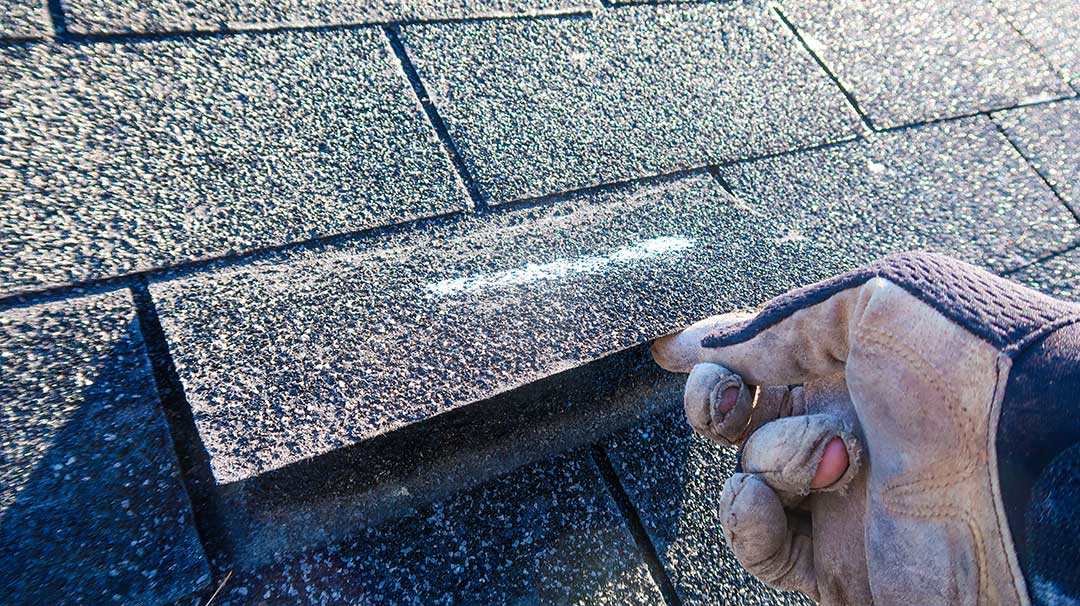
Moisture can also enter an attic through warm indoor air that rises through gaps around light fixtures, wiring, ducts, or attic access panels. If roof growth is accompanied by interior moisture, the source should be identified rather than treating only the visible stain.
Is it safe to clean mold or mildew from a roof?
Roof cleaning can be hazardous because shingles become slippery, and improper pressure or chemicals can cause damage. Walking on roofing materials may also dislodge granules or crack brittle shingles.
Avoid:
- Power washing asphalt shingles
- Scrubbing aggressively with stiff brushes
- Mixing household chemicals
- Applying cleaning solutions near plants, pets, or storm drains without understanding runoff risks
- Climbing onto a wet, icy, steep, or visibly damaged roof
- Removing moss by pulling it upward against the direction of the shingles
Ground-level observations, binoculars, and photographs taken from a safe position are usually enough for an initial assessment. If the roof is steep, damaged, difficult to access, or shows signs of structural weakness, inspection from the ground is the safer choice.
How can roof mold and mildew be prevented?
Prevention focuses on reducing moisture and improving airflow. It does not require keeping every roof completely free of natural discoloration, but it can limit conditions that allow growth to persist.
Helpful measures include:
- Keep gutters and downspouts clear so water moves away from the roof and foundation.
- Trim branches that shade the roof or drop leaves onto shingles.
- Remove accumulated leaves and small organic debris using methods that do not damage roofing materials.
- Check that attic ventilation openings are not blocked by insulation or debris.
- Watch for loose flashing, damaged shingles, and areas where water pools.
- Keep roof valleys and drainage paths clear.
- Inspect after major wind, snow, or ice events.
- Look for recurring stains rather than judging the roof from a single photograph.
Do not cover a recurring mold-like stain with paint or sealant. That may hide the visible symptom while allowing moisture damage to continue underneath.
When does roof growth need prompt attention?
Prompt attention is warranted when mold-like growth is spreading quickly, returning after cleaning, or appearing with evidence of moisture inside the building. The same is true for moss that is lifting shingles or growth located around damaged flashing and roof penetrations.
Residents should also take extra care with older roofs, roofs that have experienced storm damage, and homes where anyone has respiratory sensitivity. Mold in an attic or living area is a separate indoor air-quality concern from ordinary algae staining on exterior shingles.
The most useful first step is careful observation: identify the color, texture, location, and pattern of the growth, then look for nearby moisture sources. A roof that stays dry, drains properly, and has adequate attic airflow is less likely to develop persistent mold or mildew problems.
