
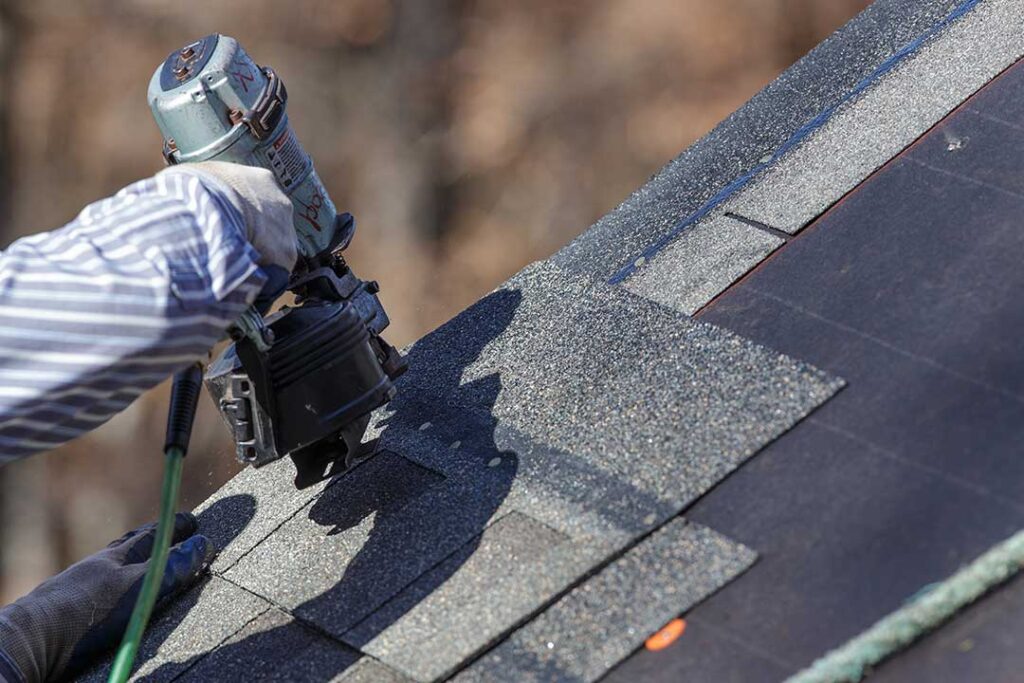
What Counts as Roof Debris?
Roof debris includes leaves, pine needles, twigs, branches, seed pods, moss, loose shingle pieces, and material carried onto the roof by wind. In Greene, NY, seasonal leaf fall, winter storms, and spring branches can place debris on roofs for weeks if it is not noticed from the ground.
Small amounts of dry leaves are usually not an immediate emergency, but debris becomes more concerning when it:
- Blocks gutters, downspouts, valleys, or roof drains
- Holds moisture against shingles
- Covers damaged roofing materials
- Collects around chimneys, vents, skylights, or flashing
- Forms a heavy pile after a storm
- Contains broken branches or sharp objects
Roof debris should be removed carefully because the removal process can damage shingles or create a fall hazard.
Is It Safe to Remove Debris Yourself?
Removing light debris from a single-story roof may be reasonable for a person who is comfortable using a ladder safely and can work from the ground or a stable lower-level surface. Walking on a roof is riskier than many homeowners expect, especially when shingles are damp, frosty, brittle, steep, or covered with moss.
Do not climb onto the roof if:
- The roof is wet, icy, snow-covered, or visibly unstable
- The slope is too steep for secure footing
- Wind is present or a storm is approaching
- You cannot maintain three points of contact on the ladder
- The roof has extensive damage, sagging, exposed decking, or loose materials
- You are carrying heavy branches or tools
- Power lines are near the work area
A fall from even a low roof can cause serious injury. If debris is large, the roof is difficult to access, or damage is visible, specialized assistance is safer than attempting the work alone.
How Can Light Debris Be Removed From the Ground?
The safest approach for minor debris is often to avoid stepping onto the roof. A roof rake designed for light debris, a soft-bristled extension tool, or a leaf blower used from a secure location may work for accessible areas.
Use these precautions:
- Stand on level ground and keep both feet planted.
- Keep the tool away from overhead electrical lines.
- Pull debris downward rather than pushing it higher across the shingles.
- Use light pressure to avoid scraping the protective granules from asphalt shingles.
- Do not use metal rakes, garden hoes, sharp poles, or pressure washers.
- Watch for falling branches, stones, nails, and hidden objects.
- Keep children, pets, and other people away from the drop zone.
A leaf blower can scatter debris into gutters, neighboring areas, or the air around the house. It may also disturb loose roofing granules. Use the lowest effective setting and avoid blowing directly under shingles, flashing, or roof vents.
What Is the Safest Way to Use a Ladder?
A ladder should be placed on firm, level ground and inspected before use. The base should not rest on ice, loose soil, wet leaves, or uneven landscaping. The ladder should extend above the roof edge enough to provide a secure handhold when stepping onto or away from the roof, but climbing onto a roof should be avoided unless the conditions and equipment are appropriate.
Never:
- Stand on the top step of a stepladder
- Lean sideways to reach debris
- Move a ladder while standing on it
- Set a ladder against gutters that are loose or damaged
- Use a ladder during strong wind or rain
- Carry long branches while climbing
A tool belt or bucket secured to a rope is safer than carrying tools in both hands. However, heavy debris should not be lifted from a ladder because it can shift balance suddenly.
How Should Debris Be Removed From Shingles?
Roofing materials are designed to shed water, not to withstand scraping, dragging, or repeated foot traffic. Lift or brush debris gently whenever possible. Do not yank branches that are caught beneath shingles, flashing, ridge caps, or vents. Pulling can enlarge a tear or loosen a fastener.
For asphalt shingles, avoid:
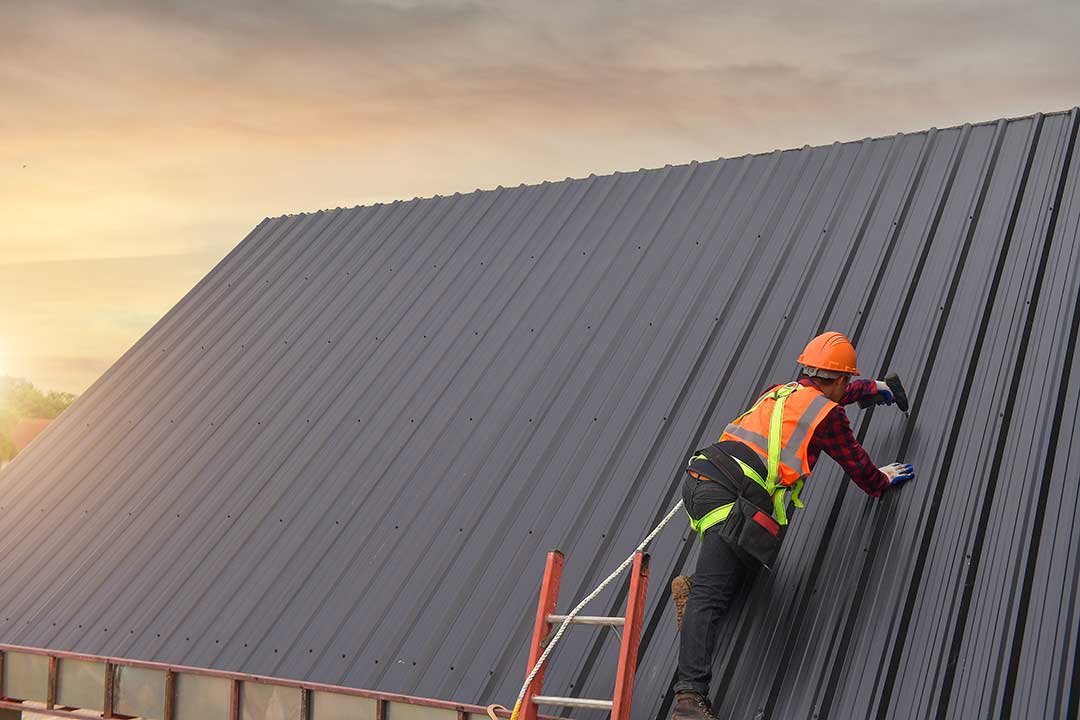
- Shovels and metal rakes
- Aggressive brushing
- Pressure washing
- Solvents or household cleaners
- Walking repeatedly over the same area
- Dragging wet branches across the surface
Wet leaves are heavier than dry leaves and can leave stains or compact into a dense layer. Remove them in small amounts instead of pulling a large pile toward the roof edge. If a branch is lodged in the roof, leave it in place until it can be removed without worsening the damage.
Clay, slate, wood, and other roofing materials have different maintenance requirements. Some can crack or break under concentrated weight, so the roof covering should be identified before anyone walks on it.
What Should Be Done With Gutters and Roof Valleys?
Gutters and roof valleys deserve special attention because they collect water and debris from large portions of the roof. A blockage can cause water to spill over the edge, soak exterior walls, or collect near the foundation.
After removing visible debris, check whether water can move through the gutter and downspout. Do not place hands into a downspout opening without protection, since it may contain sharp metal, screws, or decomposing material. A garden hose can help test flow from the ground or from a stable ladder position.
Debris around a roof valley can conceal damaged shingles. It may also keep the area damp long enough for algae, moss, or decay to develop. Valleys, flashing, and areas around chimneys or vents should be inspected without prying up roofing materials.
How Does Winter Weather Affect Roof Debris in Greene, NY?
Cold-weather conditions make roof work more hazardous. Snow can hide branches, ice can make ladders unstable, and freeze-thaw cycles can loosen roofing materials. A layer of wet leaves may freeze into a heavy mass, adding weight in a concentrated area.
Do not chip frozen debris from shingles with a shovel or other hard tool. Chipping can remove granules, split brittle materials, or damage flashing. After a windstorm, inspect the roof from the ground first. Look for missing shingles, displaced vents, hanging branches, sagging areas, or debris trapped near the roof edge.
If a tree limb has struck the roof, temporary protection may be needed to limit water entry, but climbing onto the roof to place a covering can be dangerous. Interior signs such as ceiling stains, damp insulation, dripping around light fixtures, or musty odors indicate that water may already be entering the structure.
How Often Should Roof Debris Be Checked?
A practical schedule is to inspect from the ground several times each year and after strong wind, heavy rain, ice, or nearby tree damage. Properties with mature trees may need more frequent checks during autumn and after storms.
Look from several angles and use binoculars if available. Check:
- Roof valleys and low-slope sections
- Gutters and downspout outlets
- Areas beneath overhanging trees
- Around chimneys, vents, and skylights
- Roof edges where branches may collect
- Shingles visible from windows or upper floors
A roof does not need to look perfectly clean to function properly. The main concerns are trapped moisture, blocked drainage, excessive weight, concealed damage, and unsafe conditions.
When Should Roof Debris Be Left Alone?
Leave debris in place when removing it could expose a person to a fall or cause additional roof damage. This includes large limbs, debris near power lines, material on a steep or icy roof, and objects covering visibly damaged areas.
Safety takes priority over appearance. If water is entering the home, contain it indoors with a bucket or other suitable container and move valuables away from the area if it is safe to do so. Avoid touching wet electrical fixtures or wiring. Roof damage involving structural movement, exposed decking, or a large fallen limb requires prompt attention because conditions can worsen during the next period of rain, wind, or freezing weather.
