
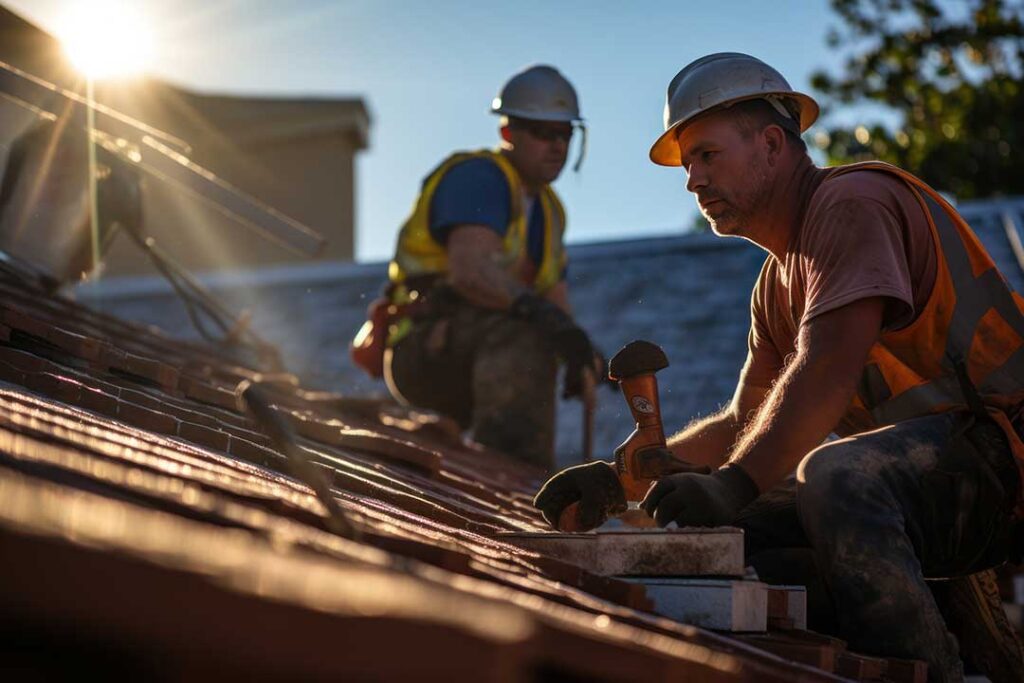
Humidity affects a roof in two different ways: moisture can come from the outdoor air, or it can move upward from inside the home. In Greene, NY, seasonal changes between humid summers, rainy periods, freezing winters, and spring thaws can repeatedly expose roofing materials to wetting and drying cycles.
The most serious problems usually occur when moisture becomes trapped in the roof assembly. Shingles, metal panels, underlayment, roof decking, insulation, fasteners, and structural framing each respond differently to prolonged dampness.
How does humidity damage roofing materials?
High humidity does not usually destroy a roof in a single event. Instead, it increases the chance of condensation, slow drying, corrosion, biological growth, and material movement over time.
Roofing materials are affected in several ways:
- Asphalt shingles may age faster when persistent moisture prevents the roof surface and underlying materials from drying.
- Wood roof decking can swell, soften, delaminate, or develop decay when repeatedly exposed to damp conditions.
- Metal fasteners and flashing can corrode, especially where moisture remains trapped or where dissimilar metals meet.
- Insulation can lose effectiveness when it becomes damp.
- Wood framing may develop staining, mold-like growth, or rot if high humidity continues for long periods.
- Sealants and certain roofing membranes may deteriorate more quickly when exposed to constant moisture and temperature changes.
A roof can appear intact from the ground while moisture is affecting the underside of the deck or the attic framing.
Why is condensation a roofing problem?
Condensation occurs when warm, moisture-filled air reaches a surface cold enough for water vapor to turn into liquid water. During cold weather, the underside of roof decking, exposed nails, and other roof components can become cold enough for this to happen.
Interior moisture commonly comes from:
- Showers and bathing
- Cooking and dishwashing
- Drying clothes indoors
- Unvented combustion appliances
- Basement or crawl-space moisture
- Air leaks around light fixtures, attic hatches, wiring, and plumbing openings
If that air escapes into a cold attic, droplets may form on the roof deck or fasteners. During a freeze, the moisture may remain as frost. When temperatures rise, the frost melts and can be mistaken for a roof leak.
This distinction matters. A leak usually allows water to enter from outside through damaged shingles, flashing, or penetrations. Condensation results from moisture moving through the building from inside. Both problems can occur at the same time, and surface stains alone do not always identify the source.
Does roof ventilation control humidity?
Proper roof ventilation helps remove moisture from an attic, but ventilation cannot correct every moisture problem. A balanced system generally uses lower intake openings and higher exhaust openings so air can move through the attic space.
Ventilation is most effective when:
- Intake openings are not blocked by insulation.
- Exhaust vents have a clear path to the outside.
- Bathroom and kitchen exhaust fans discharge outdoors rather than into the attic.
- Air leaks between the living space and attic are sealed.
- Insulation is installed without crushing or covering intended ventilation channels.
- Snow, debris, paint, or nesting material does not obstruct vents.
More ventilation is not automatically better. Poorly planned openings can allow wind-driven rain or snow to enter, and powered attic fans can create pressure differences that pull warm, moist indoor air through ceiling leaks. The goal is controlled airflow, not simply adding more vents.
New York’s residential building requirements include provisions for roof and attic ventilation. Existing homes may have older construction details that do not perform as well as current practices, especially where insulation has been added without improving air sealing.
How does summer humidity affect a roof?
Warm, humid weather can create problems even when there is no visible rain. Moist outdoor air may enter an attic through openings, while hot roof surfaces raise attic temperatures. This combination can increase the movement of moisture through wood, insulation, and joints.
Summer humidity can also make roof materials expand and contract more noticeably. Asphalt-based materials soften in high heat and become more brittle during cold weather. Repeated seasonal movement can stress seams, flashing, fasteners, and areas around chimneys, vents, skylights, and other roof penetrations.
Shaded roof sections may dry more slowly after rain. Areas beneath overhanging trees can also collect leaves and organic debris, holding moisture against roofing materials and blocking drainage paths.
What happens during winter in Greene?
Winter roof moisture problems are often connected to warm indoor air, not outdoor humidity alone. Heating the home increases the difference between indoor and outdoor temperatures. If warm air reaches the attic through gaps in the ceiling plane, it can condense on cold roof components.
Signs of winter moisture may include:
- Frost on the underside of roof decking
- Rusty nails or metal fasteners
- Darkened wood around roof penetrations
- Damp insulation
- Icicles combined with uneven roof temperatures
- Peeling paint or staining near upper ceilings
- Musty odors in the attic
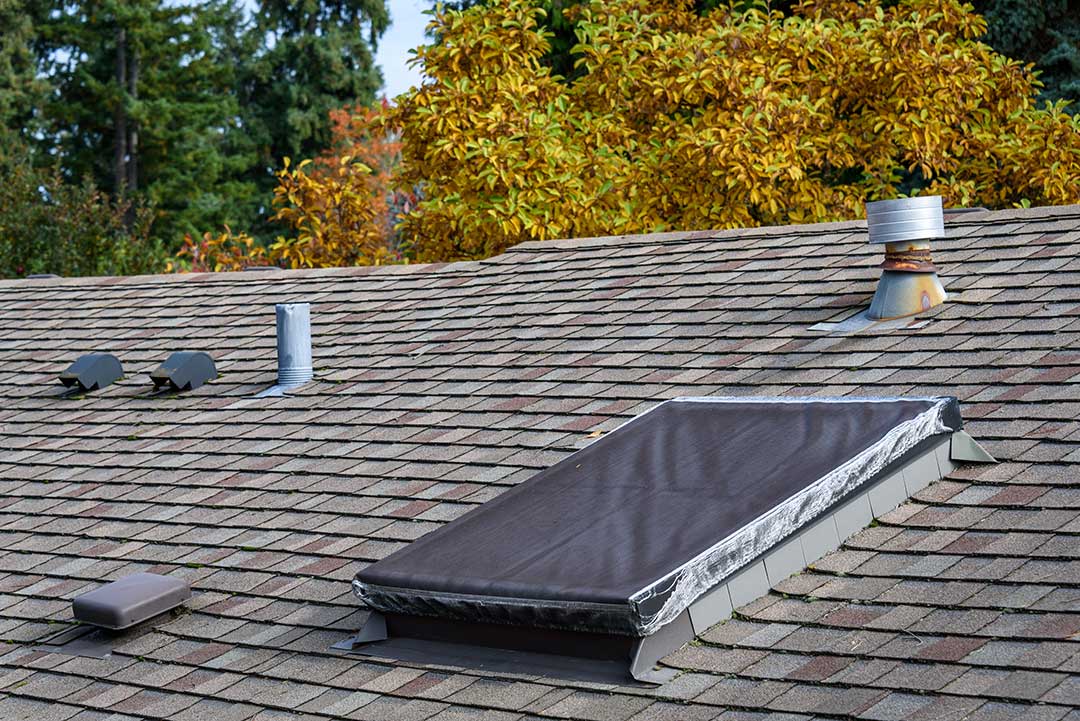
Ice buildup at the eaves can also redirect melting snow beneath roofing materials. While ice dams are influenced by snow, roof temperature, insulation, and air leakage, excess attic moisture can contribute to frost and uneven melting.
Which roofing materials are most sensitive to moisture?
No roofing material is completely unaffected by humidity, but the type of risk varies.
Asphalt shingles: Moisture beneath or between shingle layers can contribute to deterioration of the underlying deck. Shingles also depend on proper installation and drying conditions around fasteners and flashing.
Wood shingles and shakes: Wood naturally absorbs and releases moisture. Adequate spacing, airflow, and drainage are especially important because trapped dampness can promote splitting, curling, moss, and decay.
Metal roofing: Metal itself may resist water well, but fasteners, seams, coatings, and the supporting structure can still corrode or deteriorate. Condensation beneath metal panels is a particular concern when the roof assembly lacks appropriate moisture control.
Rubber and membrane materials: Low-slope roof membranes may be durable, but trapped moisture beneath a membrane can damage decking and insulation. Blisters, bubbles, or soft areas may indicate a problem below the surface.
Roof decking and framing: These components are often more vulnerable than the visible roof covering. Persistent dampness can cause swelling, loss of strength, fungal decay, or fastener withdrawal.
How can homeowners spot humidity-related roof trouble?
A periodic attic check can reveal problems before they become visible indoors. Look for damp insulation, water droplets, rusty nails, staining, mold-like discoloration, or roof decking that feels soft or appears warped.
After heavy rain, inspect ceilings and upper walls for new stains. After a cold spell, check whether frost is forming on the underside of the roof. A moisture meter may help identify unusually damp wood, although readings can vary with temperature and material type.
Also check that bath fans and dryer vents do not discharge into the attic. A dryer vent in an attic can introduce substantial heat and moisture, while lint creates an additional fire hazard.
What reduces humidity-related roof damage?
The most effective approach is to control moisture at its source and provide the roof assembly with a reliable way to dry.
Useful measures include:
- Running bathroom exhaust fans during showers and for a period afterward.
- Using kitchen ventilation while boiling water or cooking.
- Keeping basement and crawl-space moisture under control.
- Sealing air leaks around attic openings and penetrations.
- Maintaining clear soffit, ridge, gable, or other designed ventilation paths.
- Keeping gutters and drainage paths free of leaves and sediment.
- Trimming branches that shade the roof or drop debris onto it.
- Replacing damaged flashing and correcting areas where water pools.
- Avoiding storage that blocks attic airflow.
- Checking roof surfaces and attic spaces after major storms, deep freezes, and spring thaws.
Safety deserves priority around steep roofs, icy surfaces, unstable decking, and suspected structural damage. An attic inspection should also be postponed if there are exposed electrical components, significant water intrusion, or signs that the roof deck is unsafe.
A durable roof depends not only on the outer covering but also on the way heat, air, and moisture move through the entire roof assembly. Controlling indoor humidity, stopping unwanted air movement, maintaining drainage, and allowing materials to dry are all part of protecting a home through the wet, humid, and freezing conditions common in the region.
