

What actually helps a roof last longer?
A roof generally lasts longer when water is moved away efficiently, attic moisture is controlled, small defects are repaired early, and the roofing materials are not exposed to avoidable stress. In Greene, NY, seasonal snow, freeze-thaw cycles, wind, ice, and heavy rain make routine maintenance especially valuable.
Roof life depends on several connected parts of the building—not just the visible shingles. Flashing, gutters, attic insulation, ventilation, roof decking, chimney areas, and penetrations for plumbing or mechanical equipment all affect how well the system performs.
A practical maintenance plan should include:
- Visual checks from the ground several times a year
- Gutter and downspout maintenance
- Attic inspections for moisture and poor airflow
- Careful attention after major storms
- Prompt repair of small leaks, lifted shingles, and damaged flashing
- Safe removal of snow or ice only when necessary
How often should a roof be inspected?
Most homes benefit from a basic inspection in spring and fall, along with an additional check after strong winds, heavy snow, ice, or falling branches. A ground-level inspection can identify many problems without requiring anyone to climb onto the roof.
Look for:
- Shingles that are missing, cracked, curled, blistered, or unusually dark
- Exposed or rusting metal around chimneys, vents, and roof edges
- Sagging areas along the roofline
- Granules collecting heavily in gutters or at downspout outlets
- Water stains on ceilings, walls, or attic framing
- Moss or algae covering large areas
- Daylight visible through the roof deck from inside the attic
A roof does not need to look badly damaged to have a problem. A small opening around flashing can allow repeated moisture entry, gradually weakening sheathing and framing. Early repairs are usually less disruptive than waiting for interior damage to become visible.
Why are gutters so important to roof life?
Gutters protect the roof edge, fascia, siding, foundation, and nearby soil by directing water away from the house. Blocked or sagging gutters can cause water to back up under the roofing materials or spill repeatedly against the roof edge.
Clean gutters at least twice a year and check them after leaves, pine needles, or storm debris accumulate. In wooded areas, more frequent attention may be needed. Downspouts should discharge water far enough away from the foundation to prevent repeated pooling beside the building.
Check for:
- Loose or separated gutter sections
- Leaks at seams and end caps
- Downspouts that empty directly beside the foundation
- Water marks below the roof edge
- Sections that hold standing water
- Ice buildup that blocks drainage during winter
Do not rest ladders against gutters. The weight can bend them or pull them away from the fascia. If roof access requires a steep climb, unstable surface, or work near electrical lines, the task presents a genuine safety risk.
How can attic ventilation and insulation prevent roof damage?
A balanced attic system helps keep roof temperatures more uniform and reduces moisture buildup. Air should be able to enter near the lower roof edges and leave through properly designed upper ventilation, while insulation limits heat loss from the living space below.
Poor attic conditions can contribute to:
- Winter condensation on nails and roof sheathing
- Damp insulation
- Mold growth
- Premature deterioration of wood
- Uneven snow melting
- Ice dams along roof edges
Warm air leaking into a cold attic can melt snow on the upper roof. The water may then refreeze at colder eaves, forming an ice dam. Meltwater can back up beneath shingles and enter the roof assembly.
Homeowners can look for blocked soffit vents, compressed insulation, wet areas, or dark staining on roof sheathing. Air-sealing work should not be used to conceal an active roof leak. The source of water entry should be corrected first, and combustion appliances in or near the attic require careful attention before changing ventilation or air-sealing conditions.
What should homeowners do after a snow or windstorm?
After severe weather, inspect the roof from the ground and check the attic when it is safe. Wind may lift shingles without removing them entirely, leaving loose edges that can admit water during the next storm.
Heavy snow deserves special caution. Snow can accumulate unevenly around valleys, roof transitions, dormers, and areas below higher roof sections. Ice and snow loads may also be greater on older buildings or structures that have been modified over time.
Signs that require prompt attention include:
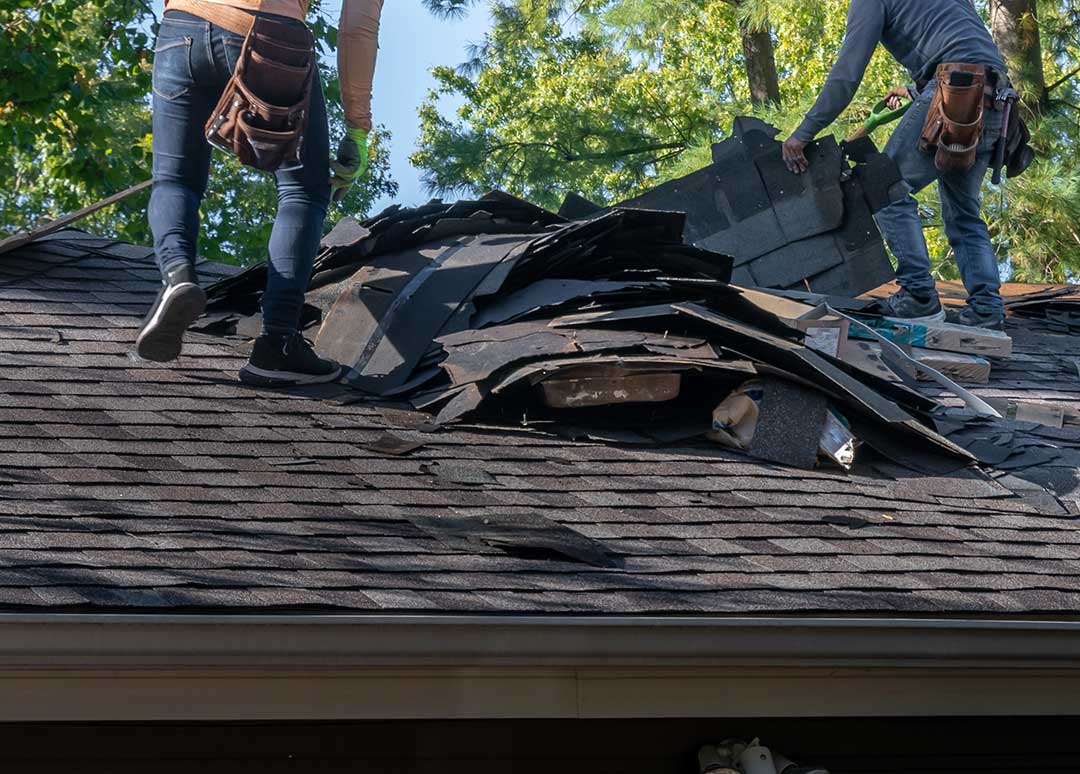
- A visibly sagging roofline
- Cracking sounds or shifting interior walls
- Doors that suddenly stick
- New ceiling stains
- Large ice formations hanging over walkways
- Roof materials scattered around the property
Snow should not be shoveled from a roof casually. Metal tools can damage shingles, and walking on an icy roof can lead to a serious fall. If snow removal is necessary because of structural concerns or dangerous buildup, the work may require specialized equipment and safety procedures.
Which roof problems should not be ignored?
Some warning signs are easy to dismiss because they appear minor. A single missing shingle, small ceiling stain, or loose piece of flashing can become a larger moisture problem if repeated rain and freeze-thaw cycles reach the roof deck.
Address these conditions promptly:
- Leaks around chimneys, skylights, and plumbing vents
- Torn or loose flashing
- Shingles with exposed fasteners
- Damaged ridge caps
- Open seams around roof penetrations
- Rusted metal valleys or drip edges
- Wet insulation or persistent attic odors
Interior staining may remain visible after a leak has stopped, but it can also indicate an intermittent problem that appears only during wind-driven rain or melting snow. The location of a ceiling stain is not always directly below the entry point because water can travel along rafters and roof sheathing.
Can moss or algae shorten roof life?
Small amounts of surface growth are not always an emergency, but thick moss can hold moisture against roofing materials and may lift shingle edges. Growth is more common on shaded roof sections, beneath trees, and in areas that dry slowly.
Avoid scraping the roof aggressively or using pressure-washing equipment. Both can remove protective granules and damage the surface. Overhanging branches should be trimmed where they rub against the roof or block sunlight, but tree work also involves fall and equipment hazards.
Leaves, twigs, and organic debris should be removed carefully from valleys and roof-to-wall areas. These locations can retain moisture and hide damaged flashing.
How can a homeowner plan routine roof care?
A simple record can make maintenance easier. Note the roof’s approximate age, material type, previous repairs, areas that collect debris, and any recurring leaks. Photographing flashing, valleys, gutters, and attic conditions during dry weather creates a useful comparison after storms.
A sensible seasonal routine is:
- Spring: Check for winter damage, clogged gutters, ice-related problems, and attic moisture.
- Summer: Look for curling shingles, deteriorated sealant, tree contact, and signs of heat-related wear.
- Fall: Clear gutters, remove roof debris, and confirm that downspouts drain away from the house.
- Winter: Watch for unusual ice buildup, interior leaks, and signs of excessive snow loading.
The safest approach is to keep routine observations at ground level and reserve roof access for situations where proper fall protection and experience are available. A roof that is kept dry, well-drained, adequately ventilated, and promptly repaired has a much better chance of reaching its expected service life.
