
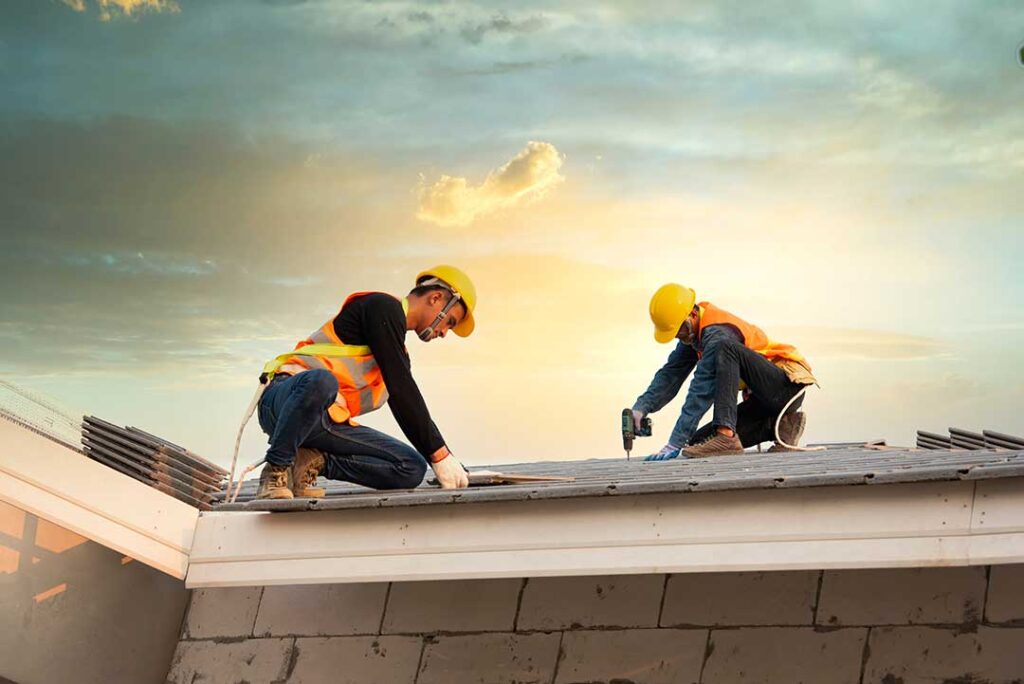
Roof stains are common on homes in Greene, NY, especially after periods of rain, snow, shade, and repeated freeze-thaw weather. Dark streaks, green patches, reddish marks, or brown ceiling spots can have very different causes, so the first step is identifying whether the stain is on the roof surface or inside the home.
What causes dark streaks on roof shingles?
Dark streaks on asphalt shingles are often caused by airborne algae rather than dirt or mold. The discoloration may appear as narrow black, gray, or blue-green lines that run downward with the slope of the roof.
Algae tends to remain damp longer on roof areas that receive limited sunlight. North-facing slopes, sections beneath tree cover, and roof planes near taller structures are more likely to show streaking. Greene’s humid periods, precipitation, and winter moisture can create conditions where this discoloration becomes noticeable.
Algae stains are usually a cosmetic concern at first. They do not automatically mean the roof is leaking or failing. However, heavy organic growth can hold moisture against the shingles and make it harder to notice other problems, such as missing granules, cracked sealant, or damaged flashing.
Is green growth on a roof algae, moss, or lichen?
The appearance and texture of the growth provide useful clues.
- Algae usually creates flat, dark streaks or broad discoloration.
- Moss appears as a raised, soft, green layer and may grow in clumps.
- Lichen often looks crusty, pale green, gray, or yellow and may attach firmly to the shingle surface.
- Mold or mildew is more commonly associated with damp interior materials, although organic growth can also occur outdoors.
Moss deserves more attention than flat algae staining because it can lift or separate shingle edges as it grows. Its roots and structure can hold water against the roof surface, increasing the risk of premature wear. Lichen can also attach tightly enough that aggressive removal may pull away protective granules.
A roof with green growth is not necessarily unsafe, but walking on it can be hazardous. Wet shingles, moss, and algae can be slippery even when the roof appears dry.
What do brown stains on a ceiling mean?
Brown, yellow, or tan marks on a ceiling usually suggest moisture intrusion, although older stains may remain after a leak has stopped. The location of the stain does not always identify the exact entry point because water can travel along roof decking, rafters, insulation, or ceiling materials before becoming visible.
Possible causes include:
- Damaged or missing shingles
- Failed flashing around chimneys, vents, or roof edges
- Blocked or poorly directed drainage
- Ice buildup and winter water backup
- Condensation in an attic
- Plumbing leaks near the ceiling
- Inadequate attic ventilation or insulation
A ceiling stain that grows after rain, snowmelt, or a thaw deserves prompt investigation. Bubbling paint, soft drywall, damp insulation, peeling surfaces, or a musty odor may indicate that moisture is still present.
Do not assume that a roof stain is only a cleaning issue when it appears indoors. Removing the visible mark without correcting the moisture source can allow hidden damage or mold growth to continue.
How should roof stains be cleaned?
Cleaning depends on the roofing material, the type of growth, and the condition of the shingles. For asphalt shingles, avoid pressure washing, stiff wire brushes, scraping, and walking directly on the stained area. These methods can remove protective granules, damage the shingle surface, and shorten the roof’s service life.
A safer general approach is to:
1. Identify the stain from the ground or from a safely accessible location.
2. Check the roof manufacturer’s maintenance instructions if they are available.
3. Use only a cleaning method approved for the specific roofing material.
4. Apply solutions gently rather than blasting the surface.
5. Protect siding, plants, soil, gutters, and metal fixtures from runoff.
6. Allow loosened organic material to wash away naturally rather than scraping it off.
Household bleach should not be treated as a universal roof-cleaning solution. Strong chemicals can damage landscaping, corrode metal, discolor exterior materials, and create hazardous fumes if mixed with other cleaners. Bleach should never be combined with ammonia, acids, or unknown products.
Some roof stains lighten gradually after treatment rather than disappearing immediately. Trying to force a faster result can cause more damage than the stain itself.
Can a pressure washer remove roof stains?
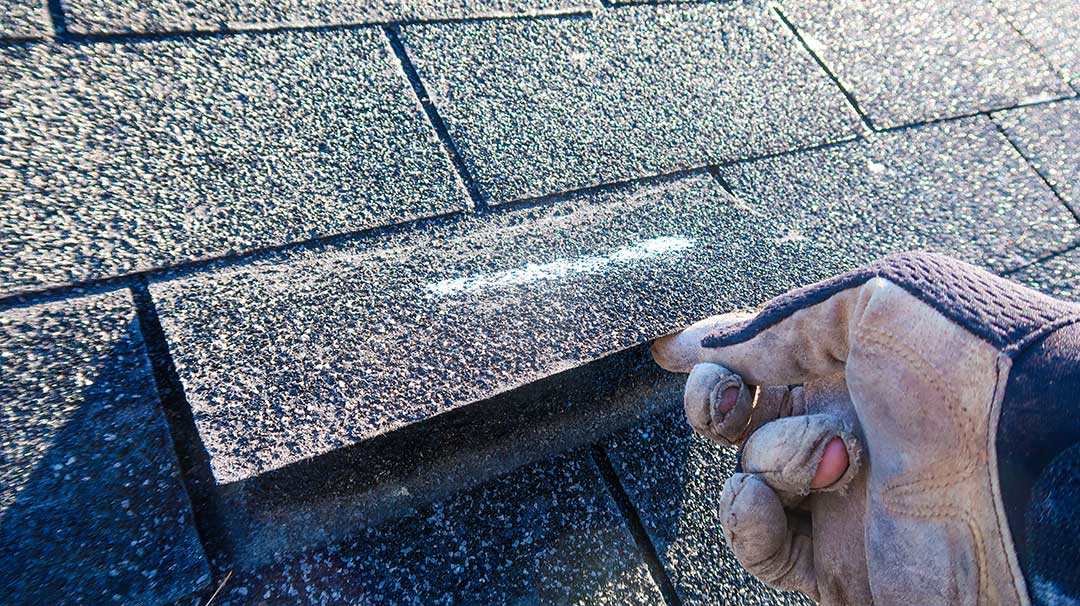
A pressure washer can remove surface discoloration quickly, but that does not make it appropriate for most asphalt-shingle roofs. High-pressure water may loosen granules, break seals, drive water beneath shingles, and damage flashing or roof vents.
It can also leave the roof looking clean while reducing its ability to shed water. On older shingles, pressure washing may expose the underlying asphalt or create weak spots that become more noticeable after winter weather.
Low-pressure cleaning methods are generally less damaging, but the correct process still depends on the roofing material. Metal, slate, wood, and synthetic roofing products each have different maintenance requirements.
How can roof stains be prevented?
Prevention focuses on reducing moisture, shade, and organic debris.
Keep gutters and downspouts clear so water can drain away from the roof and walls. Trim branches that constantly shade the roof or drop leaves and needles onto the shingles. Avoid piling firewood, stored materials, or yard debris against exterior walls where moisture can remain trapped.
Attic ventilation also matters. Warm, moist air that cannot escape may contribute to condensation beneath the roof. Proper insulation and balanced ventilation help reduce moisture problems, particularly during cold weather.
Some asphalt shingles are manufactured with algae-resistant features. These can reduce discoloration but do not make a roof immune to algae, moss, lichen, or dirt. Existing roofing material should not be coated with a roof treatment unless the product is compatible with that specific assembly and its manufacturer’s instructions allow it.
When does a roof stain require closer attention?
A stain should be examined more carefully when it is accompanied by:
- Missing, curled, cracked, or lifted shingles
- Exposed underlayment or roof decking
- Granules collecting heavily in gutters
- Water marks that expand after precipitation
- Damp attic insulation
- Sagging ceiling or roof areas
- Persistent musty odors
- Moss covering a large portion of the roof
- Stains near roof penetrations, valleys, or flashing
Safety also changes the situation. Steep roofs, icy surfaces, wet shingles, fragile roofing, and work near electrical lines are not appropriate for casual do-it-yourself inspection. A person who cannot safely reach the area should inspect it from the ground, attic, or an upper window instead.
Roof stains are often manageable, but the right response depends on what caused them. Flat dark streaks may need only careful maintenance, while interior brown marks, heavy moss, or recurring dampness can point to a drainage, ventilation, or roof-repair issue that cleaning alone will not solve.
