
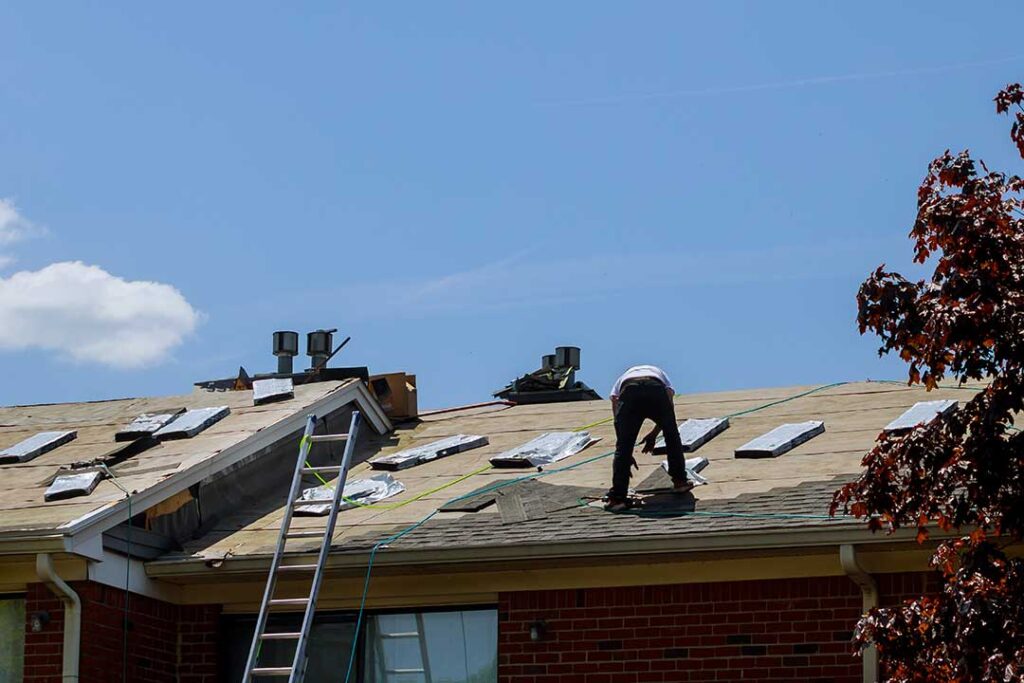
Why does preventive roof maintenance matter?
Preventive roof maintenance helps identify small defects before they become interior leaks, structural damage, or premature roof replacement. For homes in Greene, NY, regular attention is especially useful because roofs must withstand changing temperatures, snow, ice, wind, rain, and periods of high humidity.
A roof usually declines gradually rather than failing all at once. A lifted shingle, clogged drainage path, or damaged flashing may seem minor during a routine inspection. Left unaddressed, however, that condition can allow moisture to enter beneath the roof covering and affect decking, insulation, ceilings, wall finishes, or framing.
Maintenance does not make a roof last forever. Its long-term value comes from controlling deterioration, improving predictability, and preserving the parts of the roofing system that are still performing well.
What does preventive roof maintenance include?
Preventive maintenance is a planned review of the entire roof system, not simply a search for visible leaks. It may include:
- Checking shingles or other roof coverings for cracking, curling, missing sections, exposed fasteners, and loose edges
- Examining flashing around chimneys, vents, skylights, walls, and roof transitions
- Clearing leaves, twigs, and other debris from drainage areas
- Inspecting gutters, downspouts, and extensions for blockages or separation
- Looking for moss or algae growth that may retain moisture against the roof surface
- Reviewing attic areas for damp insulation, staining, mold-like growth, daylight, or poor ventilation
- Checking areas where tree branches may rub against the roof or allow repeated impact
- Looking for signs of ice buildup or recurring winter drainage problems
The goal is not to replace sound materials unnecessarily. It is to understand how the roof is aging and address conditions that could shorten its useful life.
How often should a roof be inspected?
A roof should generally receive a visual review at least once or twice each year, along with an inspection after severe weather or an unusual event. Spring is useful for identifying damage left by snow, ice, and winter wind. Early fall is a practical time to address drainage and exterior defects before colder weather arrives.
More frequent observation may be appropriate when a home has:
- Mature trees near the roof
- A history of ice buildup
- Heavy shade that keeps surfaces damp
- A low-slope roof section
- Older roofing materials
- Repeated gutter overflow
- Recent construction or nearby tree work
A homeowner can often inspect gutters, downspouts, attic areas, and visible roof edges from the ground or from a safe interior location. Walking on a roof carries fall and material-damage risks. Steep surfaces, wet conditions, snow, ice, and unstable ladders create hazards that warrant trained assistance rather than an improvised inspection.
What are the long-term financial benefits?
Maintenance can reduce the cost of ownership by preventing minor defects from becoming multi-layered repairs. For example, replacing a damaged flashing component may be relatively limited, while an unnoticed leak can damage roof decking, insulation, interior finishes, and electrical components.
Preventive care also helps homeowners plan for eventual replacement. A roof that is regularly observed provides better information about remaining service life than a roof that is ignored until water enters the living space. This can make it easier to budget for future work, compare repair options, and avoid making rushed decisions during an emergency.
There is no guarantee that maintenance will prevent every major expense. Storm damage, material defects, installation problems, and extreme weather can still cause sudden failures. Even so, early detection often limits the number of affected materials and reduces the chance that damage will spread unnoticed.
Can maintenance extend a roof’s life?
Yes, maintenance may extend a roof’s useful service life by reducing avoidable stress. Roofing materials age from exposure to sunlight, temperature changes, moisture, wind, and repeated freezing and thawing. Proper drainage, secure flashing, clear ventilation paths, and timely repairs help the system manage those stresses.
Maintenance cannot reverse normal aging. Brittle shingles will not become flexible again, and deteriorated underlayment will not regain its original performance. The practical benefit is that healthy portions of the system are not weakened prematurely by preventable moisture or drainage problems.
A roof’s lifespan also depends on material type, installation quality, ventilation, roof design, exposure, and the condition of the underlying structure. Any lifespan estimate should therefore be treated as a planning range rather than a guarantee.
Why are gutters and attic ventilation part of roof maintenance?
Gutters and attic ventilation are connected to roof performance, even though they are not part of the roof covering itself.
Blocked or poorly draining gutters can cause water to back up near roof edges, saturate fascia and soffits, and contribute to unwanted moisture around the building envelope. Downspouts that release water directly beside the foundation may also create drainage concerns below the roofline.
Attic ventilation helps manage heat and moisture beneath the roof. Inadequate airflow can contribute to condensation, damp insulation, wood deterioration, and uneven winter roof temperatures. Excessive airflow through unsealed openings, however, is not automatically beneficial. Ventilation works best when intake and exhaust paths are balanced and the attic floor is properly air-sealed.
These conditions are easy to overlook because the visible roof surface may appear acceptable while problems are developing underneath.
What should homeowners look for after a storm?
After strong wind, heavy rain, or a winter storm, residents should look for changes rather than attempting risky roof access. Useful observations include:

- Shingles or roofing pieces in the yard
- New ceiling or wall stains
- Water near attic penetrations
- Gutter sections that have pulled away
- Bent or displaced flashing
- Exposed roof areas visible from the ground
- Fallen branches or heavy limbs resting on the roof
- Downspouts or gutters that no longer drain properly
Interior staining may appear well after the original weather event. A dry ceiling does not always prove that a roof is undamaged, particularly if moisture has entered an attic space but has not yet reached the finished interior.
Electrical hazards, active water entry, structural sagging, large fallen branches, and damaged roof edges require prompt attention because they can affect both building safety and occupant safety.
Is moss on a roof only a cosmetic issue?
Moss is not always an immediate emergency, but it should not be dismissed as purely visual. Moss can hold moisture against roofing materials, work beneath edges, and contribute to surface deterioration over time. Heavy growth may also obscure damaged areas during visual inspections.
Aggressive scraping or pressure washing can remove protective granules and damage shingles. Roof cleaning methods should be compatible with the roofing material and should not direct water beneath laps, flashing, or other vulnerable areas.
Shade management may also help. Trimming vegetation that repeatedly contacts or heavily shades the roof can improve drying, but tree work becomes hazardous when branches are near utility lines or large enough to damage the structure.
How can maintenance records improve future decisions?
A simple maintenance record can provide long-term value. Note the inspection date, visible conditions, weather events, repairs, drainage concerns, and photographs taken from safe locations. Records are especially useful when a home changes ownership, when a roof approaches the later part of its service life, or when a recurring leak needs to be traced.
The most useful records distinguish between:
- Cosmetic wear and active damage
- A localized repair and a system-wide concern
- A roof covering issue and an attic, ventilation, or drainage issue
- Damage caused by a specific event and deterioration that developed gradually
That distinction helps prevent both unnecessary replacement and delayed action.
What is the central long-term lesson?
Preventive roof maintenance is a form of risk management. It does not eliminate weather damage or stop normal aging, but it can reveal problems earlier, protect related building components, improve repair planning, and help a roof perform closer to its expected service life.
For area households, the most valuable routine is consistent observation: check drainage, watch for changes after severe weather, inspect attic conditions, keep records, and treat unsafe roof access seriously. Small findings are easier to understand and address before they become hidden, widespread, and expensive.
