
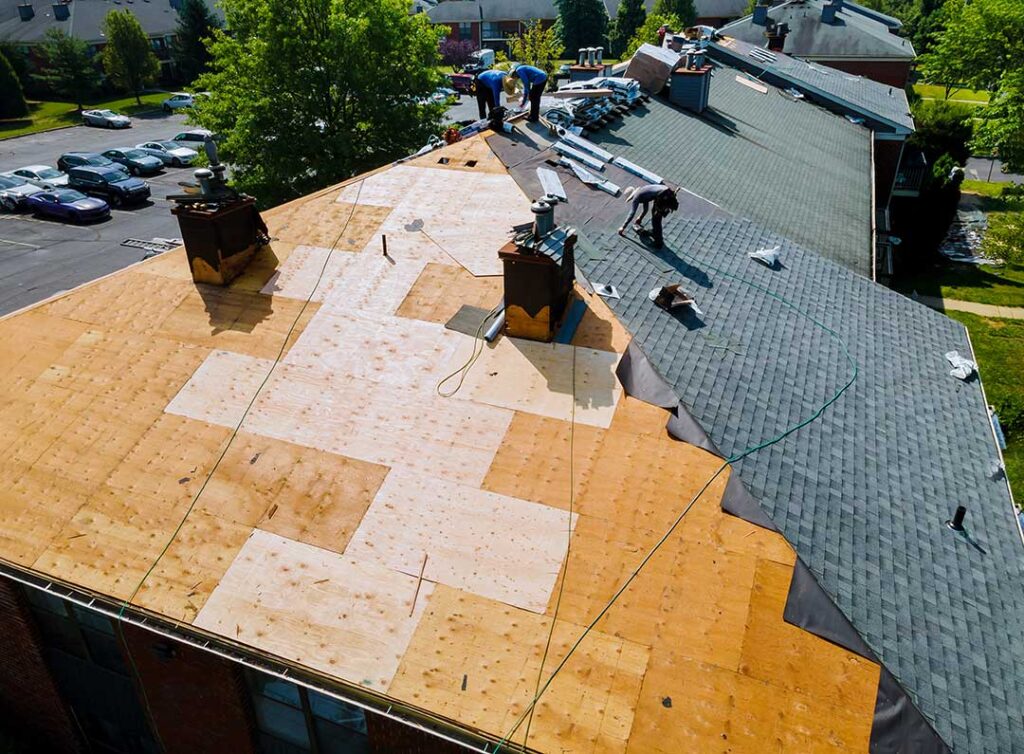
Why should roof debris be removed?
Leaves, twigs, pine needles, and other debris can trap moisture against roofing materials and block the flow of rainwater. Clearing the roof helps reduce the chance of clogged gutters, stained or deteriorated shingles, ice buildup, and water entering around roof edges or penetrations.
In Greene, NY, roof debris may collect after autumn leaf drop, high winds, thunderstorms, and winter weather. Properties surrounded by mature trees often need more frequent observation, especially when branches overhang the roof.
Debris is not always an emergency, but it should not be ignored when it is thick, wet, blocking drainage, or covering damaged roofing.
What debris commonly collects on a roof?
Roof debris can include:
- Dry or wet leaves
- Pine needles and seed pods
- Small branches and twigs
- Shingle granules
- Moss, algae, or organic buildup
- Windblown litter
- Snow-covered branches
- Animal nesting material
Loose leaves and small twigs are usually manageable from the ground or with proper access. Larger branches, heavy wet vegetation, and debris near electrical equipment require greater caution.
A small amount of scattered material is generally less concerning than a layer that stays wet for several days. Persistent dampness can encourage moss growth and can shorten the service life of some roofing components.
Can roof debris be removed from the ground?
Light debris can sometimes be removed from the ground using a roof rake or a soft-bristled extension tool designed for roofing. This approach is safer than climbing and may be enough for leaves, pine needles, and small twigs on a low-slope roof or the lower edge of a roof.
Use gentle pressure. Scraping, stabbing, or dragging a tool across shingles can remove protective granules, loosen tabs, or damage flashing. A roof rake should be pulled downward rather than forced upward beneath shingle edges.
Ground-level removal has limits. It may not reach valleys, upper roof sections, dormers, or areas hidden behind roof features. Do not throw tools onto the roof or pull at branches that are caught under shingles.
How can someone safely remove debris from a roof?
If roof access is appropriate, debris should be removed during dry, calm weather. Wet shingles, frost, snow, and damp leaves can be extremely slippery. Roofing materials may also become brittle during cold conditions and more vulnerable to damage from foot traffic.
Basic precautions include:
- Inspect the area from the ground before approaching the roof.
- Keep clear of overhead power lines.
- Use stable, properly positioned ladders on firm ground.
- Maintain three points of contact while climbing.
- Wear slip-resistant footwear.
- Avoid stepping on skylights, plastic vents, loose flashing, or visibly damaged areas.
- Work from a safe position rather than reaching sideways.
- Use a leaf blower, soft broom, or gloved hands for loose material.
- Place debris in a container or tarp instead of pushing it into gutters or over roof edges.
A leaf blower can work well for dry leaves and needles, but it should be used at a low setting and directed away from shingle edges, vents, and loose flashing. Blowing debris across the roof can move granules and spread material into nearby gutters or onto lower roof sections.
Should a roof be swept or pressure-washed?
A roof should not be pressure-washed to remove ordinary debris. High-pressure water can strip granules, force water beneath roofing materials, and damage flashing, seals, or underlayment.
A stiff household broom is also a poor choice because its bristles can loosen granules and scrape the surface. Soft tools are safer for lightweight debris. Moss or algae that has bonded to roofing may require a separate cleaning approach, but aggressive scrubbing and improvised chemical treatments can create additional damage.
If the roof has widespread moss, heavy organic growth, or material embedded in the shingles, the problem is no longer simple debris removal. The condition of the roofing should be evaluated before cleaning methods are chosen.
How should debris be removed from gutters and valleys?
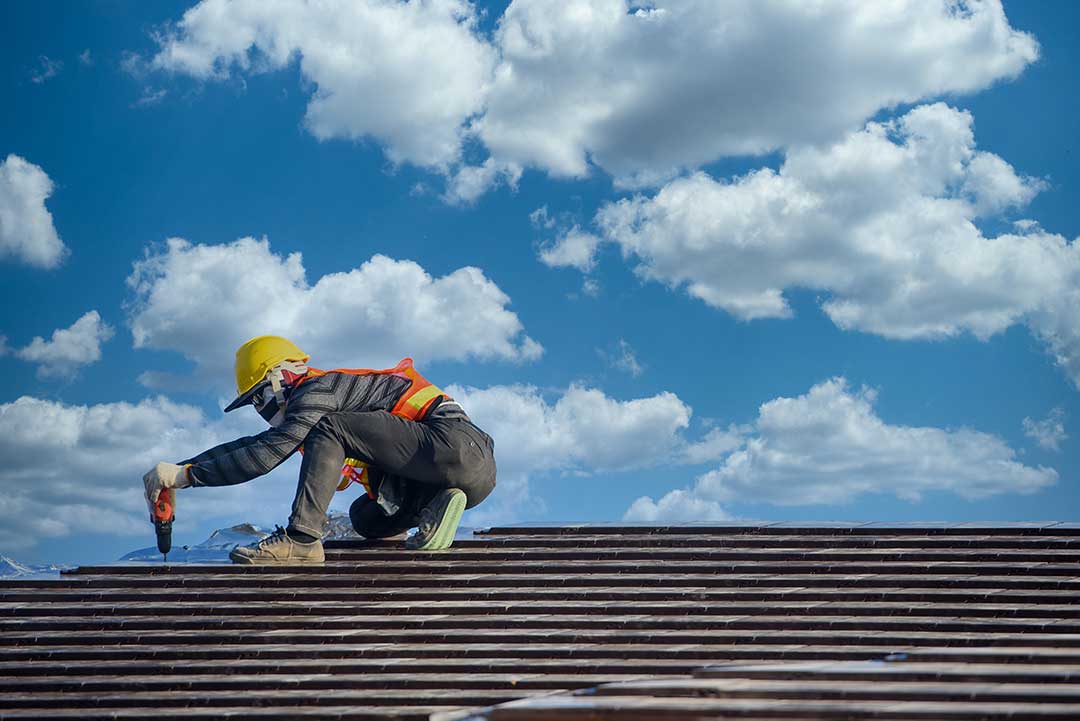
Gutters and roof valleys deserve extra attention because they direct water away from the building. Leaves packed into a valley can dam water against shingles. Debris-filled gutters can overflow onto siding, trim, foundations, or walkways.
Remove loose material by hand while wearing gloves, or use a small plastic scoop that will not puncture the gutter. Avoid leaning a ladder against the gutter itself. After clearing the material, flush the gutter with a modest amount of water and check whether it flows toward the downspout.
Do not push large amounts of roof debris into the downspouts. A clog farther down the system may be difficult to see and can cause water to back up during the next rainfall.
If a valley contains exposed roofing damage, lifted shingles, rusted flashing, or standing water, avoid disturbing the area until it can be assessed safely.
What signs indicate that debris has caused damage?
Debris may have contributed to a roofing problem if any of the following are visible:
- Missing, cracked, curled, or lifted shingles
- Bare patches where granules have worn away
- Bent or displaced flashing
- Sagging roof areas
- Water stains on ceilings or upper walls
- Damp insulation or musty attic odors
- Overflowing gutters during ordinary rainfall
- Branch impact marks
- Moss or leaves trapped beneath shingle edges
A single twig does not usually damage a roof. Repeated branch movement, heavy limbs, and prolonged moisture are more significant concerns. After a storm, inspect the roof from the ground and check attic areas for signs of moisture rather than immediately climbing onto the roof.
When should roof debris removal not be a do-it-yourself task?
Roof work should not be attempted when the roof is steep, icy, snow-covered, visibly damaged, unusually high, or difficult to access safely. It is also unsafe to work near downed wires, large storm-damaged branches, unstable ladders, or structural damage.
Older roofing may be fragile even when it looks intact. Walking on it can cause damage that is not immediately visible. Anyone who feels unsteady on a ladder, lacks proper fall protection, or cannot identify safe footholds should avoid climbing.
Professional assistance is justified when debris removal involves a large branch, storm damage, steep access, suspected structural weakness, or potential electrical hazards. Safety takes priority over removing a small amount of leaves.
How often should a roof be checked?
A practical schedule is to inspect the roof from the ground several times a year and after major wind or rain events. A closer look may be useful after autumn leaf fall and before winter, when clogged drainage and trapped moisture can become harder to address.
Properties with overhanging trees may need more frequent checks than homes in open areas. Tree trimming can reduce recurring debris, but branches should not be cut by anyone working near electrical lines or unstable limbs.
The goal is not to keep every leaf off the roof. The goal is to prevent buildup from blocking drainage, holding moisture, hiding damage, or creating an unsafe condition.
