
Roof fire ratings describe how a complete roof assembly performs when exposed to flames, radiant heat, and burning debris. For residents in Greene, NY, understanding these ratings can make roof replacement decisions clearer, especially in older homes, houses with wood framing, and properties surrounded by mature trees.
A fire rating does not mean a roof is fireproof. It indicates how effectively the tested roof system resists ignition, flame spread, and fire passing through to the roof deck.
What do Class A, Class B, and Class C mean?
Class A provides the highest level of roof-covering fire performance. Class B provides moderate protection, while Class C provides protection against lighter fire exposure.
The classifications generally mean:
- Class A: Effective against severe fire-test exposure
- Class B: Effective against moderate fire-test exposure
- Class C: Effective against light fire-test exposure
- Nonclassified: The product or assembly has not been listed for one of the recognized fire classifications
These ratings are determined through standardized testing, commonly under ASTM E108 or UL 790. The tests evaluate conditions such as external flame, intermittent flame, and burning brands that represent pieces of burning wood or debris landing on a roof.
The rating is not a simple score assigned to a shingle by itself. It applies to the roof assembly tested in a specific arrangement.
Is the fire rating based only on the shingles?
No. The roof covering is only one part of the system. The roof deck, underlayment, insulation, ventilation details, and installation method can affect the final classification.
For example, a shingle may achieve a Class A rating only when installed over a particular type of underlayment and deck. Substituting another material may change the performance of the assembly, even if the visible shingles appear identical.
This is one reason product labels, installation instructions, and tested assembly information matter. A roof should not be assumed to retain its listed rating if components are mixed without checking compatibility.
Which roofing materials commonly achieve Class A?
Many common roofing systems can achieve Class A performance when properly tested and installed. Examples may include:
- Fiberglass-reinforced asphalt shingles
- Metal roofing systems
- Slate
- Clay or concrete tile
- Certain built-up and single-ply roofing systems
- Some treated wood roofing products
Material type alone does not guarantee a rating. Asphalt shingles, metal panels, and tile products can have different classifications depending on their design and the assembly beneath them.
Metal roofing is sometimes described as noncombustible, but the complete roof system still matters. A metal covering installed over a combustible deck, insulation, or underlayment may have different tested characteristics than metal installed over a noncombustible structure.
Does a Class A roof prevent a house fire?
No. A Class A roof can reduce the likelihood that an exterior fire exposure will ignite the roof covering or burn through to the deck, but it cannot prevent every type of fire.
Roof fires may begin from several sources, including:
- Sparks or embers from a nearby fire
- A chimney or heating-equipment problem
- Electrical equipment
- A lightning strike
- Combustible debris collecting in roof valleys or gutters
- Fire spreading from an attached building, porch, or nearby vegetation
A roof with a strong fire classification may provide valuable resistance, but openings, penetrations, damaged areas, exposed wood, and nearby combustible materials can still create vulnerable points.
What does New York’s building code require?
New York’s residential building requirements address roof fire classifications in the roof-assembly provisions of the state code. The required classification can depend on factors such as the building type, construction method, and distance from a property line.
The 2025 New York State Uniform Code became fully effective on December 31, 2025. Under the residential roof provisions, Class A, B, or C assemblies must be tested and identified when the code requires a fire classification or when the roof deck edge is less than 3 feet from a lot line.
This does not mean every home automatically requires the same rating. Existing buildings, reroofing work, additions, permits, and local enforcement conditions can affect which code provisions apply. A permit application may also need to show the proposed roof covering and installation details.
For a property in Greene, checking the requirements that apply to the specific project is more reliable than relying on a general statement such as “all roofs must be Class A.”
Why does the roof deck matter?
The roof deck is the structural surface beneath the roof covering. In many homes, it consists of wood panels or boards, which can contribute fuel if flames penetrate the outer roof layers.
A roof covering that performs well over a noncombustible deck may not have the same tested classification over a combustible deck. Underlayment can also help protect the deck during fire exposure, particularly during the burning-brand portion of testing.
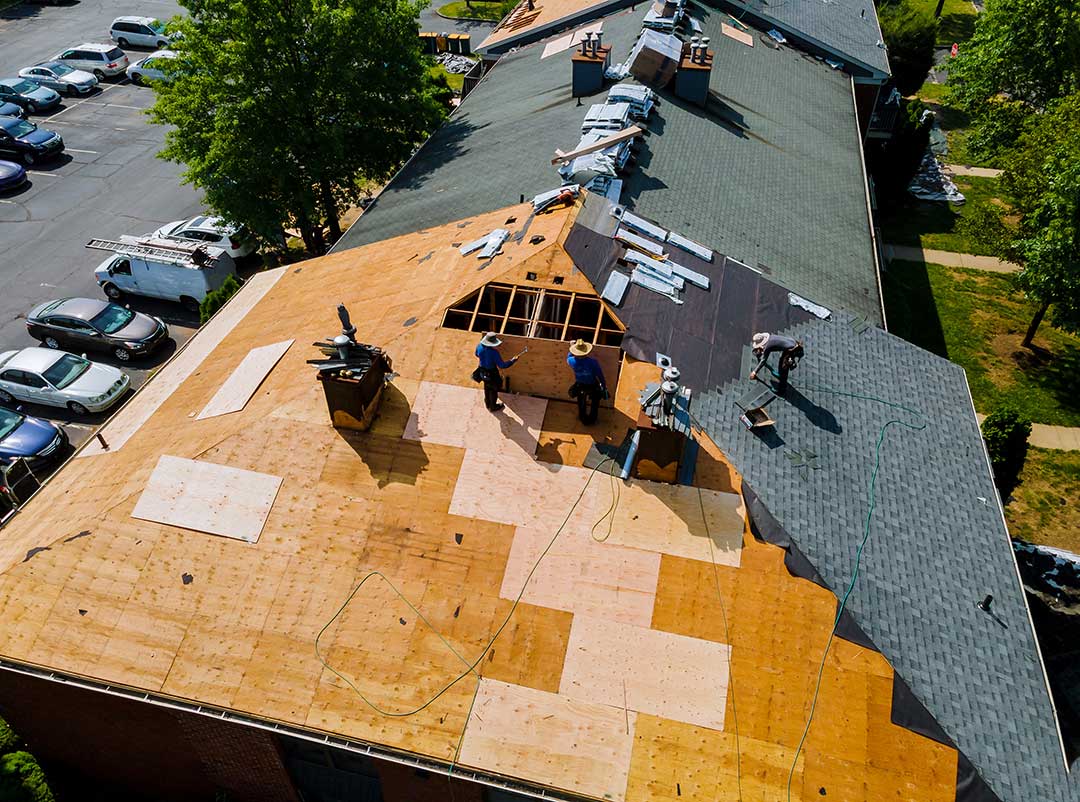
Older homes may have plank decking, multiple layers of previous roofing, or areas that have been repaired with different materials. Those conditions can complicate the fire performance of the overall roof. Removing damaged or deteriorated material and following the tested installation requirements helps avoid assuming that a visible roof covering tells the entire story.
Do roof penetrations and maintenance affect fire safety?
They can. Chimneys, vents, skylights, plumbing stacks, electrical penetrations, and rooftop equipment interrupt the roof surface. Each opening must be properly detailed so the roof continues to resist weather and does not create an unnecessary path for fire or hot gases.
Routine maintenance also matters. In the climate around Greene, changing seasons can leave leaves, small branches, and organic debris in valleys, gutters, and areas behind rooftop equipment. Dry debris can ignite more easily than the roof covering itself.
Useful precautions include:
- Keeping gutters and roof valleys clear of accumulated leaves
- Removing branches that rest on or rub against the roof
- Watching for cracked, loose, or missing roof coverings
- Keeping chimney areas maintained according to applicable safety requirements
- Checking that roof vents and flashing remain secure
- Avoiding storage of combustible materials against exterior walls or beneath roof overhangs
Snow and ice do not usually create a roof-fire hazard by themselves, but freeze-thaw cycles can damage flashing and roof coverings. Water intrusion may weaken materials or lead to emergency repairs that do not follow the original tested assembly.
How do solar panels affect the roof’s fire classification?
Solar panels installed on or above a roof are evaluated as part of a rooftop photovoltaic system. The panel, mounting method, roof covering, and spacing can affect the system’s fire classification.
A roof that was originally listed as Class A should not automatically be assumed to remain Class A after solar equipment is added. The photovoltaic system must be tested and installed according to its listing and the applicable code requirements.
This is especially relevant when panels are installed over older roofing, near roof edges, or around vents and other penetrations. The roof’s condition and the solar mounting design should be considered together.
What should homeowners look for in roof documents?
For a new roof or major reroofing project, useful records may include:
- The product name and model
- The fire classification
- The tested roof assembly
- Required underlayment
- Approved deck materials
- Fastening instructions
- Installation limitations
- Information for rooftop photovoltaic systems, if applicable
A product described as “fire resistant” is not necessarily the same as a listed Class A, B, or C roof assembly. The exact classification and installation conditions provide more useful information than general advertising language.
For older homes, records may not be available. In that situation, visible material, roof age, repairs, and deck construction can offer clues, but they may not establish a formal fire classification. Code questions, unsafe chimney conditions, suspected fire damage, and permit-related issues may require review by the appropriate building or fire-safety authority.
