
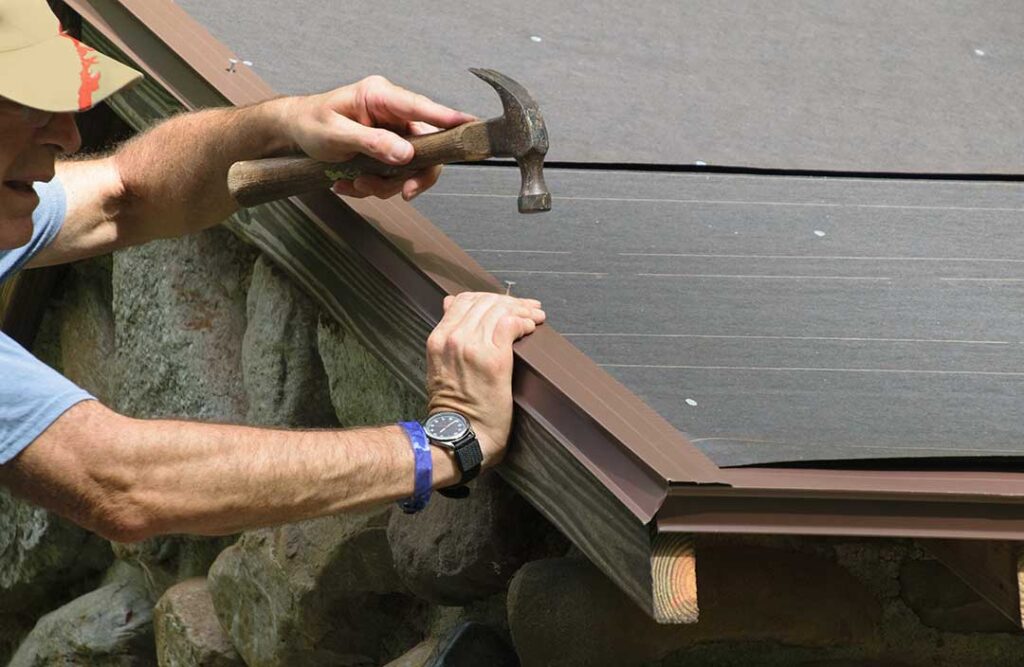
Roof valleys are the channels where two sloping roof sections meet. They collect rainwater, melting snow, leaves, and ice, then direct that flow toward the gutters or roof edges. Because valleys handle concentrated runoff, they can begin failing before the rest of the roof shows obvious problems.
For homes in Greene, NY, seasonal rain, winter snow, freeze-thaw cycles, and windblown debris can place added stress on these areas. A careful inspection from the ground can reveal warning signs, but climbing onto a roof may be unsafe, especially when surfaces are wet, icy, steep, or damaged.
What does a roof valley do?
A roof valley carries water from two roof slopes into a controlled drainage path. Depending on the roof design, the valley may be covered with exposed metal, layered roofing materials, or a closed arrangement where shingles meet along the channel.
Valleys receive more water than most other parts of a roof. During a heavy storm, runoff from both roof planes can converge in one narrow area. If the valley lining is damaged, improperly covered, clogged, or overwhelmed by debris, water may move beneath the surrounding roofing.
A valley does not have to look dramatically broken to be losing its ability to shed water. Small openings, lifted materials, or repeated standing water can gradually lead to leaks and concealed wood damage.
What are the visible signs of a failing roof valley?
The clearest warning signs are changes in the valley materials, water stains, and signs that runoff is not moving freely.
Look for:
- Shingles that are missing, cracked, curled, buckled, or visibly loose along the valley
- Exposed fasteners, exposed underlayment, or areas where roofing material has worn thin
- Rust, holes, splits, dents, or separated seams in exposed metal valley flashing
- Dark lines or streaks that follow the valley
- Granules collecting heavily at the bottom of gutters or near downspouts
- Leaves, pine needles, twigs, or compacted organic debris trapped in the channel
- Water stains on ceilings or upper walls below the valley
- Damp insulation, musty odors, or peeling paint in attic areas near the valley
- Sagging roof sheathing or a slight dip visible along the roofline
A dark streak alone does not always prove a leak. It may be caused by algae, dirt, or repeated wetting. However, streaking that remains damp, expands after rain, or appears with interior staining deserves closer attention.
How can valley problems be spotted from the ground?
A ground-level inspection can identify many problems without stepping onto the roof. Use binoculars if available, and inspect the roof after a storm only from a stable location away from falling debris.
Compare the valley with nearby roof sections. A damaged valley may appear unusually rough, uneven, bare, or discolored. Shingles may not lie in the same flat pattern as those farther from the channel. A line of debris that remains in place after the rest of the roof has dried may indicate poor drainage or a depression.
Check the lower end of the valley as well. Water often exits this area with force, and worn roofing may show near the eaves. Look for overflowing gutters, splash marks on siding, or soil erosion below the valley’s discharge point.
Do not use a roof rake, broom, or ladder to scrape at suspected damage. Pulling on roofing materials can enlarge a small defect.
What does a roof valley leak look like inside?
Interior evidence often appears some distance from the actual roof defect. Water can travel along rafters, roof decking, insulation, or framing before it enters a room.
Common indoor signs include:
- Brown or yellow ceiling stains
- Fresh dampness after rain or snowmelt
- Water marks near exterior walls or upper-floor corners
- Bubbling paint or soft drywall
- Mold-like odors in the attic
- Wet insulation beneath a roof slope
- Drips that occur only during wind-driven rain
- Staining that appears after thawing rather than during rainfall

A leak that appears only during certain storms may still represent a serious roof problem. Wind can push water sideways beneath valley materials, while ice dams can force meltwater backward under the roofing near the lower roof edge.
If electrical fixtures, wiring, or ceiling-mounted equipment becomes wet, avoid touching the affected area and treat it as a potential electrical hazard.
Why do valleys fail during winter and spring?
Freeze-thaw movement is a frequent source of stress. Water enters small openings, freezes, expands, and then leaves behind a slightly larger gap when temperatures rise. Repeated cycles can loosen flashing, lift shingles, and separate seams.
Snow and ice can also conceal damage for weeks. A valley may look intact under a layer of snow, while melting water finds a path beneath the roofing. Ice dams near the eaves can slow drainage and cause water to back up toward the valley.
Spring is often the first time hidden valley damage becomes obvious. Heavy rain, melting snow, falling branches, and accumulated debris can expose weaknesses that developed during winter.
Can debris in a valley cause a leak?
Yes. Debris can block water movement and keep roofing materials wet for extended periods. Leaves and needles may also trap soil, allowing moss or other organic growth to develop. As the material decomposes, it can hold moisture against shingles or metal flashing.
A small amount of loose debris is not automatically a failure. The greater concern is compacted material that forms a dam, covers cracks, or remains in the valley after several dry days.
Branches should not be pulled forcefully from a roof valley. A branch may be caught beneath flashing or shingles, and removing it carelessly can create additional openings.
Are open metal valleys more likely to fail?
Not necessarily. An exposed metal valley makes certain defects easier to see, but its performance depends on correct design, fastening, slope, material condition, and surrounding roof installation.
Metal can corrode, develop pinholes, split at seams, or pull away from fasteners. It can also be dented by falling branches or damaged by repeated movement. On the other hand, valleys covered by shingles may hide deterioration until a leak becomes visible indoors.
The key question is whether the valley provides a continuous, unobstructed, weather-resistant path for runoff. Appearance alone does not determine whether it is functioning properly.
What should Greene, NY homeowners check after severe weather?
After strong wind, heavy rain, hail, or a major snowfall, inspect the attic and ceilings as soon as conditions are safe. Look for new staining, wet insulation, or daylight visible through the roof deck.
From the ground, check whether debris has collected in the valley or whether roofing pieces have appeared in the yard or gutters. Also look for displaced flashing, hanging material, and new gutter overflow.
Roof access may be hazardous after storms because surfaces can be wet, icy, unstable, or weakened by hidden damage. A roof that appears safe from below may not support a person safely.
When does valley damage require prompt attention?
Prompt attention is warranted when water is actively entering the home, the roof deck is sagging, flashing is torn or displaced, a large section of valley material is missing, or damage is near electrical components.
Temporary measures such as placing a container beneath an interior drip and moving belongings away from the wet area can reduce immediate damage. Avoid puncturing the ceiling to release water unless directed by a qualified emergency responder or building professional, because the ceiling may conceal wiring.
Early inspection is especially useful when a valley shows repeated staining, standing water, loose roofing, or deterioration that returns after temporary drying. A valley leak may be small at first but can eventually affect sheathing, insulation, framing, and interior finishes.
