
What should be done first after roof damage?
After a roof emergency, protect people first, limit interior damage second, and inspect the roof only from a safe location. Do not climb onto a wet, damaged, icy, or wind-affected roof.
Begin with a quick check of the household:
- Leave areas with sagging ceilings, falling debris, exposed wiring, or active electrical problems.
- Keep children and pets away from leaking rooms and damaged exterior areas.
- If there is a fire, strong smell of burning insulation, or electrical arcing, leave the building and request emergency assistance.
- If water is near outlets, light fixtures, appliances, or electrical panels, avoid touching the water or electrical equipment.
Once everyone is safe, place containers beneath small interior drips and move furniture, electronics, rugs, and other belongings away from the affected area. A ceiling that is bulging from trapped water may collapse. Do not stand directly beneath it or puncture it unless instructed by a qualified emergency responder.
How can a homeowner tell whether roof damage is urgent?
A roof problem is urgent when it allows water into the building, creates a risk of collapse, exposes the interior to weather, or threatens personal safety. Missing shingles alone may not always require immediate overnight action, but an open roof section before rain, snow, or freezing temperatures can quickly become more serious.
Situations that generally require prompt attention include:
- Water entering through the ceiling or upper walls
- A large area of missing roofing
- A tree limb or other object resting on the roof
- A visible hole, torn membrane, or displaced flashing
- A sagging roof surface or ceiling
- Damage around a chimney, vent, skylight, or roof edge
- Roof debris near electrical wires
- Ice or snow that has caused visible structural movement
- Strong winds that have loosened roofing materials across a broad area
In Greene, winter weather can combine snow, ice, freezing temperatures, and rapid thaws. These conditions may turn a small opening into a leak that spreads through insulation, ceilings, and wall cavities. Water may travel away from the original entry point, so the visible stain indoors is not always directly beneath the roof damage.
Should someone climb onto the roof during an emergency?
Usually, no. Emergency roof inspections are especially hazardous after storms because surfaces may be wet, icy, unstable, or covered with hidden damage. Wind can also loosen materials that appear secure from the ground.
A ground-level inspection is safer and may provide useful information. From the yard or another stable location, look for:
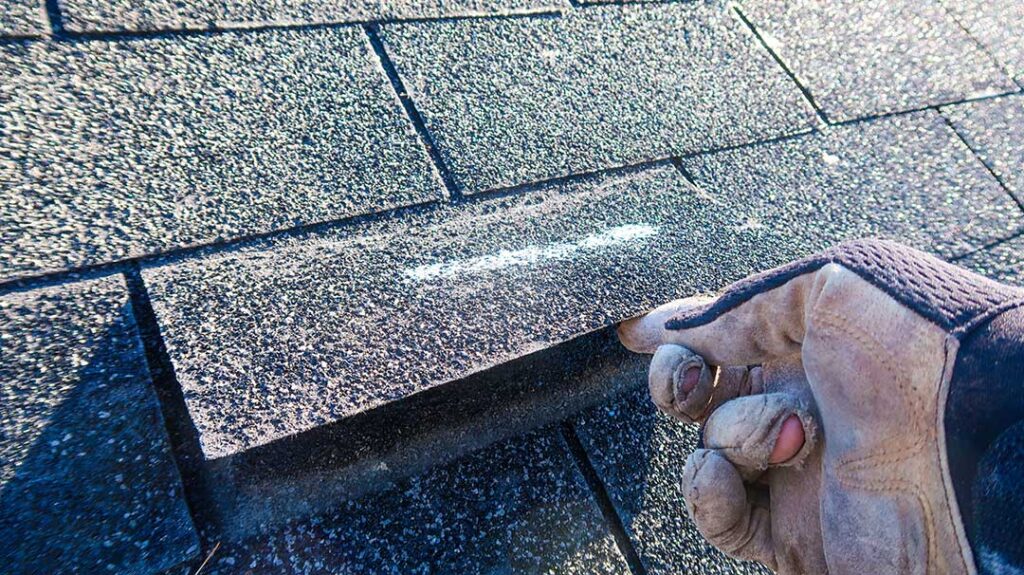
- Missing or curled shingles
- Exposed underlayment or roof decking
- Hanging gutters or metal flashing
- Branches or other objects on the roof
- Uneven roof lines or areas that appear to sag
- Water running behind gutters or along exterior walls
Binoculars or a phone camera with optical zoom can help document the condition without requiring a climb. Do not use a ladder against a roof edge during windy, icy, or otherwise unstable conditions. A ladder can also damage gutters, siding, or roofing materials.
How can temporary water damage be limited?
Temporary measures should be used only from a safe position and should not involve walking on the roof. The goal is to control interior water until permanent repairs are possible.
Inside the home, use buckets or containers for active drips and place towels around, rather than directly beneath, the container to catch splashing. If a ceiling is bulging, clear the room and keep people away from the affected area.
For a small, reachable leak in an attic, a container may be placed beneath the drip. Avoid stepping between ceiling joists because attic insulation can hide the framing. Do not touch wet insulation near electrical wiring, and do not use electrical equipment in a damp area.
From the ground, it may be possible to cover a low, accessible damaged section with a properly secured tarp, but this should not be attempted during wind, rain, snow, or freezing conditions. A loose tarp can become airborne, damage nearby property, or create a hazard for people below. Never throw a tarp over live electrical wires or attach materials near utility lines.
What should be documented for insurance or repair decisions?
Document the damage before moving or removing materials, provided doing so is safe. Clear records can help establish what happened and which areas were affected.
Useful documentation includes:
- Wide photographs showing the building and surrounding conditions
- Close photographs of visible roofing damage
- Images of indoor stains, wet drywall, damaged flooring, and affected belongings
- The date and approximate time the problem was discovered
- Weather conditions, such as strong wind, heavy rain, hail, or snow
- A written description of temporary steps taken
- Receipts for necessary emergency materials or cleanup
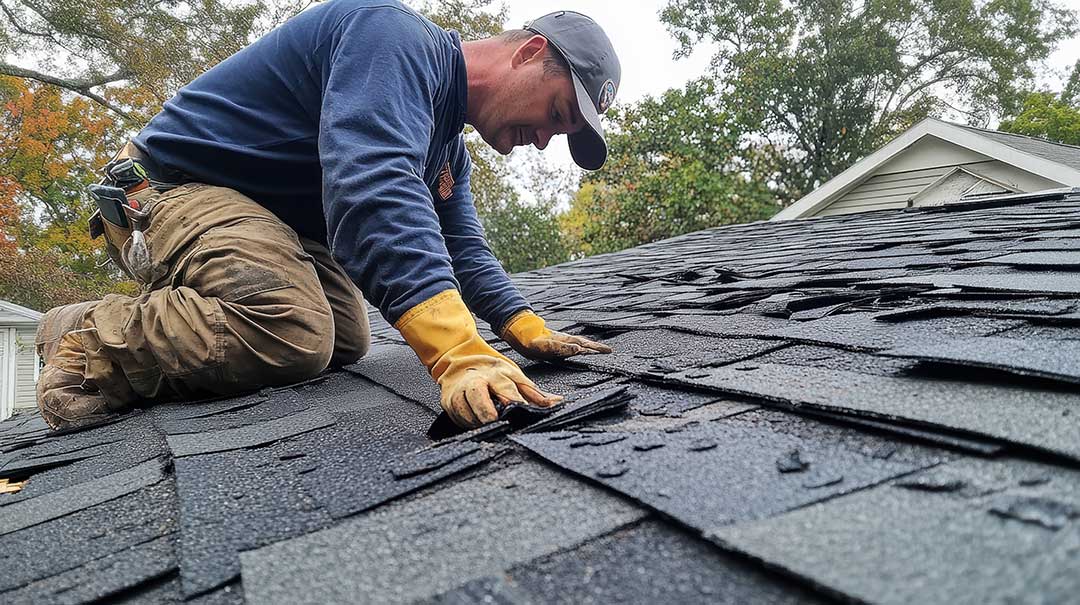
Do not discard damaged roofing materials or interior items immediately unless they create a health or safety hazard. Keep damaged objects in a dry place when practical. Insurance policies differ, and coverage may depend on the cause of damage, the condition of the roof before the incident, and whether reasonable steps were taken to prevent further loss.
What emergency roof repairs should not be attempted?
Several common quick fixes can increase damage or create serious injury risks. Avoid:
- Climbing onto a roof during bad weather
- Walking on damaged, sagging, or visibly soft roof areas
- Using roofing cement on wet, icy, or dirty surfaces as a permanent solution
- Nailing through roofing materials without knowing where water will travel
- Covering a chimney, furnace vent, or other required opening
- Removing a fallen tree limb while it is touching electrical lines
- Using a pressure washer to clear moss, debris, or storm residue
- Sealing an interior ceiling stain without locating and stopping the roof leak
- Ignoring a small leak because it stops during dry weather
A patch that appears successful from inside may trap moisture in insulation or roof decking. Likewise, a roof can continue leaking after the ceiling stain dries, especially around flashing, valleys, penetrations, and roof edges.
How should winter roof emergencies be handled?
Snow and ice require extra caution because the roof may be overloaded or surfaces may be concealed. Do not use a roof rake from a ladder, and do not pull heavy snow from one side of a roof without understanding how the weight is distributed.
Signs of possible snow-related distress include:
- New cracks in ceilings or walls
- Doors that suddenly stick
- Unusual popping or creaking sounds
- A sagging roof line
- Interior water near exterior walls
- Gutters pulling away from the building
- Large amounts of snow concentrated in valleys or behind higher roof sections
If these signs appear, move people away from the affected area and avoid adding weight to the roof. Snow and ice removal can also damage shingles, flashing, gutters, and protective membranes when done improperly.
When is temporary repair no longer enough?
Temporary protection is no longer sufficient when water continues entering the building, the damaged area expands, the roof structure appears unstable, or interior materials remain wet. Persistent moisture can lead to wood deterioration, insulation problems, peeling finishes, and mold growth.
Emergency repairs may stabilize a situation, but they do not always address hidden damage. A roof may look dry after a storm while moisture remains beneath shingles, flashing, or underlayment. Any situation involving structural movement, a fallen tree, electrical hazards, difficult access, or extensive water entry should be handled by qualified personnel because the risks extend beyond ordinary roof maintenance.
After the immediate danger has passed, the affected area should be monitored during the next rainfall, thaw, or high-wind period. A new stain, musty odor, recurring drip, or change in the ceiling surface can indicate that the temporary measure has failed or that water has traveled farther than first observed.
