
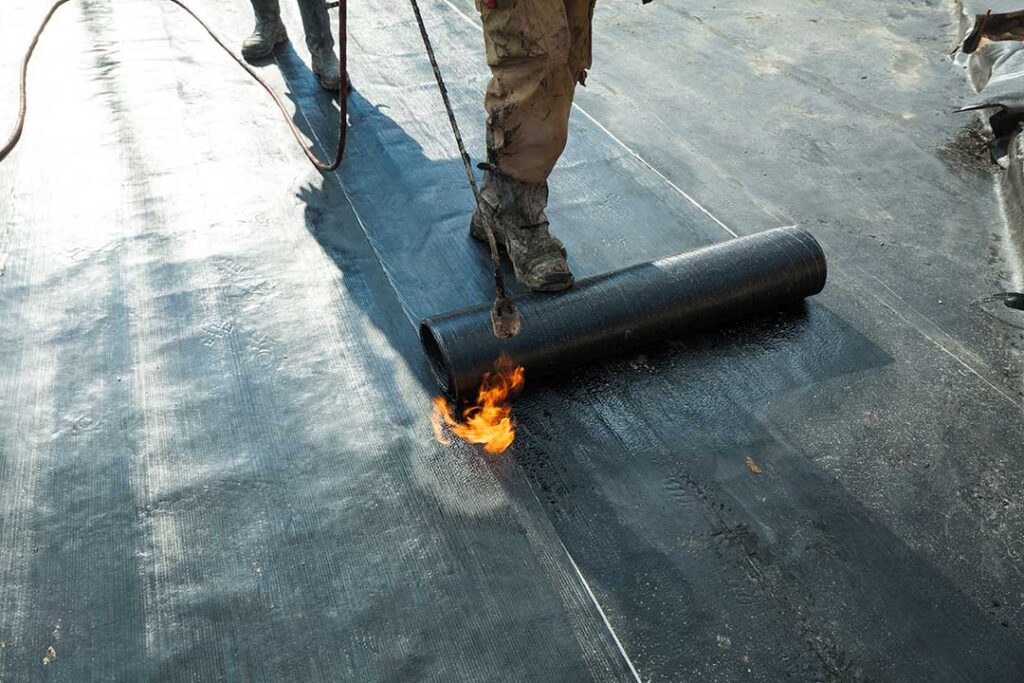
Which roofing material works best for homes in Greene, NY?
No single roofing material is best for every house. The right choice depends on roof slope, snow and ice exposure, structural capacity, expected service life, maintenance tolerance, appearance, and budget.
For homes in Greene, NY, roofing materials also need to handle repeated freeze-thaw cycles, winter snow, wind, summer heat, falling branches, and moisture that can remain on shaded roof sections. A material that performs well in one setting may be less suitable on an older house, a low-slope addition, or a roof with complicated valleys and dormers.
The most common options are asphalt shingles, metal roofing, wood shingles or shakes, slate, clay or concrete tile, and synthetic roofing products.
Are asphalt shingles a practical choice?
Asphalt shingles are the most widely used residential roofing material because they offer a balance of cost, appearance, availability, and installation flexibility.
Advantages
- Usually less expensive than metal, slate, or tile
- Available in many colors and profiles
- Suitable for many pitched residential roofs
- Relatively easy to repair in isolated areas
- Familiar to most building inspectors and roofing contractors
- Can often be installed over common roof decking without major structural changes
Modern architectural or dimensional shingles generally provide a more substantial appearance than basic three-tab shingles. Higher-quality versions may also offer better wind resistance and longer expected service lives than entry-level products.
Disadvantages
Asphalt shingles can lose flexibility and protective granules over time. Freeze-thaw conditions, strong sunlight, poor attic ventilation, and algae or moss growth can shorten their useful life. Ice buildup near eaves can also expose weak points if flashing, underlayment, or drainage details are inadequate.
Their service life varies widely. A roof with good ventilation, proper installation, and limited moisture exposure may last substantially longer than one installed over damp decking or in an attic with poor airflow.
For many area households, asphalt is a reasonable choice, but the lowest initial price does not always represent the lowest long-term cost.
What are the benefits and drawbacks of metal roofing?
Metal roofing is available in standing-seam panels and smaller exposed-fastener panels. It is valued for durability, light weight, and its ability to shed snow and water.
Advantages
- Often lasts longer than standard asphalt shingles
- Handles rain, snow, and sun exposure well
- Resists fire and many forms of insect damage
- Weighs less than slate, tile, and some layered roofing systems
- Available in finishes that reflect more sunlight
- Can be used on some lower-slope roof designs, depending on the system
A properly designed metal roof can be especially useful on buildings where snow shedding is desirable. However, snow sliding from a roof can create a hazard over entryways, walkways, decks, or lower roof sections. Snow guards may be needed in those locations.
Disadvantages
Metal roofing generally costs more at the beginning than asphalt shingles. Panels can also dent from large hail, falling branches, or careless handling. Scratches or cut edges may eventually develop corrosion if they are not properly protected.
Rain and hail can sound louder under metal roofing, especially in rooms with limited attic insulation. Expansion and contraction can also produce occasional popping noises. The severity of these issues depends on the roof assembly, insulation, fastening method, and panel type.
Metal roofing is not automatically maintenance-free. Fasteners, sealants, flashing, penetrations, and areas where dissimilar metals meet still require attention over time.
Are wood shingles or shakes suitable for a cold, wet climate?
Wood roofing can complement older homes, cabins, and buildings with a traditional architectural style. Cedar is commonly used because it naturally resists some decay and can perform well when kept dry.
Advantages
- Natural appearance that ages distinctly
- Lower environmental impact in some sourcing situations
- Can provide good insulation compared with thin sheet materials
- Appropriate for certain historic or rustic designs
- Individual pieces can sometimes be replaced rather than removing an entire roof
Disadvantages
Wood requires more maintenance than many homeowners expect. Leaves, moss, and moisture can keep the material damp, increasing the risk of splitting, decay, and fungal growth. Tight roof valleys and areas beneath overhanging trees can be especially vulnerable.
Wood shingles and shakes may also have more restrictive fire-resistance requirements than other materials. Treatment, spacing, underlayment, and installation details matter. On a shaded roof that stays wet after rain or snow, wood may demand more attention than a household wants to provide.
The distinction between shingles and shakes is also relevant. Shakes are usually thicker and more irregular, while shingles are more uniformly cut. That affects both appearance and water-shedding performance.
Why do some homeowners choose slate?
Slate is a natural stone roofing material known for its long service life and distinctive appearance. It is often found on older, architecturally significant, or traditionally styled buildings.
Advantages
- Can last for many decades when properly installed
- Resists fire, insects, rot, and ultraviolet damage
- Maintains a formal appearance over time
- Individual broken pieces may be replaced
- Performs well under normal weather exposure
Disadvantages
Slate is heavy. The roof framing must be able to support it, and an older home may need structural evaluation before replacement. The material and installation are also costly compared with asphalt.
Slate can crack if walked on improperly or struck by falling branches. Repairs require knowledge of slate types, fastening methods, flashing, and compatible replacement pieces. Removing an old slate roof may also create disposal and structural complications.
Synthetic slate may provide a similar appearance with less weight, but its performance depends on the product, installation, exposure, and manufacturer specifications. It should not be assumed to behave exactly like natural slate.
What should homeowners know about clay and concrete tile?
Tile roofing is more common in certain architectural styles and regions, but it can be used on appropriately designed residential structures.
Advantages
- Long service life when properly installed
- Strong resistance to fire, insects, and decay
- Holds color well compared with many painted materials
- Can provide a distinctive architectural appearance
- Concrete tile may offer a wide range of shapes and colors
Disadvantages
Tile is heavy and may require stronger roof framing. Individual pieces can crack from impact, freezing water, or foot traffic. The underlayment and flashing beneath the tile are critical because the visible tile itself is not the only water-shedding layer.
Snow and ice conditions create another consideration. Water that freezes beneath or around damaged tiles can cause leakage even when the roof looks mostly intact. Tile roofs may also be less suitable for homes with simple framing that was never designed for substantial dead loads.
Are synthetic roofing materials worth considering?
Synthetic roofing products imitate slate, wood, or tile while reducing weight. They are made from polymers, composites, recycled materials, or combinations of these.
Potential benefits
- Lighter than natural slate or many tile systems
- May be easier to handle and install
- Can provide a traditional appearance
- Often resistant to rot and insect damage
- May be suitable for homes where structural capacity is limited
Potential drawbacks
Performance varies considerably between products. Some materials may change color, become brittle, or respond differently to heat and cold as they age. Long-term repairability can also be less certain if a product is discontinued.
A synthetic roof should be evaluated by its testing, warranty terms, fastening requirements, fire rating, wind rating, and cold-weather performance—not by appearance alone.
Which factors matter more than the material itself?
Roofing material is only one part of the roof system. Flashing, underlayment, ventilation, drainage, roof slope, and workmanship often determine whether a roof performs well.
Before choosing a material, consider:
- Whether the roof can support the material’s weight
- How snow will shed and where it will land
- The condition of the decking and framing
- The number of valleys, skylights, chimneys, and roof penetrations
- Attic ventilation and insulation
- Nearby trees and the amount of shade
- Ease of obtaining matching repair materials later
- Local code requirements and permit rules
- The intended service life of the house and roof
A common misconception is that a heavier or more expensive roof is automatically stronger. Strength depends on the entire roof assembly, including framing, connections, drainage, flashing, and installation details.
For older homes, replacing roofing material without correcting inadequate ventilation, damaged decking, or recurring ice-dam conditions can leave the main problem unresolved. In Greene, winter weather makes those underlying details particularly relevant.
How should the options be compared?
A useful comparison looks beyond the purchase price:
- Lowest initial cost: Often asphalt shingles
- Longer service life with low weight: Often metal or selected synthetic products
- Traditional appearance: Wood, slate, tile, or synthetic alternatives
- Lowest maintenance potential: Metal, slate, and some synthetic systems
- Lightest practical option: Asphalt or certain metal and synthetic systems
- Best fit for an older historic design: Material-compatible slate, wood, or approved substitutes
The most suitable roof is the one that matches the building’s structure, slope, weather exposure, appearance, and maintenance expectations. A material that is durable in theory may perform poorly if the roof cannot support it or if water-management details are overlooked.
