
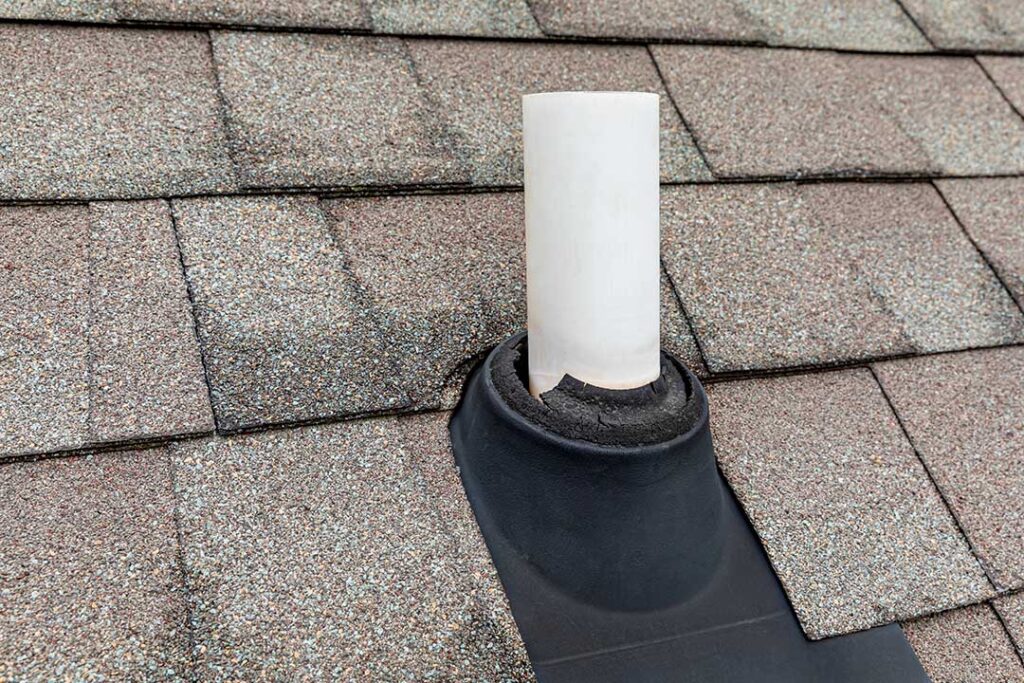
Proper roof ventilation helps a home manage heat, moisture, and changing seasonal conditions. In Greene, NY, where roofs experience cold winters, humid summers, wind, rain, and repeated freeze-thaw cycles, balanced ventilation can support the durability of the roof assembly and the comfort of the living space below.
Ventilation is not simply a matter of adding more openings to a roof. It depends on how air enters, moves through, and exits the attic. A well-functioning system usually combines low intake ventilation near the eaves with higher exhaust ventilation near the roof peak or upper roof area.
What does roof ventilation do?
Roof ventilation allows outdoor air to move through the attic space. This movement helps remove excess heat and moisture that would otherwise collect beneath the roof covering.
During summer, solar heat can make an attic substantially hotter than the outdoor air. Without a way for that heat to escape, the attic can transfer warmth into upper rooms and place additional demand on cooling equipment.
During winter, warm indoor air may reach the attic through small gaps around light fixtures, wiring, plumbing penetrations, attic hatches, and ductwork. When that warm air meets a cold roof surface, condensation can form. Ventilation helps remove some moisture, but air sealing and insulation are also necessary parts of the solution.
Why is ventilation especially useful in Greene, NY?
The local climate creates several conditions that make attic moisture and temperature control worth paying attention to.
Cold weather can leave roof sheathing and fasteners exposed to prolonged low temperatures. At the same time, indoor activities such as cooking, bathing, laundry, and drying clothing add moisture to household air. If that moisture reaches the attic, it may condense on cold surfaces.
Summer humidity creates a different challenge. Warm, damp outdoor air can enter through vents, while roof surfaces absorb heat from the sun. Good airflow helps reduce heat buildup, but it does not eliminate the need for adequate insulation and moisture control.
Snow and ice can also reveal ventilation weaknesses. Uneven roof temperatures may contribute to melting and refreezing near colder roof edges, which can support ice formation. Ventilation alone cannot prevent every ice problem, particularly when insulation, air sealing, drainage, or roof design issues are involved.
What is a balanced ventilation system?
A balanced system has both intake and exhaust ventilation. Intake vents allow outdoor air to enter near the lower edge of the roof, commonly through soffits or the eaves. Exhaust vents allow warmer or more humid air to leave near the roof ridge or another appropriately high location.
The intake and exhaust openings need to work together. If exhaust ventilation is added without enough intake air, the system may draw air from unintended locations, such as bathroom vents, wall cavities, recessed-light openings, or other gaps. That can bring moist indoor air into the attic rather than removing it.
A simple way to think about the system is:
- Intake openings bring air in.
- Clear channels allow air to move upward.
- Exhaust openings let heat and moisture escape.
- Insulation and air sealing limit unwanted heat and moisture transfer from the living space.
Blocking soffit vents with insulation is a common problem. Baffles or air chutes may be needed to preserve a clear path from the eaves into the attic.
Can roof ventilation prevent ice dams?
Proper ventilation can reduce uneven roof temperatures, but it is not a complete ice-dam solution.
Ice dams form when heat from the building melts snow on warmer portions of the roof. Water then moves toward colder roof edges, where it can freeze. Ventilation may help keep the roof deck closer to a consistent temperature, but the most important controls often include:
- Adequate attic insulation
- Thorough air sealing at the attic floor
- Clear soffit-to-ridge airflow
- Proper roof drainage
- Correct flashing and water-shedding details
- Safe snow-management practices during severe conditions
Ice dams can allow water to move beneath roof coverings and into ceilings, walls, and insulation. Removing heavy ice from a roof can be hazardous and may damage shingles or flashing, so unsafe roof access should not be attempted.
What are signs of poor attic ventilation?
Warning signs may appear inside the attic, on the roof, or in the living space. Common indicators include:
- Frost or water droplets on roof sheathing during cold weather
- Musty odors in the attic
- Damp or compressed insulation
- Dark staining or mold-like growth on wood surfaces
- Rust on nails, fasteners, or metal components
- Peeling paint or moisture marks on upper ceilings
- Excessive summer heat in finished rooms below the attic
- Shingles that appear to age unevenly
- Recurring ice buildup along roof edges
These signs do not always prove that ventilation is the only problem. Indoor humidity, roof leaks, plumbing leaks, inadequate insulation, and unvented bathroom fans can create similar symptoms.
Bathroom and kitchen exhaust fans should discharge outdoors through properly sealed ducts, not into the attic. Venting moist air into an attic can overwhelm an otherwise adequate ventilation system.
Are ridge vents always the right choice?
No. A ridge vent can be effective when the roof design includes sufficient intake ventilation and the ridge vent is installed correctly. It may not be suitable for every roof shape, attic arrangement, or existing ventilation system.
Roof sections with limited ridge length, complex slopes, additions, vaulted ceilings, or blocked soffits may require a different approach. Gable vents, soffit vents, under-eave vents, or other ventilation designs can be appropriate depending on the building.
Mixing different exhaust vent types without planning can also reduce performance. For example, an attic with both high-powered exhaust fans and ridge vents may pull air through unintended openings instead of using the planned intake route.
Does ventilation replace insulation or air sealing?
No. Ventilation, insulation, and air sealing perform different jobs.
Insulation slows heat transfer between the living space and the attic. Air sealing reduces the movement of warm, moist indoor air through gaps and penetrations. Ventilation manages the attic air space by allowing controlled airflow.
A roof can have plenty of vents and still develop condensation if warm indoor air is escaping through the attic floor. Likewise, a well-sealed attic may still overheat if it lacks a suitable airflow path.
The most reliable approach is to consider all three functions together rather than treating ventilation as an isolated roof feature.
What should homeowners check safely?
A ground-level inspection can reveal whether vents are visibly blocked, whether snow or debris is covering openings, and whether exhaust ducts appear to terminate at the exterior. Inside the attic, a homeowner may be able to inspect for obvious moisture, frost, or blocked airflow from a safe access point.
Roof surfaces, steep slopes, icy conditions, and unstable attic areas present fall and structural hazards. Any inspection requiring roof travel, electrical work, removal of insulation, or investigation of suspected mold or structural damage may require appropriate safety equipment and specialized judgment.
For households in Greene, regular attention before winter and after the heating season can help identify moisture problems before they affect roof sheathing, insulation, ceilings, or interior finishes.
