
Roof eaves are the lower edges of a sloped roof that extend beyond the exterior walls. Although they may look like a simple architectural detail, eaves help control rainwater, protect siding and foundations, support attic ventilation, and reduce exposure to winter weather.
For homes in Greene, NY, properly designed and maintained eaves are especially useful because roofs must handle repeated cycles of rain, snow, freezing temperatures, ice formation, and spring thawing.
What are roof eaves?
Roof eaves are the portions of a roof that project past the outside walls. The underside of an eave is often finished with a soffit, while the outer edge may include a fascia board, drip edge, gutter, and roof covering.
The main parts commonly associated with an eave include:
- Soffit: The underside surface beneath the roof overhang
- Fascia: The vertical trim board along the roof edge
- Drip edge: Metal flashing that directs water away from the roof edge and wood trim
- Gutter: A channel that collects and moves roof runoff
- Rafter tails: Structural framing members that may extend beyond the wall
- Soffit vents: Openings that allow air into a vented attic or roof assembly
Not every roof has the same eave design. Older houses may have open rafter tails, enclosed soffits, or decorative brackets. Some homes have very short overhangs, while others have wide eaves designed to provide additional wall and window protection.
How do eaves protect the walls and foundation?
The most visible job of an eave is to move water away from the exterior walls. Without enough roof overhang, rain can run directly down siding, window trim, doors, and masonry.
An eave does not stop all wind-driven rain, but it reduces the amount of water reaching vulnerable areas. This can help limit:
- Water staining on siding
- Rot at window and door trim
- Peeling paint
- Deterioration of exterior sheathing
- Moisture near the foundation
- Splashing and erosion around the base of the house
Gutters are often attached to the fascia near the eave. Their purpose is to collect runoff and send it through downspouts. The eave itself provides the initial separation between the roof edge and the wall, while the gutter manages the water after it leaves the roof.
A gutter cannot correct every eave problem. If the roof edge lacks proper flashing, has sagging framing, or directs water behind the gutter, runoff may still damage the fascia and wall assembly.
Why are eaves important for attic ventilation?
In many homes, eaves provide the intake side of a balanced attic ventilation system. Air enters through soffit vents, moves upward through the attic or rafter spaces, and exits through higher roof or ridge vents.
This airflow can help remove excess heat and moisture. In winter, warm indoor air that reaches the attic can contribute to condensation on cold roof sheathing. In summer, trapped heat can raise attic temperatures and place additional stress on roofing materials and insulation.
Effective eave ventilation depends on an unobstructed path. Insulation should not be packed tightly against the roof sheathing where it blocks the soffit openings. Many roof assemblies use baffles or ventilation chutes to preserve an air channel above the insulation.
A few visible soffit vents do not automatically mean the attic is ventilating correctly. Vents may be blocked by paint, insulation, nesting material, debris, or poorly installed repairs. Intake and exhaust openings also need to work together rather than relying on one type of vent alone.
Do eaves help prevent ice dams?
Eaves can influence ice-dam risk, but the overhang itself is not a complete solution. Ice dams form when snow on a roof melts in warmer areas, flows toward a colder roof edge, and refreezes near the eaves.
The eave is often colder because it extends beyond the heated wall line. If melting water reaches that colder edge, ice can accumulate and obstruct drainage. Water may then move beneath roofing materials or into areas that are not designed to remain wet.
Good attic insulation and air sealing help reduce uneven roof temperatures. Proper ventilation may also support a colder, more uniform roof surface. Ice-barrier materials along vulnerable roof edges are another part of many roof assemblies in regions where ice formation is a recurring concern.
In Greene, NY, homeowners may notice the greatest risk after snowfalls followed by sunny or above-freezing weather and then refreezing temperatures. Large icicles are not always proof of a roof defect, but repeated ice buildup deserves attention because it can place stress on gutters, fascia, soffits, and roof edges.
What damage can occur at the eaves?
Eave damage often begins with water, but other forces can contribute. Snow and ice can pull on gutters, wind can loosen metal flashing, and animals may enter through small openings in soffits.
Common warning signs include:
- Dark staining or soft areas on the soffit
- Peeling paint on fascia boards
- Gutters that pull away from the roof edge
- Water running behind gutters
- Sagging sections of the roof edge
- Insect activity near wood trim
- Birds, squirrels, or rodents entering the attic
- Mold or frost on the underside of roof sheathing
- Missing or damaged soffit screens
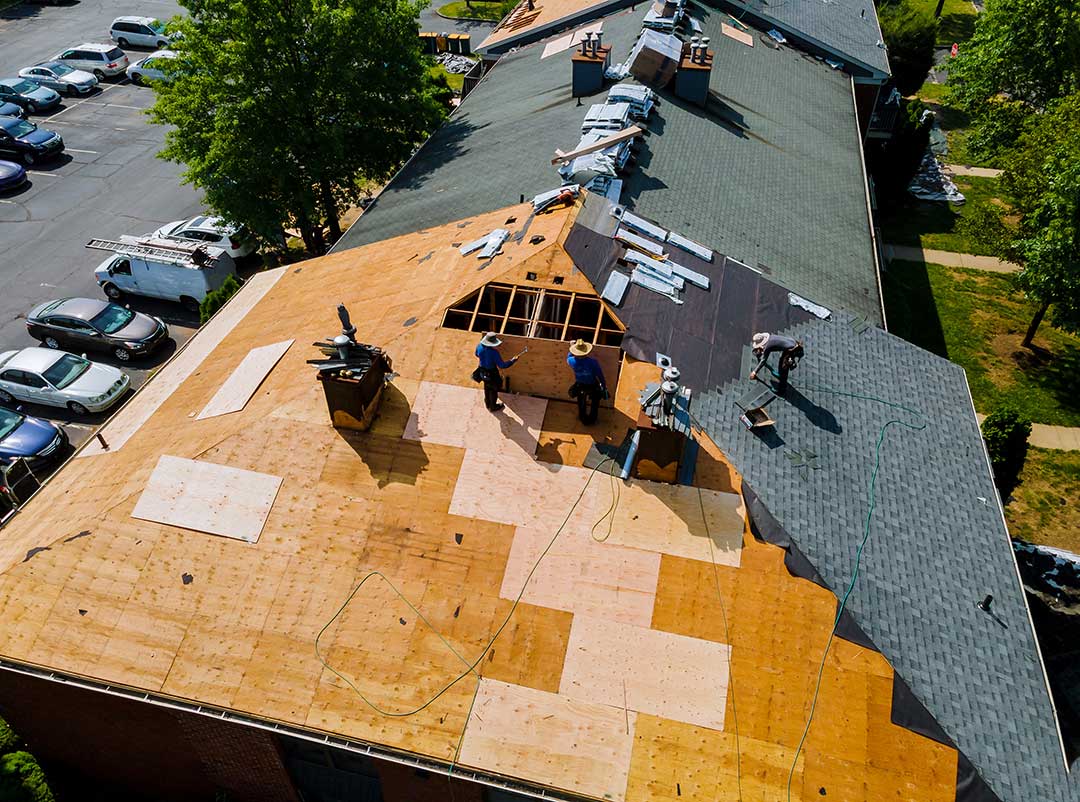
A small opening at the eave should not automatically be sealed with household caulk. Some openings are intentional ventilation paths, while others may indicate missing trim, damaged screening, or a larger moisture problem.
How should homeowners inspect roof eaves safely?
A ground-level inspection can reveal many problems without climbing onto the roof. During different seasons, look for uneven gutters, loose trim, water stains, and areas where runoff appears to miss the gutter.
Binoculars can help show whether:
- The fascia line is straight
- Gutters are securely attached
- Drip-edge metal is visible and aligned
- Soffit panels are missing or sagging
- Leaves and plant growth are accumulating at the roof edge
- Snow or ice is repeatedly collecting in one location
Interior observations also matter. In the attic, check for damp insulation, water staining, frost, musty odors, or blocked ventilation channels. These signs can result from roof leaks, indoor air leakage, inadequate ventilation, or a combination of conditions.
Work near roof edges, ladders, ice, and unstable gutters can be hazardous. Repairs involving structural damage, electrical fixtures, extensive decay, or active leaks may require qualified assistance, particularly during winter conditions.
Can eaves be changed during a roof replacement?
Eave details can sometimes be repaired or redesigned when roofing work is performed, but changes must account for the entire roof system. Increasing an overhang, replacing fascia, adding soffit ventilation, relocating gutters, or correcting drip-edge flashing can affect siding, insulation, framing, and drainage.
The appropriate design depends on the roof shape, attic configuration, wall construction, gutter placement, and local requirements. New construction and substantial alterations must follow applicable New York State building and energy-code provisions.
A roof with attractive wide eaves can still perform poorly if water is directed behind the fascia or if soffit vents are blocked. Conversely, a modest overhang can work well when its flashing, drainage, ventilation, and trim are correctly integrated.
Roof eaves are not merely decorative trim. They form a transition between the roof, walls, attic, and drainage system. Keeping that transition dry, ventilated, and structurally sound can help a home handle the wet seasons, snow loads, freezing temperatures, and thawing cycles common to the community.
