

Why do gutters matter to roof health?
Gutters protect a roof by controlling where rainwater and melting snow go after they leave the roof surface. Without a functioning drainage system, water can collect along roof edges, soak the fascia and soffits, damage siding, and saturate the soil around the foundation.
For homes in Greene, NY, gutters face changing conditions throughout the year. Spring snowmelt, heavy summer rain, falling leaves, freeze-thaw cycles, and winter ice can all affect how well the system works. A gutter problem may begin as a small blockage but eventually contribute to roof leaks or structural moisture damage.
Gutters do not make a roof waterproof by themselves. Their role is to reduce the amount of water that reaches vulnerable roof edges, exterior walls, and the ground beside the home.
How can clogged gutters damage a roof?
Clogged gutters prevent water from flowing freely to the downspouts. During rain, water may spill over the front or back edge of the gutter and run down the fascia board. If the blockage is severe, water can also collect beneath the lower edge of the roofing.
Common effects include:
- Rotting fascia boards and soffits
- Peeling paint or damaged siding
- Wet attic or wall insulation
- Water stains near roof edges
- Loose gutter sections caused by excess weight
- Mold or decay in concealed wood components
- Soil erosion below the roofline
Leaves, twigs, seed pods, roofing granules, and small amounts of sediment can accumulate over time. Even gutters that appear mostly open may have a blockage near an elbow, outlet, or underground drain connection.
A gutter does not need to be completely full to cause trouble. A partial obstruction can slow drainage enough to create overflow during a strong downpour.
Can gutters cause roof leaks?
Gutters usually do not create a roof leak directly, but poor drainage can contribute to conditions that allow water to enter the roof assembly. Overflow may wet the roof edge, fascia, soffit, and nearby wall areas repeatedly. Over time, these materials can deteriorate and allow moisture into places that are difficult to inspect.
In winter, blocked gutters can also interfere with the drainage of melting snow. If water backs up and refreezes along the roof edge, an ice dam may form. Ice dams can hold water against the lower portion of the roofing, where it may work beneath shingles or enter around roof-edge details.
A roof leak near the eaves is not always caused by the gutter. Damaged shingles, flashing, underlayment, ventilation problems, and ice dams can produce similar symptoms. Water may also travel inside a roof or wall before appearing indoors, so the visible stain may not be directly below the original entry point.
What role do gutters play during winter?
Gutters help carry melting snow and ice away from the roof, but they are not designed to support large loads of snow or thick ice. In Greene, NY, repeated freezing and thawing can place unusual stress on gutter hangers, joints, downspouts, and roof edges.
Winter warning signs include:
- Gutters pulling away from the fascia
- Long icicles forming repeatedly along one section
- Water stains on ceilings or upper walls
- Ice accumulating around downspout outlets
- Gutter sections sagging after a storm
- Snow or ice resting heavily on the gutter itself
Ice dams are influenced by more than gutter condition. Heat escaping into the attic, inadequate insulation, poor ventilation, roof shape, and fluctuating temperatures can all contribute. Cleaning the gutters helps melted water drain, but it does not correct an attic temperature imbalance.
Removing ice with sharp tools can damage shingles and flashing. Climbing onto an icy roof or ladder also creates a serious fall hazard. Roof-edge ice should not be treated as a routine do-it-yourself task when access is unsafe.
How far should downspouts discharge water from the house?
Downspouts should move water away from the foundation instead of releasing it directly beside the wall. A short extension that ends next to the foundation can concentrate a large volume of water in one small area.
The appropriate discharge method depends on the slope, soil, landscaping, drainage layout, and foundation design. In general, water should flow toward a stable area where it will not return toward the house, erode soil, or drain onto a walkway where it may freeze.
Downspouts should not discharge where water can:
- Pool beside the foundation
- Flow toward a basement entrance
- Wash out mulch or soil
- Create slippery winter surfaces
- Enter a neighboring property
- Overload a small drainage area
Underground drainage lines can also become blocked or disconnected. If a downspout seems clear but water still backs up, the problem may be below ground rather than in the gutter itself.
How often should gutters be checked?
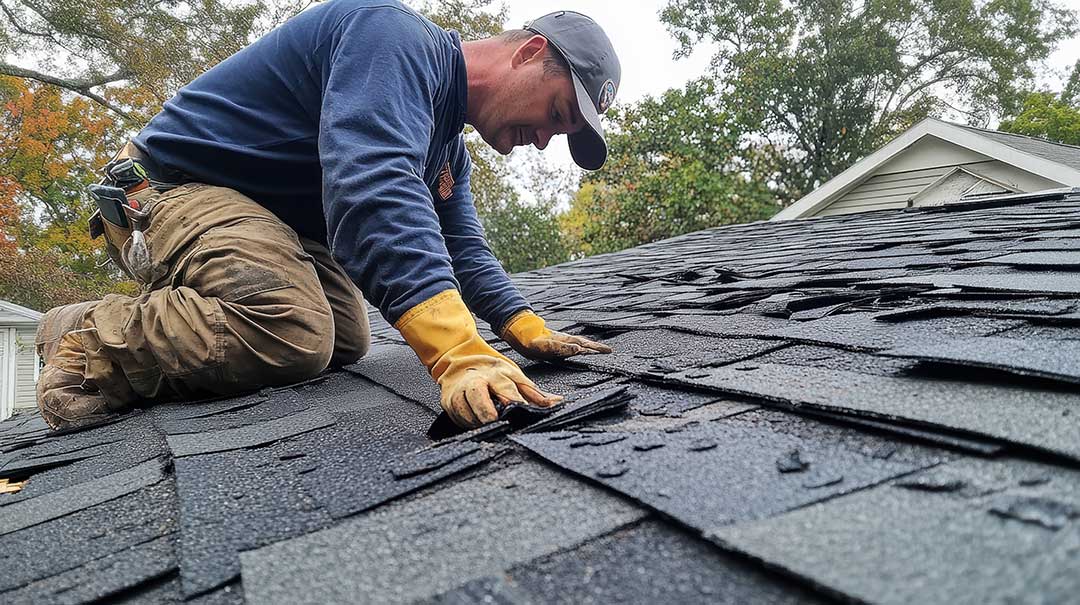
Most homes benefit from checking gutters at least twice a year: once after spring debris has fallen and again after autumn leaves have accumulated. Additional checks are useful after heavy storms, strong winds, and periods of freezing rain.
Homes surrounded by mature trees may need more frequent attention. A roof with a steep slope or a large surface area can also deliver water into gutters quickly, making overflow more likely during intense rainfall.
A basic ground-level inspection can look for:
- Sagging or uneven gutter sections
- Water spilling over during rain
- Streaks or staining below the gutter
- Loose or missing downspout sections
- Plants growing from accumulated debris
- Rust, cracks, open seams, or separated joints
- Soil erosion below roof edges
- Shingle granules collecting in the gutter
A small amount of shingle granule loss can occur on newer roofs, but heavy accumulation may indicate aging or deteriorating shingles. Gutters can provide useful clues about roof condition, although they cannot replace a full roof inspection.
Are gutter guards a complete solution?
Gutter guards can reduce the amount of leaves and larger debris entering a gutter, but they do not make the system maintenance-free. Fine particles, pine needles, roof grit, and decomposing organic material may still collect on or beneath the guard.
Some guard designs can also shed water over the gutter during heavy rainfall if the surface becomes clogged or the roof supplies water faster than the system can accept it. Their performance depends on the roof area, gutter slope, local debris, and installation quality.
Even with guards, gutters and downspouts should be checked periodically. The roof edge, fasteners, seams, and discharge points still require observation.
When does a gutter problem require prompt attention?
A gutter issue deserves prompt attention when it is connected to active interior moisture, structural deterioration, or a hazardous roof condition. Warning signs include:
- Water entering the attic or living space
- Soft or visibly rotted fascia
- Gutters separating from the roof edge
- Persistent ice buildup and ceiling stains
- A downspout that repeatedly backs up
- Foundation-area water after ordinary rainfall
- Sagging roof edges or damaged soffits
Safe ground-level maintenance is reasonable for some homeowners, but ladder work becomes more hazardous near uneven ground, steep slopes, overhead wires, ice, or fragile roof edges. Roof drainage is part of the roof system, and damage involving shingles, flashing, fascia, or structural wood may require evaluation beyond simple gutter cleaning.
Properly functioning gutters cannot prevent every roof problem, but they remove a major source of avoidable moisture exposure. Keeping the channels clear, checking the roof edge, and directing downspouts away from the foundation helps the entire roofing system perform more reliably through Greene’s wet seasons, falling-leaf periods, and winter freeze-thaw conditions.
