
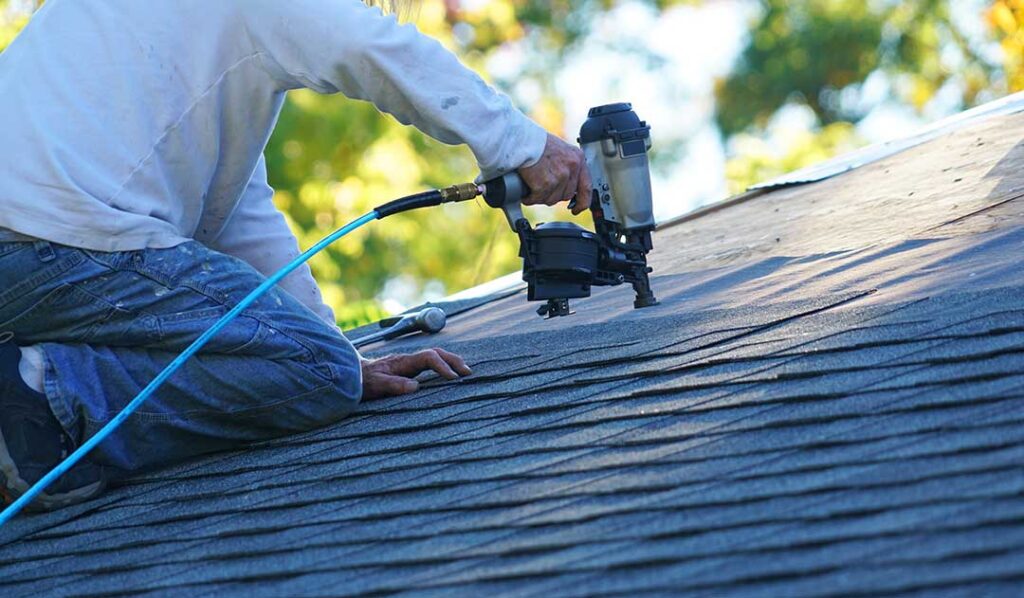
Shingle curling and cracking are common signs that an asphalt roof is changing with age, weather, moisture, or installation conditions. Some damage is mainly cosmetic, while other patterns can allow water beneath the roofing and lead to damaged decking, insulation, or ceilings.
For homeowners in Greene, seasonal temperature swings, snow, ice, wind, and repeated freeze-thaw cycles can make small shingle defects more noticeable over time. The right response depends on the type, location, extent, and age of the damage.
What does shingle curling look like?
Curling occurs when the edges or corners of a shingle lift away from the roof surface. The edges may curl upward, the corners may turn inward, or the entire shingle may appear wavy.
A small amount of edge curling on an older roof may reflect normal aging. More pronounced curling can reduce the shingles’ ability to shed water and may make them easier for wind to lift.
Look for:
- Raised corners or edges
- Shingles that no longer lie flat
- Wavy or uneven courses
- Exposed areas beneath shingle edges
- Loose tabs after windy weather
- Curling concentrated on one roof slope or near the eaves
Curling is different from buckling. Buckling usually appears as ridges or waves running across several shingles and may point to movement in the underlayment, roof deck, or moisture within the roof assembly.
Why do asphalt shingles curl?
The most common cause is aging. Asphalt shingles gradually lose flexibility as the asphalt and reinforcing layers weather. As the material contracts and becomes less pliable, the edges can pull upward.
Other possible causes include:
- Inadequate attic ventilation
- Moisture trapped beneath the roof deck
- Improper installation or fastener placement
- Shingles installed over an uneven surface
- Shingles installed during unsuitable weather conditions
- Repeated wind movement
- Excessive heat on a poorly ventilated roof
- A roof system that has reached the end of its useful service life
Ventilation is often misunderstood. It does not make an old roof new again, and it is not the only cause of curling. However, poor air movement can allow heat and moisture to build up beneath the roof deck. That environment may contribute to premature aging, wood movement, and problems with the shingle seals.
In colder climates, winter conditions can add stress. Snow and ice remain on roof surfaces, attic temperatures may vary sharply, and freeze-thaw movement can affect both shingles and the materials beneath them.
What causes shingles to crack?
Cracking may appear as short lines through the shingle surface, cracks along the edges, or splits that follow the length of the shingle. Some cracks are shallow surface crazing, while others extend through the weathering layer.
Common causes include:
- Long-term drying and aging
- Repeated expansion and contraction from temperature changes
- Hail or falling branches
- Foot traffic, especially during cold weather
- Shingles bent or lifted during installation
- Movement in the roof deck
- Manufacturing or installation problems
Thermal movement is especially relevant in areas that experience hot summer sun followed by cold winters. Asphalt becomes more flexible in warm weather and more brittle in freezing conditions. Walking on shingles during cold weather can therefore cause damage that might not occur during a mild season.
Cracks near flashing, valleys, chimneys, roof edges, or penetrations deserve particular attention because those locations already depend on careful water-shedding details.
Are curled or cracked shingles an emergency?
Usually, no. A few damaged shingles do not automatically mean that water is entering the home. However, the issue should not be ignored if the damage is spreading, the roof is leaking, or shingles are missing.
More urgent warning signs include:
- Water stains on ceilings or upper walls
- Damp insulation in the attic
- Daylight visible through the roof deck
- Missing, torn, or wind-lifted shingles
- Large areas of curling or cracking
- Rusted or displaced flashing
- Sagging roof decking
- Granules collecting heavily in gutters or at downspouts
- Damage after hail, falling limbs, or a severe windstorm
A roof can remain dry for some time after visible damage begins, particularly if the underlayment is still intact. That does not mean the shingles are performing normally. Water intrusion may first appear around a ceiling fixture, wall corner, or chimney rather than directly below the damaged area.
Can a homeowner repair one curled or cracked shingle?
A single damaged shingle can sometimes be replaced, but roof work involves fall hazards and hidden conditions that are difficult to evaluate from the ground. Shingles may also crack when lifted, particularly in cold weather.
Temporary measures should not involve walking on a steep, icy, wet, or visibly damaged roof. Do not seal over a large area with roofing cement simply to hide the pattern. That may trap moisture, interfere with later repairs, and make the underlying cause harder to identify.
A proper repair generally requires checking the shingle, fasteners, underlayment, flashing, and roof deck around the affected area. If several adjacent shingles are damaged, replacing only the most obvious one may not resolve the problem.
When is replacement more practical than repair?
Replacement becomes more likely when curling and cracking are widespread, the shingles are near the end of their expected service life, or the roof has already experienced repeated repairs.
A roof may need broader attention when:
- Damage appears on multiple slopes
- Shingles are brittle across the surface
- Seal strips have failed in many locations
- Granule loss is widespread
- Leaks have occurred more than once
- The roof has multiple layers with concealed damage
- The decking is soft, stained, or visibly distorted
A few isolated defects on a relatively newer roof may be repairable. Widespread curling on an older roof usually indicates general material deterioration rather than a problem limited to one shingle.
What should be checked in the attic?
The attic can reveal whether the visible roof damage is connected to moisture or ventilation problems. Inspection should focus on the underside of the roof deck, not just the insulation.
Look for:
- Dark stains or water marks on wood
- Damp or compressed insulation
- Mold-like growth
- Rusted nails
- Frost or condensation during cold weather
- Blocked soffit openings
- Inadequate air movement toward the ridge or upper roof
- Sagging or separated decking
Bathroom and kitchen exhaust should discharge outdoors rather than into the attic. Moist indoor air entering the attic can condense on cold roof surfaces and contribute to moisture damage.
What can Greene homeowners do after noticing damage?
Start with a ground-level inspection using binoculars if available. Photograph the affected areas from several angles and note whether the damage is limited to one slope, one roof edge, or the entire roof.
Check the attic only from a safe, stable location and avoid stepping between ceiling joists. After strong wind, heavy snow, ice, or falling branches, look for displaced shingles and check ceilings for new stains.
Roof replacement and roof recover work in Greene may require local permitting. Before work begins, property owners should verify current requirements with the applicable local code enforcement office. Permit rules can apply even when the work appears straightforward.
The most useful question is not simply, “How many shingles are curled?” It is, “Why did they curl or crack, and is the surrounding roof still watertight?” Identifying that cause helps distinguish a limited repair from a broader roof-system problem.
