
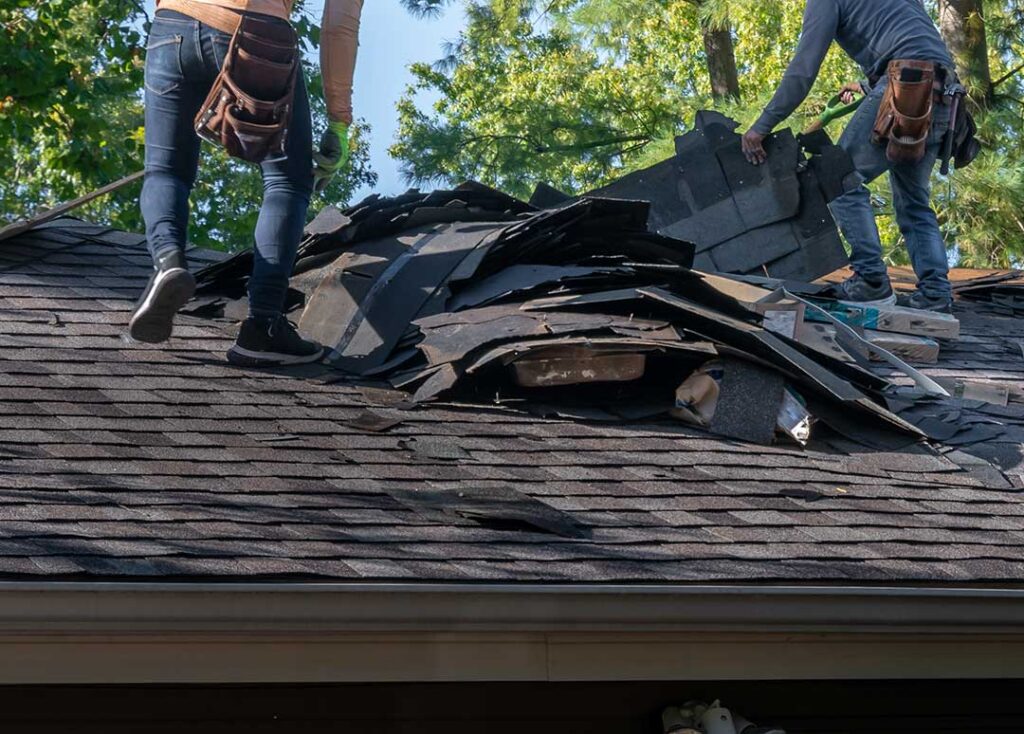
Roof decking is the structural surface installed over a roof’s rafters or trusses. It supports the underlayment and roof covering while helping the entire roof resist snow, wind, moisture, and everyday movement.
Although decking is hidden beneath shingles or other roofing materials, its condition affects nearly every part of the roof system. A roof can appear sound from the ground while the decking underneath has weakened from leaks, condensation, age, or repeated wetting and drying.
What exactly is roof decking?
Roof decking, also called roof sheathing, is the layer attached directly to the roof framing. In many homes, it consists of wood structural panels such as plywood or oriented strand board. Older houses may contain solid boards installed across the rafters.
The decking provides several functions:
- Creates a continuous surface for underlayment and shingles
- Transfers roof loads to the rafters or trusses
- Helps resist wind pressure and movement
- Supports workers and materials during roof work
- Contributes to the roof’s overall stiffness
Roof decking is not the same as the roof covering. Shingles, metal panels, slate, and similar materials shed water, but the decking beneath them provides much of the structural support.
How is roof decking different from the rest of the roof?
A typical roof has several layers, and each one has a separate job.
The roof framing consists of rafters or engineered trusses. These are the main structural members that create the roof’s shape.
The decking is fastened to that framing. It forms the flat or sloped surface visible only during construction or roof replacement.
The underlayment is installed over the decking. It provides an additional moisture barrier below the roof covering.
The roof covering is the exposed layer, such as asphalt shingles, metal roofing, wood shingles, or another approved material.
Flashing is installed around chimneys, walls, valleys, vents, skylights, and roof edges. It directs water away from vulnerable joints. Good flashing cannot fully compensate for decking that has already lost its strength.
What materials are commonly used?
Plywood and oriented strand board are the most common materials in newer residential construction. Both are wood-based structural panels, but they are manufactured differently.
Plywood is made from thin wood veneers layered in alternating directions. It generally handles repeated moisture exposure better than some other wood panels, although it can still delaminate or decay if leaks continue.
Oriented strand board is made from compressed wood strands bonded with adhesive. It is widely used because it provides consistent panel sizes and structural performance. If it remains wet for extended periods, edges may swell and become uneven.
Older homes may have board decking made from individual planks. Boards can remain serviceable for many decades, but gaps, cracks, splitting, and movement may create problems for modern roofing materials. A roof replacement over older plank decking may require careful evaluation before new materials are installed.
What causes roof decking to deteriorate?
The most common cause is water intrusion. A small leak around a flashing detail, roof penetration, valley, or damaged shingle can wet the same area repeatedly. Over time, the wood may soften, rot, swell, delaminate, or lose its ability to hold fasteners.
Other causes include:
- Ice dams that allow meltwater to back up beneath the roof covering
- Condensation caused by inadequate attic ventilation or warm, moist air reaching the underside of the roof
- Long-term exposure after storm damage
- Improperly driven or widely spaced fasteners
- Heavy rooftop loads or structural movement
- Repeated installation of new roofing over deteriorating materials
Seasonal weather in Greene can place added stress on roof assemblies. Snow, freezing temperatures, spring thawing, wind-driven rain, and rapid changes between wet and dry conditions all increase the importance of keeping the roof covering and flashing in good condition.
What are the warning signs of damaged decking?
Some warning signs appear inside the home, while others are found during roof work. Interior clues may include:
- Brown or yellow ceiling stains
- Damp insulation in the attic
- Musty odors
- Peeling paint near upper-floor ceilings
- Sagging areas on the ceiling or roofline
- Light visible through roof boards, where it should not be visible
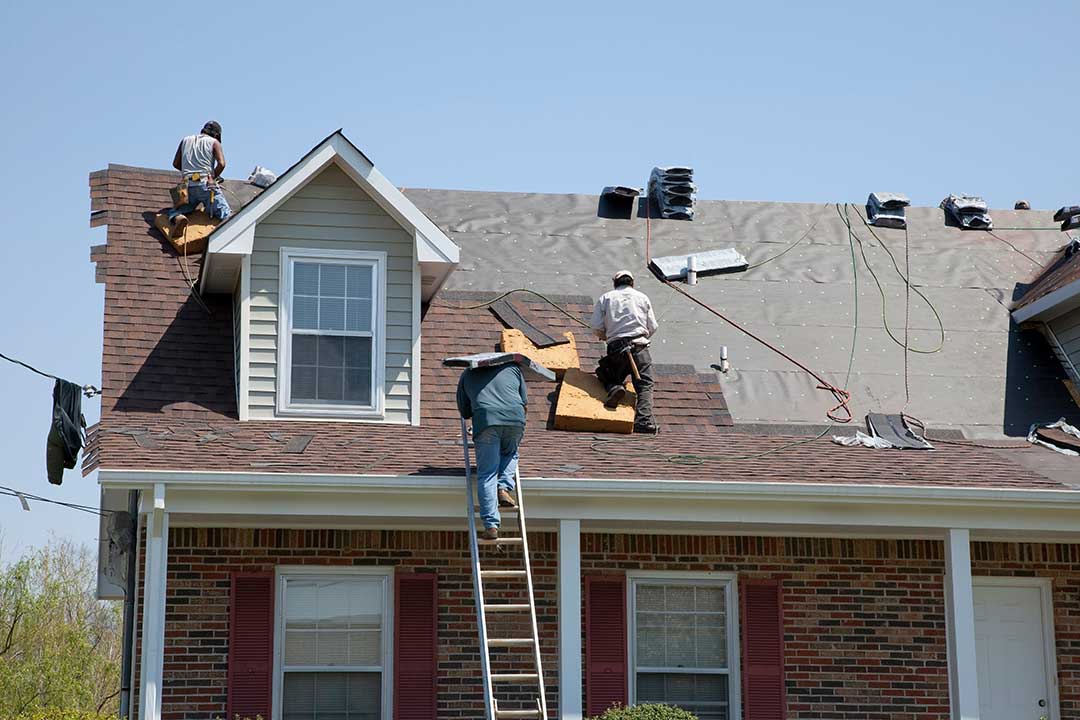
From outside, a roof may show uneven planes, depressions, or areas where shingles appear wavy. These signs do not always prove that decking has failed, but they deserve attention.
Soft spots are especially significant. Walking on a roof or attic surface can be dangerous, and pressing on a visibly damaged area can cause injury or create additional damage. Roof decking should not be tested by walking across questionable sections.
Does every roof replacement require new decking?
No. Decking does not automatically need replacement simply because the shingles are being replaced. If the panels are dry, structurally sound, properly attached, and able to hold roofing fasteners, they may remain in place.
Replacement becomes more likely when the decking is:
- Soft, rotten, swollen, or delaminated
- Structurally cracked or broken
- Stained from long-term moisture exposure
- Too uneven for the planned roof covering
- Unable to hold nails securely
- Inconsistent with current construction or roofing requirements
Small isolated areas may need limited replacement, while widespread deterioration can indicate a larger moisture or ventilation problem. Covering damaged decking without addressing the cause can leave the roof vulnerable beneath a new surface.
Can new shingles be installed over old or damaged decking?
New roofing should not be treated as a substitute for sound decking. Shingles depend on a stable, properly attached surface. If the decking flexes, swells, or cannot hold fasteners, the roof covering may fail prematurely.
In addition, roofing work must follow the applicable New York State construction requirements and the installation instructions for the selected material. Requirements can address panel attachment, underlayment, ice-barrier areas, ventilation, fire performance, and wind resistance.
The exact requirements may vary according to the building type, roof design, materials, and scope of work. Local code enforcement can clarify permit or inspection questions for a specific project.
How can homeowners protect roof decking?
The most effective protection is preventing water from reaching it. Practical steps include keeping roof coverings in serviceable condition, maintaining flashing, clearing leaves from valleys and drainage areas, and ensuring attic air movement is not blocked.
Attic insulation and ventilation should work together. Warm indoor air that leaks into a cold attic can create condensation on the underside of the decking, even when no exterior roof leak is present.
After severe wind, heavy snow, or an ice-dam event, inspect accessible attic areas for dampness or staining. A roof inspection may be necessary when there is visible sagging, active leaking, widespread mold-like growth, or concern about structural safety. Roof surfaces and severely damaged attic areas should not be entered casually.
Understanding the decking layer makes roof problems easier to interpret. Shingles may be the visible part of the system, but the dry, stable surface beneath them is what allows the rest of the roof to perform properly.
