
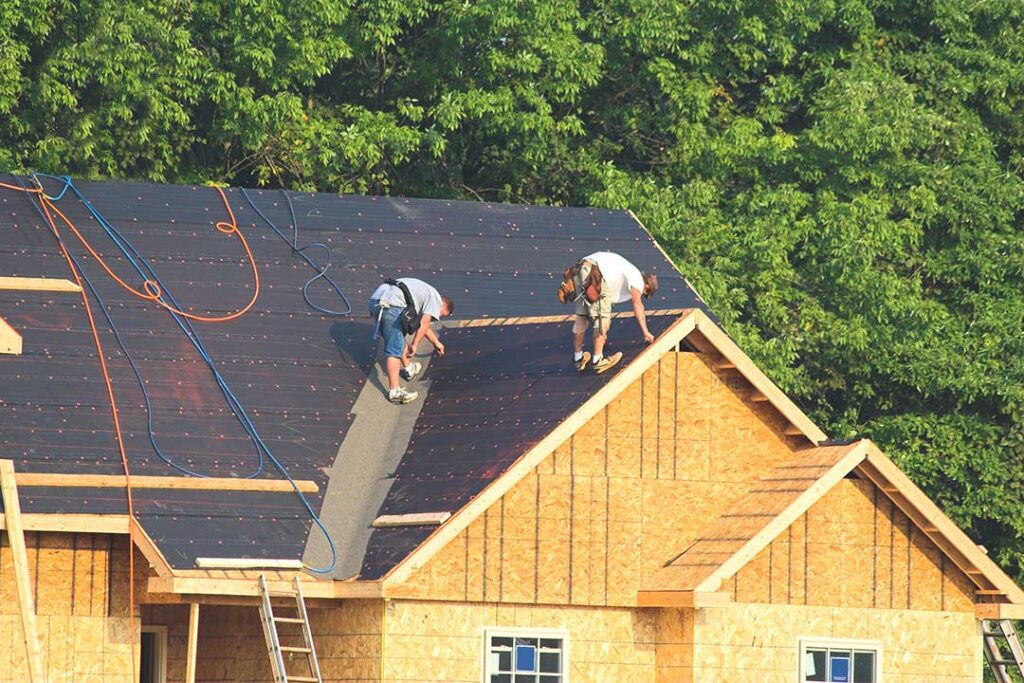
How long does a typical roof last?
A typical asphalt-shingle roof lasts about 15 to 30 years, although the actual service life depends on the shingle quality, installation, ventilation, maintenance, weather exposure, and the condition of the roof structure below it.
For homes in Greene, NY, seasonal weather can make roof age difficult to judge by the calendar alone. Snow, ice, wind, freeze-thaw cycles, summer heat, moisture, and falling branches can all affect roofing materials. A roof that is 20 years old may still be performing well, while a younger roof may need attention if it has poor ventilation, storm damage, or repeated moisture exposure.
Age is a useful starting point, but visible condition and performance provide a better guide.
What are the typical lifespans of common roofing materials?
Roofing materials do not all age at the same rate. Approximate service ranges include:
- Basic asphalt shingles: 15 to 20 years
- Architectural asphalt shingles: 20 to 30 years
- Premium or impact-resistant asphalt shingles: 25 to 40 years in favorable conditions
- Metal roofing: 40 to 70 years or more, depending on the metal, coating, fasteners, and maintenance
- Wood shakes or shingles: About 20 to 30 years, with more maintenance than many other materials
- Clay, concrete, or slate roofing: Several decades to more than a century when properly installed and supported by a suitable structure
These are estimates rather than guarantees. A material rated for 30 years does not automatically last 30 years on every home. Manufacturers often base expected life on controlled conditions, while real roofs experience wind, debris, ice, foot traffic, poor drainage, and changing temperatures.
Why does the local climate affect roof life?
Seasonal weather is one of the main reasons two roofs of the same age can be in very different condition. In Greene, winter conditions can bring snow loads, ice formation, and repeated freezing and thawing. Water can enter small openings, freeze, expand, and gradually enlarge them.
Wind can loosen shingles or damage flashing around chimneys, vents, skylights, and roof edges. Heavy rain may expose drainage problems, especially when gutters are blocked or downspouts discharge near the foundation. During summer, ultraviolet exposure and heat can dry or weaken some roofing materials.
Trees also matter. Branches that rub against shingles can remove protective surface granules. Falling limbs may cause obvious punctures, but smaller impacts can create damage that is less visible from the ground. Moss and organic debris can hold moisture against the roof surface, particularly in shaded areas.
What are the signs that a roof is nearing the end of its life?
A roof may need closer evaluation when several warning signs appear together. Common indicators include:
- Shingles that are curling, buckling, cracked, or missing
- Areas where the shingle surface has lost many protective granules
- Dark streaks or patches that may indicate algae, staining, or moisture retention
- Exposed nail heads or loose flashing
- Sagging along the roof plane or near the ridge
- Water stains on ceilings, walls, or attic wood
- Daylight visible through the roof boards in an attic
- Damp insulation, musty odors, or signs of mold in the attic
- Frequent small leaks after rain or snowmelt
A single missing shingle does not always mean the entire roof has failed. Localized damage can sometimes be limited to one area. However, repeated repairs, widespread granule loss, or leaks in multiple locations suggest that the roof system may be approaching the end of its useful life.
Does a roof’s age determine whether it should be replaced?
No. Roof age helps establish risk, but it should not be used by itself to decide whether replacement is necessary.
A 12-year-old roof with poor attic ventilation, storm damage, and recurring leaks may be in worse condition than a carefully maintained 25-year-old roof. The quality of the original installation also matters. Improper flashing, inadequate underlayment, poor fastening, and insufficient ventilation can shorten the life of otherwise durable materials.
Roofing should be viewed as a system rather than a layer of shingles. The system may include shingles or panels, underlayment, flashing, ventilation, roof decking, gutters, and the structural framing beneath the decking. Problems in one part can affect the others.
How does attic ventilation affect roof longevity?
Proper attic ventilation helps manage heat and moisture. During cold weather, warm indoor air can move into the attic and condense on cooler surfaces. Persistent moisture may contribute to wood deterioration, insulation problems, and mold growth.
During summer, excessive attic heat can accelerate aging in some roofing materials and increase stress on components. Balanced intake and exhaust ventilation allows air to move through the attic rather than becoming trapped.
Ventilation does not correct every roofing problem. It cannot compensate for active leaks, damaged flashing, or inadequate insulation. Still, a well-designed attic environment can reduce moisture-related deterioration and help roofing materials perform closer to their expected lifespan.
Can snow and ice damage a roof?
Snow does not automatically damage a properly designed roof, but heavy accumulation can add substantial weight. Problems are more likely when snow combines with structural weaknesses, blocked drainage, or uneven buildup caused by roof geometry.
Ice dams can also create trouble. They form when heat escapes into a cold attic and melts snow on warmer sections of the roof. The water can refreeze near colder eaves, creating a dam that holds later meltwater against the shingles and flashing. That water may work beneath roofing materials and enter the attic or walls.
Signs of possible ice-dam problems include water stains near exterior walls, wet attic insulation, peeling paint, or recurring leaks during thawing weather. Preventive measures generally involve addressing attic insulation and ventilation, keeping drainage paths clear, and avoiding unsafe attempts to remove ice from the roof.
How can homeowners extend the useful life of a roof?
Routine observation and basic maintenance can help prevent small problems from becoming major ones. Useful habits include:
- Inspecting the roof and attic after major wind, ice, or hail events
- Keeping gutters and downspouts clear of leaves and roof debris
- Trimming branches that contact or overhang the roof
- Looking for loose flashing around penetrations and roof edges
- Checking attic areas for dampness, staining, or condensation
- Avoiding pressure washing or harsh cleaning methods that can remove protective granules
- Recording the installation date and any repairs for future reference
Roof surfaces can be dangerous, especially when wet, icy, steep, or covered with moss. A ground-level inspection and an attic check are safer for most residents. Conditions involving sagging, active leaks near electrical components, major storm damage, or suspected structural weakness require prompt attention because they involve more than ordinary surface wear.
Is a roof replacement always necessary after a leak?
No. A leak may come from a limited failure in flashing, a damaged pipe boot, a small area of missing shingles, or an opening around a vent. In those cases, a targeted repair may resolve the problem.
However, a leak inside the home does not always appear directly below the exterior damage. Water can travel along roof decking, rafters, insulation, and wall cavities before becoming visible. A repaired surface may not solve the issue if wet materials remain underneath.
Replacement becomes more likely when leaks are widespread, the decking is deteriorated, shingles are failing across large areas, or repairs have become frequent and temporary. The key question is whether the roof can still protect the building reliably and economically over the next several years.
For most asphalt-shingle homes, the 15- to 30-year range is a useful planning guide. A careful inspection, attic observations, maintenance history, and knowledge of past weather exposure provide a more accurate picture than age alone.
