
Why roofing terms matter
Understanding basic roofing language helps homeowners describe problems accurately, compare repair information, and recognize when a concern may involve more than a few missing shingles. In Greene, NY, roofs must handle winter snow, freeze-thaw cycles, wind, rain, and occasional ice buildup, so small defects can become more serious if water reaches the roof deck or attic.
The terms below cover the main parts of a residential roof, common warning signs, and the words often used when discussing repairs or replacement.
What are the main parts of a roof?
A residential roof is a system of layers and components, not just the visible covering. Each part has a separate function.
- Roof covering: The outermost weather-resistant layer, such as asphalt shingles, metal panels, slate, or another approved material.
- Roof deck: The structural surface beneath the covering. It is commonly made from plywood or oriented strand board. The deck supports the roof covering and can be damaged by long-term leaks.
- Underlayment: A protective sheet installed over the roof deck and beneath the outer covering. It provides a secondary layer of moisture resistance.
- Ice barrier: A waterproof membrane installed in areas vulnerable to ice damming. It helps limit water intrusion when melting snow backs up beneath the roof covering.
- Flashing: Thin pieces of metal or other durable material installed around chimneys, walls, valleys, skylights, vents, and roof edges. Flashing directs water away from vulnerable joints.
- Drip edge: A metal strip installed along eaves and rakes. It helps move water into the gutters and protects the edges of the roof deck.
- Ridge: The highest horizontal line where two sloping roof surfaces meet.
- Eave: The lower edge of a sloped roof, where water typically runs toward the gutter.
- Rake: The sloped edge of a roof along a gable.
- Valley: The internal angle where two roof slopes meet. Valleys carry a large amount of runoff and require careful installation.
A leak does not always appear directly below the damaged area. Water may travel along the roof deck, rafters, insulation, or interior framing before showing up as a ceiling stain.
What do roof pitch and roof slope mean?
Roof pitch describes how steeply a roof rises compared with its horizontal distance. A roof described as “6-in-12,” for example, rises six inches for every twelve inches of horizontal run.
Roof slope affects several practical issues:
- How quickly rain and melting snow drain
- Which roofing materials are suitable
- How much snow may remain on the surface
- Whether walking on the roof is especially hazardous
- How flashing and underlayment should be installed
Low-slope roofs generally require different materials and installation methods than steeply pitched roofs. A roof that appears nearly flat may still have a slight slope designed to direct water toward drains or edges.
What is roof ventilation?
Roof ventilation allows air to move through an attic or enclosed rafter space. Common components include soffit vents near the lower roof edge, ridge vents near the peak, gable vents, and other approved vents.
Balanced ventilation usually requires both intake and exhaust openings. Intake air enters near the eaves, while warmer air exits higher on the roof. Blocked soffit vents, inadequate insulation, or poorly placed exhaust vents can interfere with this movement.
Proper ventilation helps manage heat and moisture. In winter, heat escaping into the attic can warm the underside of the roof, melt snow, and contribute to ice dams. In summer, trapped heat can increase attic temperatures and place additional stress on roofing materials.
Ventilation is not a substitute for air sealing or insulation. A well-performing attic generally needs all three: controlled airflow, adequate insulation, and reduced air leakage from the living space below.
What is an ice dam?
An ice dam is a ridge of ice that forms along a roof edge when snow melts on a warmer section of the roof and refreezes near the colder eaves. The resulting ice can block drainage and cause water to back up beneath shingles or other roof coverings.
Signs may include:
- Icicles accompanied by thick ice along the eaves
- Water stains near exterior walls or ceilings
- Damp insulation in the attic
- Peeling paint or damaged trim near roof edges
Ice dams are often related to uneven roof temperatures, attic air leakage, insufficient insulation, or blocked ventilation. Removing snow or ice from a roof can be dangerous and may damage the roof covering. Roof rakes, improved attic insulation, air sealing, and correctly designed ventilation may help reduce recurring problems.
What is flashing, and why does it fail?
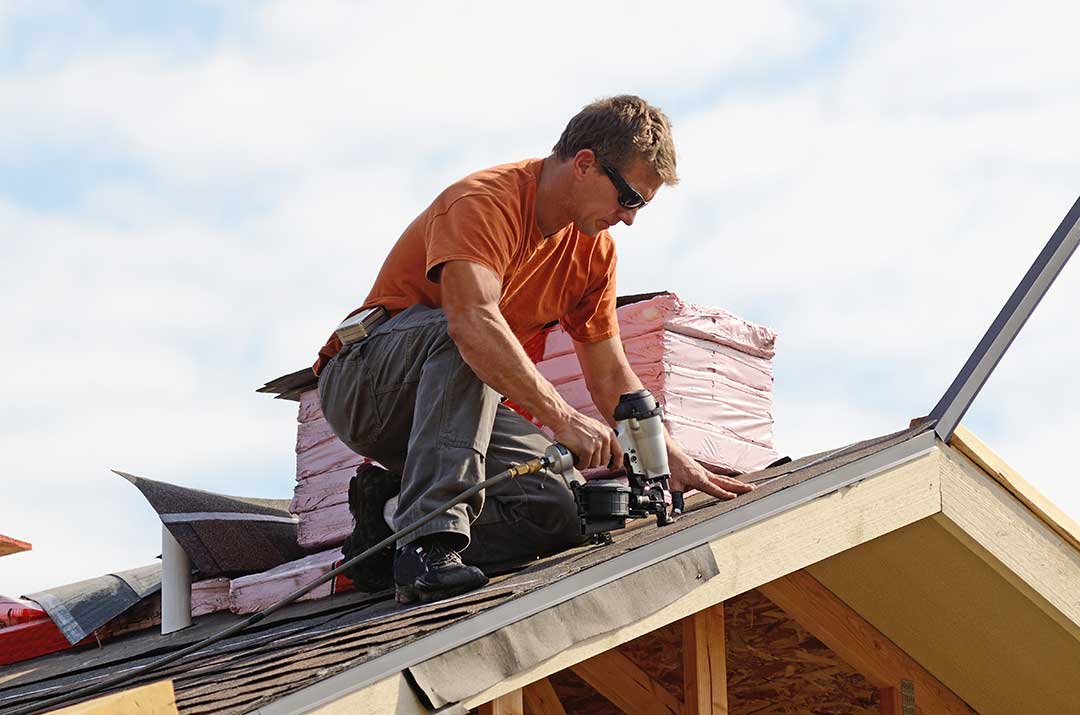
Flashing protects transitions and openings where water could otherwise enter. Common types include step flashing along walls, valley flashing in roof intersections, chimney flashing, and flashing around plumbing vents.
Flashing can fail because of corrosion, loose fasteners, sealant deterioration, movement between building materials, or improper installation. Sealant alone is not a permanent replacement for correctly shaped and integrated flashing.
A leak near a chimney, skylight, wall, or vent should not automatically be assumed to be a shingle problem. The flashing system may be the source, especially when the visible roofing appears intact.
What is a roof recover compared with a roof replacement?
A roof replacement removes the existing roof covering, and sometimes damaged underlayment or roof deck, before installing a new roof system.
A roof recover places a new approved roof covering over an existing one without completely removing the older covering. Whether this is allowed depends on the roof’s condition, the number of existing layers, the material being installed, and applicable building requirements.
A recover may not be appropriate when the existing roof has widespread moisture damage, significant deck deterioration, excessive layers, poor drainage, or underlying ventilation problems. Covering visible symptoms without addressing structural or moisture concerns can shorten the life of the new work.
Roofing permits are required for roofing activity in Greene, and local code requirements may distinguish between replacement and recover work. Permit questions should be checked before work begins, particularly when the project involves structural repairs or changes to the roof assembly.
What do common shingle terms mean?
Algae streaks are dark marks caused by organisms that grow on damp roofing surfaces. They may affect appearance without immediately indicating a leak.
Blistering refers to raised areas on shingles, often associated with trapped moisture or manufacturing and installation conditions.
Granule loss occurs when the small protective ceramic particles on asphalt shingles loosen. A few granules in gutters can be normal, especially after installation, but heavy accumulation may indicate aging or damage.
Curling occurs when shingle edges or corners turn upward or downward. Curling can allow wind and water to reach beneath the shingles.
Buckling describes wrinkles or raised lines across shingles. It may be connected to movement in the roof deck, moisture, or installation conditions.
Missing shingles leave the underlayment and roof deck more exposed to weather. Even a small missing area can become a leak path during wind-driven rain.
When does a roof problem require immediate attention?
Some conditions should be treated as urgent because they involve active water intrusion or structural risk:
- A ceiling that is sagging or bulging
- Water entering during rain or snowmelt
- Exposed roof decking
- Large sections of missing or lifted roofing
- Signs of structural movement
- Heavy snow or ice accompanied by unusual creaking or visible sagging
- Electrical fixtures affected by a leak
Avoid entering areas with sagging ceilings or suspected structural damage. Water near electrical components also creates a safety hazard. Roof surfaces covered with snow, ice, frost, or steep slopes should not be treated as routine walking areas.
Knowing terms such as roof deck, underlayment, flashing, pitch, ventilation, ice barrier, and ice dam makes it easier to understand what a roof is doing and where a problem may begin. It also helps homeowners distinguish between a surface repair and a larger issue involving moisture, drainage, insulation, or structure.
