
Renovations can expose a roof to damage that is easy to miss until the next heavy rain, freeze, or snowstorm. In Greene, NY, changing weather, wind, ice, and seasonal temperature swings make temporary roof protection just as important as the finished construction.
A roof can be harmed by falling tools, misplaced ladders, loose materials, foot traffic, dust, punctures, blocked drainage, and improperly installed temporary coverings. The safest approach is to plan how the roof will be protected before renovation work begins.
Which renovation activities can damage a roof?
Roof damage is possible even when the project is not directly related to roofing. Additions, siding work, chimney repairs, solar work, window replacement, painting, and exterior carpentry can all affect roof surfaces or drainage systems.
Common risks include:
- Ladders resting against shingles, flashing, gutters, or roof edges
- Tools, screws, nails, and demolition debris landing on the roof
- Workers walking across areas not designed for frequent foot traffic
- Temporary tarps rubbing against shingles or trapping moisture
- Building materials sliding onto roof surfaces
- Dust and debris collecting in valleys, gutters, and downspouts
- New walls or additions redirecting water toward existing roof sections
- Snow, rain, or wind entering through an unfinished opening
Even a small puncture can allow water beneath shingles. The visible leak may not appear until moisture travels along roof decking, insulation, or framing.
How should a roof be inspected before work starts?
A pre-renovation inspection creates a record of the roof’s condition and identifies weak areas before they are covered or disturbed. Look for cracked, curled, loose, or missing shingles; exposed fasteners; damaged flashing; soft decking; clogged gutters; and signs of previous leaks.
Photographs are useful, especially around:
- Roof edges and eaves
- Valleys and roof-to-wall connections
- Chimneys, vents, skylights, and other penetrations
- Areas where ladders or scaffolding will be placed
- Gutters, downspouts, and drainage outlets
- Any existing stains on ceilings or upper walls
This documentation helps distinguish pre-existing conditions from damage caused during construction. It also gives the renovation team a clear map of areas that need extra care.
If the roof already has active leaks, soft spots, or structural damage, those issues should be addressed before materials and equipment are placed nearby. Covering a known problem without repairing its cause can trap moisture and make later repairs more difficult.
What is the safest way to use ladders and scaffolding?
Ladders should not rest directly on shingles, gutters, or fragile flashing. Pressure from ladder feet or rails can crack shingles, bend metal, loosen gutters, or damage the roof edge.
Where possible, ladders should be positioned on stable ground and secured according to the equipment manufacturer’s instructions. A ladder stabilizer or stand-off attachment can help keep the rails away from gutters and roof surfaces. Scaffolding should be supported independently rather than placed on the roof unless it has been specifically designed and installed for that purpose.
Workers should avoid dragging equipment across shingles. Even minor abrasion can remove protective granules and shorten the life of the roofing material.
For steep roofs, icy conditions, wet surfaces, or elevated work near power lines, the risk increases substantially. Fall protection and site controls are necessary because a fall can injure a person and cause serious roof damage at the same time.
Should tarps be used during a renovation?
Tarps can provide short-term protection, but they are not a substitute for a properly installed temporary roof covering. A loose tarp may flap in the wind, scrape away shingle granules, collect water, or allow rain to run into walls and unfinished areas.
A temporary covering should be:
- Large enough to extend beyond the exposed area
- Supported so water does not pool
- Secured without unnecessary punctures
- Positioned to direct water away from openings and wall assemblies
- Checked after strong wind, heavy rain, and snowfall
Avoid fastening a tarp through intact shingles whenever another secure method is available. Improperly placed nails or screws create new holes that may leak after the tarp is removed.
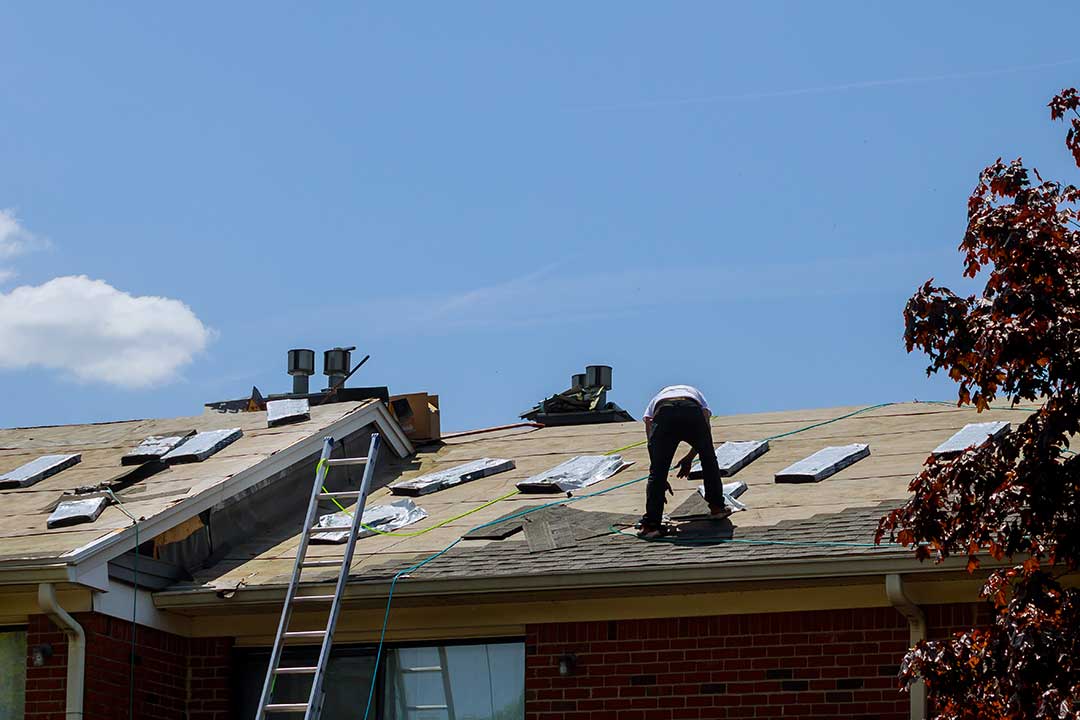
During Greene, NY winters, snow and ice can add substantial weight to a temporary covering. A tarp that appears secure in mild weather may fail during freezing rain, drifting snow, or strong gusts. Temporary protection should be inspected frequently rather than assumed to be reliable until the project ends.
How can roof drainage be protected?
Gutters and downspouts should remain clear throughout the renovation. Sawdust, roofing granules, leaves, insulation, and small pieces of siding can collect in drainage paths and cause water to overflow against fascia, siding, foundations, or unfinished walls.
Before work begins, identify where roof water is supposed to flow. Downspouts may need temporary extensions if scaffolding, excavated areas, or new foundations change the normal discharge path.
Do not use gutters as storage shelves for tools or materials. They are not designed to support construction loads, and bending can prevent water from reaching the downspouts.
After major work, check the roof during rainfall if conditions are safe. Watch for overflowing gutters, water flowing behind gutters, ponding near additions, or runoff directed toward an unfinished opening.
What precautions are needed during an addition or roof opening?
Any project that removes roofing, decking, walls, or flashing must have a daily weather plan. An opening should not be left exposed overnight unless it has been securely protected against rain, wind, and temperature changes.
Before a roof section is opened, confirm:
- Which materials will be removed
- How the opening will be covered at the end of each work period
- Where water will drain if rain begins
- How insulation and interior finishes will be protected
- Whether temporary bracing or structural support is required
- Who will inspect the covering after changing weather
A temporary roof should shed water rather than simply cover the hole. Water that collects behind a covering can enter through seams, fasteners, or exposed framing.
Renovations involving structural changes, electrical work, fire separation, or new roof areas may also require permits or inspections. Local requirements can vary by project, so plans should be checked before work begins.
How should the roof be protected after the renovation?
When construction is complete, inspect the roof and drainage system before removing all protective materials. Look for loose shingles, exposed nails, punctured membranes, displaced flashing, damaged vents, bent gutters, and debris in valleys.
Check attic spaces and upper-floor ceilings for damp insulation, new stains, peeling paint, or musty odors. Some leaks appear only after several rain events, particularly where water has traveled beneath roofing layers.
Fasteners and scraps should be removed from the roof and surrounding ground. Small metal pieces can damage tires, injure people or pets, and become lodged in gutters.
A final inspection should also confirm that new siding, trim, wall flashing, vents, and roof surfaces work together as a drainage system. Roof protection is not complete until water has a clear path away from the structure.
Which roof-protection tasks require extra caution?
Homeowners can document conditions, keep gutters clear, monitor temporary coverings, and ask how the roof will be protected. Work involving steep slopes, structural openings, damaged decking, ice, snow, or exposed electrical hazards requires specialized safety procedures.
Roof surfaces can be slippery even when they appear dry, and hidden damage may not be visible from the ground. If a roof must be accessed, the safety plan should take priority over convenience. Renovation work should pause during unsafe weather rather than relying on improvised coverings or unsecured equipment.
Careful staging, protected roof access, reliable temporary weatherproofing, and regular inspections can prevent a remodeling project from creating avoidable leaks or shortening the life of an otherwise serviceable roof.
