

Severe wind can damage a roof even when shingles are not visibly missing. Gusts may loosen roofing materials, lift flashing, drive rain beneath protective layers, and weaken connections around chimneys, vents, gutters, and roof edges. In Greene, NY, wind damage may occur during thunderstorms, remnants of tropical systems, winter storms, and periods of fast-changing weather.
What kinds of roof damage can severe winds cause?
The most common wind-related problems involve roofing materials being lifted, shifted, cracked, or torn away. Wind does not need to remove an entire section of roof to create a leak. A single loosened shingle can allow water to reach the underlayment or roof decking during the next rainfall.
Damage may include:
- Missing shingles or shingles lying in the yard
- Lifted shingle edges or visible creases
- Torn tabs and cracked asphalt surfaces
- Exposed underlayment or roof decking
- Bent, loosened, or missing flashing
- Detached ridge caps along the roof peak
- Damaged soffits, fascia, gutters, or downspouts
- Fallen branches or punctures from airborne debris
Wind can also affect low-slope roof sections, porch roofs, detached garages, sheds, and additions differently from the main roof. Changes in roof height and shape can create areas where gusts become more concentrated.
Why are roof edges and corners especially vulnerable?
Roof edges, corners, and ridges experience more wind pressure than the middle of a roof surface. Air moving over the roof can create uplift, particularly where shingles, flashing, or trim have already started to age.
The first areas to inspect after a major wind event are often:
- Eaves and rake edges
- Outside corners
- Ridge caps
- Valleys
- Areas around plumbing vents and chimneys
- Roof-to-wall transitions
- Sections near large trees
A roof may appear intact from the ground while wind has loosened materials at an edge. Once one section begins to lift, later gusts can work underneath it and spread the damage.
Can wind damage happen without missing shingles?
Yes. Wind can loosen shingles without removing them completely. A shingle may remain in place but have broken adhesive seals or lifted fasteners. This condition can be difficult to see from the ground and may not cause an immediate leak.
Signs of less obvious damage include:
- Shingles that look raised, wavy, or uneven
- Exposed nail heads
- Small tears near shingle corners
- Granules collecting in gutters or at downspouts
- New water stains in an attic or upper-level room
- Damp insulation or a musty odor after rain
- Flashing that appears bent or separated
A roof can also experience wind-related damage beneath the surface. Repeated movement may loosen nails or enlarge small gaps around flashing. Water often enters later, after the storm has passed, which can make the problem seem unrelated to the original wind event.
How can residents safely check for damage?
A ground-level inspection is the safest first step. Look for roofing pieces in the yard, branches on the roof, unusual dark patches, lifted shingles, and damaged gutters. Binoculars can help with viewing higher sections without climbing.
Inside the home, check the attic and upper floors for signs of moisture. Look beneath roof penetrations and along exterior walls where water may travel before becoming visible. A flashlight can reveal damp wood, stained insulation, or daylight showing through the roof deck.
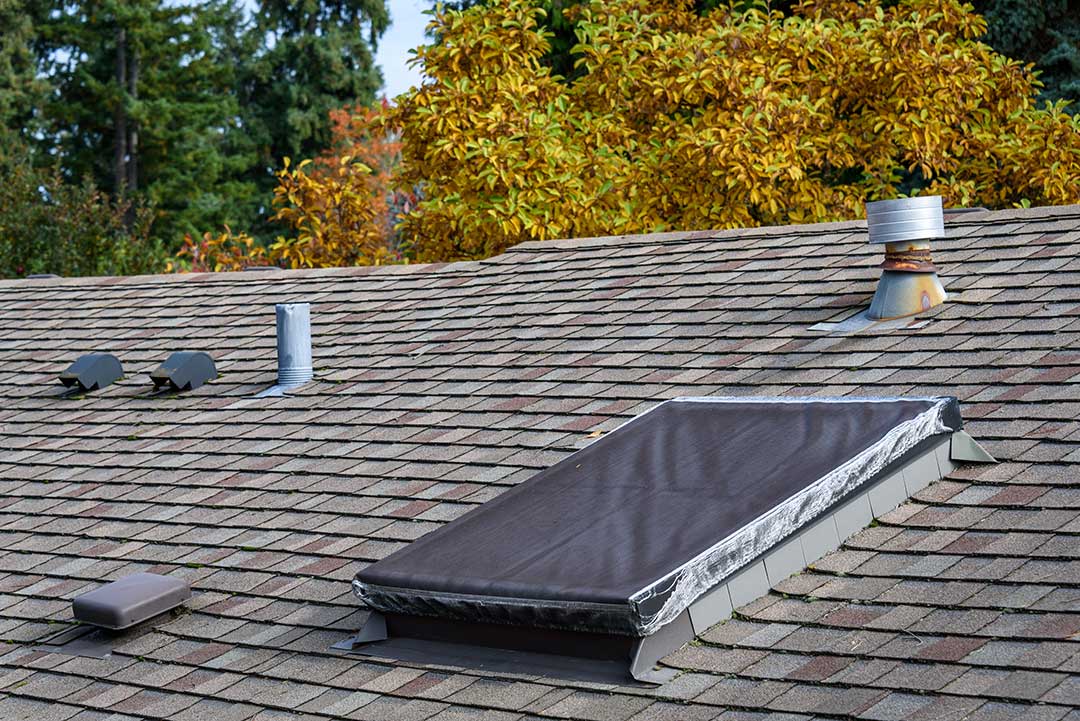
Avoid climbing onto a roof after severe weather. Wet shingles, loose materials, hidden structural damage, and fallen branches can create serious fall hazards. Do not walk on areas that appear sagging or damaged.
If a tree or large limb has struck the roof, stay clear of the affected area until it is confirmed to be stable. A damaged roof may be supporting more weight than it appears to hold.
What should happen if water is entering the house?
Active water intrusion should be addressed promptly to limit damage to ceilings, insulation, drywall, framing, and personal belongings. Place a container beneath a drip if it can be done safely, and move furniture or other items away from the affected area.
If water is near electrical fixtures, outlets, or wiring, avoid touching the area. Shut off power only if the electrical panel and surrounding floor are dry and safe to reach. Water near electrical systems can create a shock or fire hazard.
A temporary covering may reduce additional exposure, but it should not involve climbing onto the roof during unsafe conditions. Roof damage can worsen with each rainfall, especially when underlayment or flashing has been compromised.
How do trees and nearby structures increase wind risk?
Trees are a major source of roof damage during high winds. Branches may scrape shingles, break through roof surfaces, block gutters, or fall directly onto the structure. Dead limbs and overhanging branches deserve particular attention before storm season.
Nearby buildings, fences, sheds, and other obstacles can change how wind moves around a property. Wind may accelerate around corners or become turbulent where structures meet. Homes with additions, dormers, porches, or multiple roof levels have more transitions and edges where materials can be stressed.
In wooded parts of the community, roof inspections should include areas beneath mature trees and sections that are shaded or difficult to view. Moss, dampness, and debris can hide small defects that become more serious during a storm.
Does the age and condition of a roof affect wind resistance?
Yes. A well-maintained roof generally has a better chance of resisting wind than one with loose, brittle, or deteriorated materials. Age alone does not determine performance, but older roofing may have weaker adhesive seals, weathered surfaces, and previous repairs that require attention.
Wind resistance can also be affected by:
- Improperly installed fasteners
- Missing or deteriorated edge materials
- Loose flashing
- Previous storm damage
- Poorly sealed penetrations
- Roof decking that has weakened from moisture
- Inadequate attachment at roof edges
Repairs made after one storm should not be assumed to protect against future weather unless the underlying cause has also been corrected.
What should be documented after a windstorm?
Photographs taken from the ground can document fallen materials, damaged trees, exposed roof areas, and interior water stains. Record the date of the storm, when damage was first noticed, and whether water entered the building.
Keep damaged roofing pieces if they can be collected safely, but do not disturb materials that are unstable or connected to electrical hazards. Written notes and photographs can help explain the sequence of events when reviewing property records or insurance requirements.
Regularly clearing roof debris, keeping gutters open, observing tree conditions, and checking attic spaces after major storms can reveal problems before they spread. In Greene, NY, seasonal inspections are especially useful because wind damage may be followed by rain, snow, freezing temperatures, and repeated thawing that place additional stress on exposed areas.
