
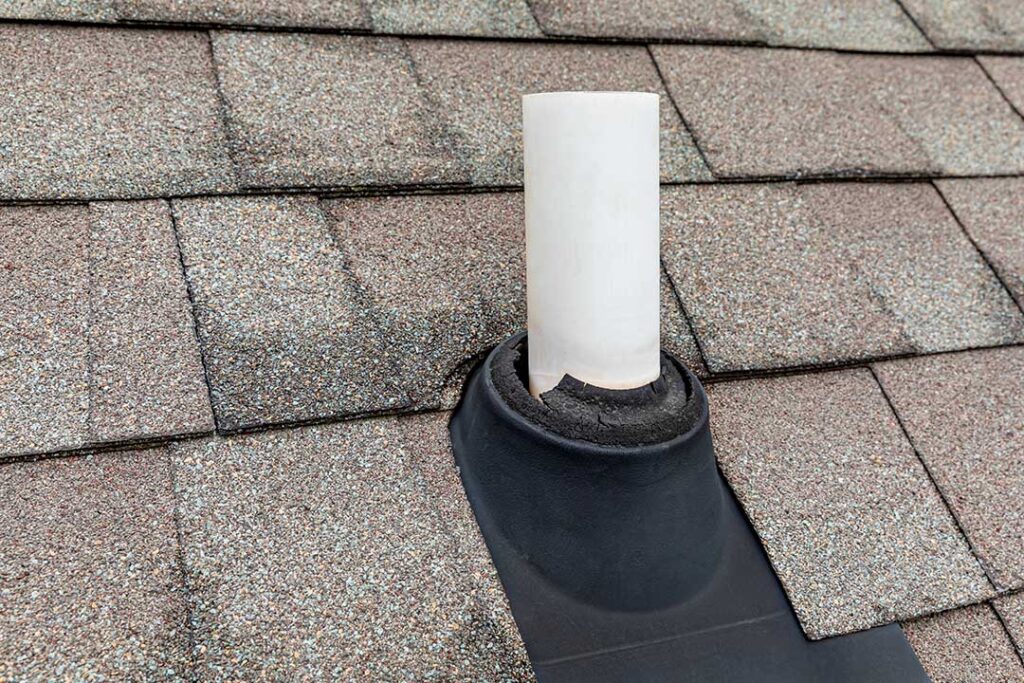
Can replacing a roof lower energy bills?
A roof replacement can help reduce heating and cooling costs, but the savings usually come from improving the entire roof assembly—not simply installing new shingles. Insulation, air sealing, ventilation, moisture control, and roofing material all affect how much energy a home uses.
For households in Greene, NY, winter heating is often the larger concern. A roof system that limits heat loss during cold weather may improve comfort and reduce the amount of work required from a furnace, boiler, heat pump, or electric heating system. During summer, a properly designed roof can also limit heat entering the attic and upper floors.
A roof replacement is most likely to improve energy performance when the existing roof has:
- Inadequate or compressed attic insulation
- Noticeable air leaks around the attic floor
- Poor ventilation
- Water damage or damp insulation
- Gaps around chimneys, plumbing vents, or recessed lights
- A roof design that allows excessive summer heat into the living space
A roof that is already well-insulated, properly sealed, and ventilated may provide less noticeable energy savings after replacement.
Why does the attic matter so much?
The attic is one of the most important areas to evaluate during a roof project because heat moves through the boundary between the living space and the roof. In winter, warm indoor air can escape through small openings and carry heat into the attic. In summer, heat absorbed by the roof can raise attic temperatures and make upper rooms uncomfortable.
Adding or improving attic insulation slows this transfer. Air sealing is also necessary because insulation alone does not stop warm air from moving through gaps. Common leakage points include:
- The attic hatch
- Wiring and plumbing penetrations
- Chimney and flue openings
- Recessed light fixtures
- Ductwork
- Gaps along the top plates of walls
If a roof replacement includes work near the roof deck or attic, it may be a practical time to inspect these areas. However, roofing work by itself does not automatically add insulation or seal the ceiling plane. Those improvements need to be specifically included in the project design.
How does roof ventilation affect energy use?
Proper ventilation helps control temperature and moisture in the roof system. In summer, air movement can release some heat from the attic. In winter, it helps keep the roof deck colder and more uniform in temperature, which can reduce the conditions that contribute to ice dams.
A balanced ventilation system generally allows air to enter near the lower roof edges and leave through higher openings. The exact arrangement depends on the roof design. Insulation should not block soffit or eave vents, and adding an attic fan without addressing air leaks can sometimes pull conditioned air out of the home.
Ventilation is not a replacement for insulation. A well-ventilated attic can still lose substantial heat if the attic floor is under-insulated or full of air leaks. The most effective approach usually combines:
- Adequate insulation
- Air sealing at the ceiling plane
- Clear intake and exhaust ventilation paths
- Proper control of moisture
Can new roofing materials keep a home cooler?
Some roofing materials reflect more sunlight and absorb less heat than conventional dark surfaces. These are often called cool roofing materials. They can reduce roof temperatures and may lower air-conditioning demand, particularly in homes with low-slope roofs, finished attic spaces, or rooms directly beneath the roof.
The effect is more limited in a cold, heating-dominated climate. A highly reflective roof may reduce some solar heat gain during winter, which can slightly increase heating demand. For that reason, the best material choice depends on the home’s roof design, insulation level, ventilation, shading, and heating and cooling patterns.
For many homes in the area, insulation and air sealing will have a more dependable effect on annual energy use than roof color alone. Reflective materials can still be useful, but they should be considered as one part of the roof system rather than a stand-alone energy solution.
What improvements should be considered during replacement?
A roof replacement creates access to areas that are difficult or disruptive to reach later. Depending on the home, useful energy-related improvements may include:
Attic insulation
If insulation is thin, uneven, wet, or compressed, adding more may reduce heat loss and summer heat transfer. Wet or damaged insulation should be evaluated before it is covered.
Air sealing
Sealing openings between the living space and attic can prevent heated or cooled air from escaping. This is especially useful around penetrations and the attic access door.
Roof-deck insulation
Some roof designs allow insulation to be added above or below the roof deck. This can be helpful for finished attics, cathedral ceilings, and areas without a conventional attic floor.
Ventilation corrections
Blocked intake vents, missing baffles, or inadequate exhaust ventilation can affect roof durability and moisture control. Correcting these issues may improve the performance and service life of the roof assembly.
Flashing and moisture protection
Water intrusion can damage insulation and structural materials. A dry roof assembly performs more predictably than one affected by leaks, dampness, or hidden decay.
Will a roof replacement solve high energy bills?
Not necessarily. High energy costs may also result from older heating equipment, leaky ductwork, drafty windows, basement air leaks, poor wall insulation, or changing fuel prices. A new roof cannot correct every source of energy waste.
It is also possible for a roof replacement to have little effect if the work only involves removing old shingles and installing new ones over an otherwise unchanged roof system. The largest improvement usually comes from treating the roof, attic, and ceiling as connected parts of the home’s thermal boundary.
Before work begins, residents can compare past utility bills, check for uneven attic insulation, look for daylight around attic penetrations, and note rooms that are unusually hot or cold. These observations can help identify whether the roof is contributing to the problem.
How can homeowners judge whether the savings are real?
Energy savings should be evaluated over time rather than by comparing one unusually cold or mild month. Weather, fuel prices, thermostat settings, occupancy, and equipment changes can all affect utility bills.
Useful comparisons include:
- Energy use during similar heating seasons
- Summer cooling use before and after the project
- Indoor temperature differences between floors
- The frequency of ice dams or roof-edge snow melt
- Heating or cooling system runtime
- Moisture, condensation, or attic odor
The most realistic expectation is often improved comfort first, followed by moderate energy savings. In Greene, NY, a properly insulated, sealed, and ventilated roof can help limit winter heat loss, reduce summer attic heat, protect against moisture-related problems, and make the home’s heating and cooling systems operate under less strain.
A roof replacement is therefore best understood as an opportunity to improve the building envelope. The shingles provide weather protection, but the insulation, air barrier, ventilation, and roof structure determine much of the roof’s energy performance.
