
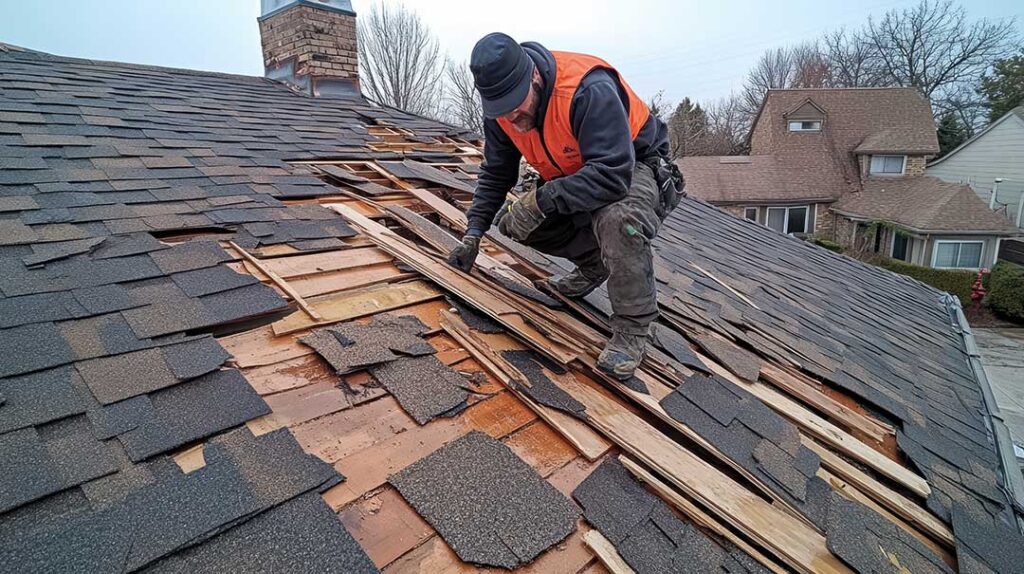
Strong winds can damage a roof without leaving an obvious hole. In Greene, NY, seasonal thunderstorms, winter wind events, falling branches, and repeated freeze-thaw cycles can all weaken roofing materials over time. The most useful response is a careful inspection from the ground, followed by prompt action if water or structural damage is present.
How do severe winds damage a roof?
Severe winds create both direct and indirect damage. Wind pressure can lift shingles, loosen flashing, expose underlayment, and place stress on roof edges. Debris carried by the wind can puncture shingles or damage vents, skylights, chimneys, and gutters.
The roof edges and corners usually experience the greatest wind pressure. This is why damage may appear along eaves, rakes, ridges, and areas surrounding roof penetrations before it becomes noticeable across the main roof surface.
Wind can affect several parts of a roofing system:
- Shingles: Shingles may curl, crease, crack, lose their protective surface, or pull loose from the fasteners.
- Flashing: Metal flashing around chimneys, walls, valleys, and vents can bend or separate.
- Roof deck: If coverings are torn away, the plywood or other decking may become exposed to rain and deteriorate.
- Underlayment: A roof can appear mostly intact while its water-shedding layer has been torn or displaced.
- Gutters and downspouts: Wind-driven branches and loose roofing materials can dent, disconnect, or clog drainage components.
- Ventilation equipment: Ridge vents, box vents, pipe boots, and other penetrations can be loosened or damaged.
A roof does not need to be completely uncovered to develop a leak. Even a small lifted shingle can allow rain to travel beneath adjacent materials.
What signs of wind damage can be seen from the ground?
The clearest warning signs are missing, displaced, or visibly lifted shingles. However, less obvious symptoms can be just as significant. After a wind event, look for roofing pieces in the yard, on decks, in gutters, or near downspouts.
From a safe location, check for:
- Shingles with raised edges, creases, or exposed nail lines
- Uneven patches or areas that look darker than the surrounding roof
- Missing ridge caps or damaged roof edges
- Bent or detached flashing
- Exposed wood or dark underlayment
- Gutters containing granules, shingle fragments, or roofing nails
- Torn screens or damaged vents near the roof
- Tree limbs resting on the roof or pressing against gutters
- New stains on ceilings, walls, or around attic penetrations
Do not climb onto a wet, steep, icy, or visibly damaged roof. Wind damage can make footing unpredictable, and concealed structural problems may increase the danger.
Can a roof leak after wind damage even if the ceiling looks dry?
Yes. Water may remain in the underlayment, insulation, or roof framing before it reaches a ceiling. A roof can also leak only during a particular wind direction or during wind-driven rain.
Inspect the attic, if it can be reached safely, for damp insulation, water marks, mold-like discoloration, rusty fasteners, or daylight visible through the roof deck. Pay particular attention to areas beneath valleys, chimneys, plumbing vents, skylights, and roof intersections.
A dry ceiling immediately after a storm does not prove that the roof is undamaged. Moisture can appear hours or days later, especially when additional rain follows the original wind event.
Why do older roofs tend to suffer more wind damage?
Age does not automatically make a roof unsafe, but older materials generally have less flexibility and fewer years of useful service remaining. Asphalt shingles may become brittle from sun exposure, temperature changes, and repeated wetting and drying. Adhesive strips can also lose effectiveness over time.
Previous repairs, multiple roofing layers, loose fasteners, inadequate edge securement, and long-term moisture exposure can further reduce wind resistance. A roof that has already experienced minor lifting may be more vulnerable during the next storm.
The condition of the roof deck also matters. If the deck has softened around old leaks, fasteners may not hold roofing materials as securely as intended.
Do strong winds affect every roof in the same way?
No. Wind performance depends on the roof’s age, design, materials, installation quality, exposure, and maintenance history.
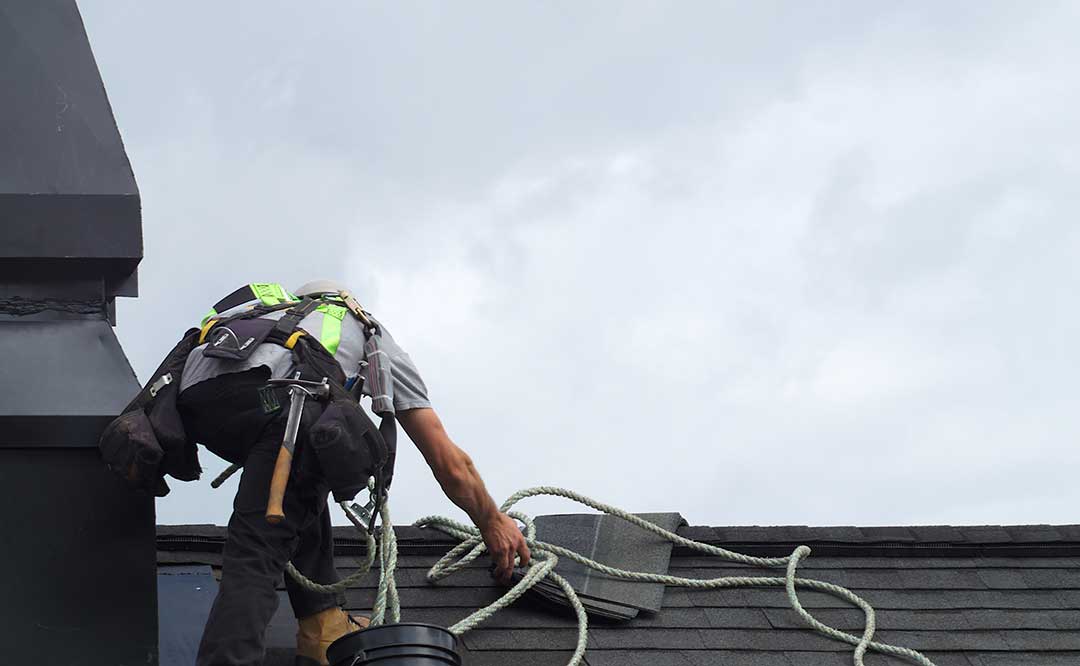
Roof geometry can influence wind pressure. Complex roofs with multiple valleys, dormers, wall intersections, and changes in slope have more transition areas where flashing and shingles can be stressed. Large overhangs and exposed roof sections may also experience greater pressure than sheltered portions.
A home surrounded by mature trees may receive some protection from wind, but it may also face greater risk from falling limbs. Homes on open lots or elevated terrain can experience stronger exposure. Nearby buildings, vegetation, and the direction of the storm all affect the result.
Newer construction is not immune to damage. Building requirements address wind resistance, but real-world performance still depends on correct materials, fastening, roof geometry, maintenance, and the severity of the event.
What should residents do immediately after a damaging windstorm?
Safety comes before inspection. Stay away from downed power lines, unstable trees, hanging branches, and areas where the roof structure appears displaced. If rain is entering the home, place containers under drips and move valuables away from the affected area without walking beneath sagging ceilings.
Temporary steps may include:
- Photographing visible damage from the ground
- Keeping damaged roofing pieces, if they can be collected safely
- Covering exposed areas only with a properly secured temporary barrier
- Removing small amounts of standing water indoors
- Monitoring ceilings and attic spaces for changes
- Recording the date of the storm and when symptoms first appeared
Do not make permanent repairs during active rain, high winds, lightning, or icy conditions. A damaged roof may require assessment by someone qualified to evaluate roofing and structural safety, particularly if the roof deck, framing, chimney, or electrical components may be affected.
How can wind damage be reduced before the next storm?
Routine maintenance cannot stop severe weather, but it can reduce preventable failures. Keep gutters clear, trim hazardous branches away from the roof, and replace deteriorated pipe boots, flashing, and damaged shingles before storm season.
A periodic roof inspection should include the roof edges, valleys, penetrations, attic ventilation, and areas where previous repairs were made. Loose gutters, aging chimney caps, and unsecured exterior items can also become windborne hazards.
In Greene, winter conditions add another concern. Ice, snow, and freeze-thaw movement can make roofing materials more brittle and can conceal loose shingles or flashing. Summer thunderstorms may expose weaknesses that developed during the colder months.
Roof work and repairs must also follow applicable New York State building requirements. Those requirements address wind resistance, roof coverings, structural connections, and the ability of the roof assembly to transfer uplift forces safely through the building.
When is wind damage an emergency?
Immediate attention is warranted when water is actively entering the home, a ceiling is sagging, a tree has struck the roof, electrical components are wet, large roofing sections are missing, or the roof structure appears shifted.
A few missing shingles may not create an immediate life-safety emergency, but delaying inspection can allow water to reach the decking, insulation, framing, and interior finishes. Prompt documentation and temporary protection can limit secondary damage while preserving a clearer record of what the storm caused.
The most reliable post-storm approach is simple: observe from a safe position, document visible changes, check for interior moisture, and treat any structural or electrical hazard as urgent.
