
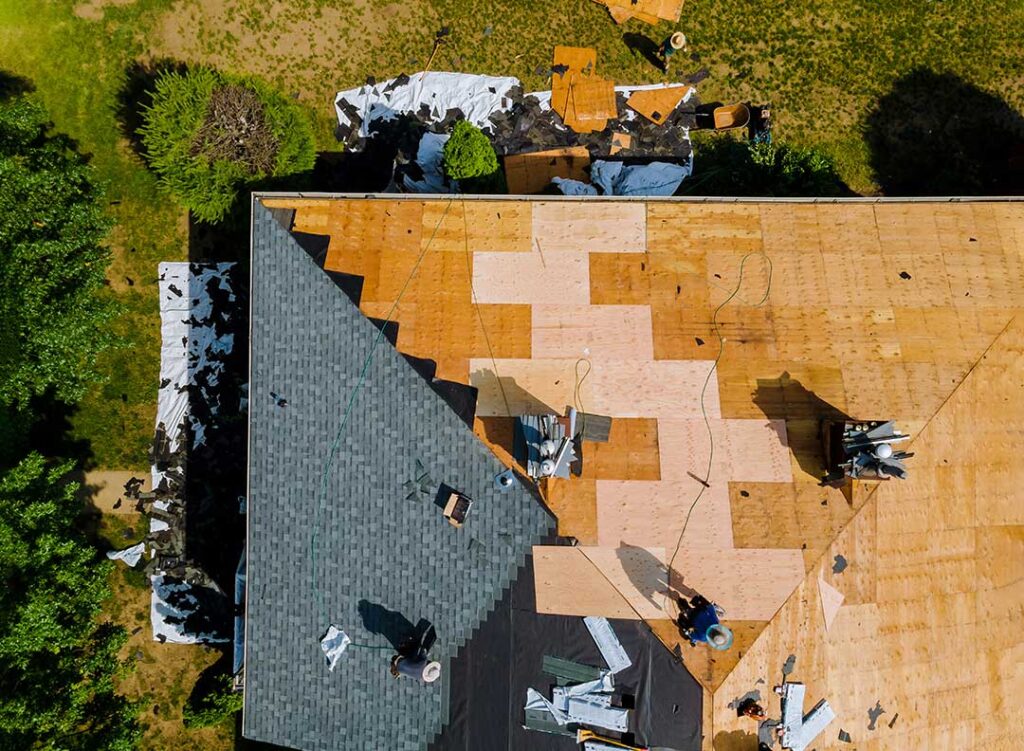
A roof leak should be treated as an active water and safety problem, not just a roofing defect. The first priorities are to protect people, limit interior damage, document what is happening, and avoid making the situation worse.
What should you do first when water appears?
Move people, pets, furniture, electronics, and other valuables away from the affected area. Place a bucket or other stable container under the drip, then use towels or plastic sheeting to protect flooring and furnishings.
If water is near light fixtures, outlets, wiring, appliances, or a ceiling fan, turn off power to the affected area only if the electrical panel can be reached safely without standing in water. Do not touch wet electrical equipment. If there is uncertainty about electrical safety, leave the area and seek emergency assistance.
A ceiling that is bulging or sagging may contain a significant amount of trapped water. Do not stand directly underneath it. Do not puncture the ceiling unless a qualified emergency worker has determined that doing so is safe, because water may spread through insulation, wiring, or other hidden materials.
How can you reduce further water damage?
Contain the water indoors while avoiding roof access during active rain, strong wind, lightning, or icy conditions. A small leak can spread across a ceiling or wall before it becomes visible, so check nearby rooms, upper floors, closets, and attic areas if they can be reached safely.
Take practical steps such as:
- Emptying containers before they overflow
- Moving rugs and upholstered furniture away from wet areas
- Placing plastic beneath leaking materials, with towels on top to absorb water
- Opening interior doors to improve air movement
- Running a dehumidifier only in a dry, electrically safe location
- Removing wet items that can be carried without creating a fall hazard
Do not use household fans near standing water or exposed wiring. Avoid climbing onto wet floors, ladders, or roofs to inspect the source.
Should you climb onto the roof to find the leak?
Usually, no. A wet roof surface is slippery, and roofing materials can be damaged by walking on them. Snow, ice, moss, steep slopes, and hidden weak spots create additional risks in Greene, especially during winter thaw cycles and after storms.
A leak’s indoor location often does not match the roof entry point. Water may travel along rafters, roof decking, insulation, plumbing vents, or wall framing before appearing on a ceiling. Looking only above the stain can lead to a false conclusion.
A safer inspection can be made from the ground with binoculars, or from an attic floor or other stable surface if access is easy and conditions are dry. Look for obvious signs such as:
- Missing, lifted, cracked, or damaged shingles
- Exposed roof underlayment
- Damaged flashing around chimneys, walls, skylights, or vents
- Standing water on a low-slope roof
- Blocked gutters or downspouts
- Wet insulation or darkened roof decking
- Daylight visible through the roof assembly
Do not pull apart roofing materials or remove snow and ice from a roof without proper training and equipment.
What if the leak happens during winter?
Winter leaks may result from storm damage, ice buildup, flashing failure, or an ice dam. An ice dam forms when melting snow refreezes near a colder roof edge, creating a barrier that allows water to back up beneath roof coverings.
Do not chop at an ice dam with a shovel, hammer, or other sharp tool. This can damage shingles, membranes, gutters, and the roof deck. Do not pour salt or chemical deicers onto the roof, since runoff may damage roofing materials, plants, metal surfaces, or exterior finishes.
Heavy snow and ice can also create a structural hazard. Warning signs include ceiling sagging, wall cracks, unusual popping sounds, doors that suddenly stick, or visible roof deflection. Leave the building or affected area if structural movement appears serious. Snow loads can become concentrated by wind and drifting, especially near roof valleys, additions, dormers, and changes in roof height.
How do you tell whether the problem is the roof or plumbing?
Not every ceiling leak comes from the roof. Plumbing leaks may appear below bathrooms, kitchens, laundry areas, heating equipment, or water supply lines. Condensation can also wet attic insulation and roof framing, particularly where warm indoor air reaches a cold roof deck.
Notice when the leak occurs:
- During or shortly after rain: the roof, flashing, or drainage system is more likely
- During snowmelt: ice dams, blocked drainage, or roof transitions may be involved
- When a bathroom or appliance is used: plumbing or ventilation should be considered
- During cold weather without precipitation: condensation or a plumbing leak may be involved
- Only during wind-driven rain: flashing, siding intersections, vents, or exposed roof edges may be contributing
This timing does not prove the source, but it provides useful information for inspection and repair decisions.
What should you document?
Photographs and notes can help identify the extent and timing of the problem. Photograph the ceiling stain, active dripping, wet walls, damaged belongings, attic conditions, and any visible exterior damage from a safe location.
Record:
- The date and approximate time the leak began
- Weather conditions, including rain, wind, snow, or thawing
- Which rooms are affected
- Whether the leak changes when plumbing fixtures are used
- Any temporary steps taken to control the water
- Signs of mold, damaged insulation, or electrical concerns
Keep damaged materials until their condition has been documented, unless they create a health or safety hazard. Insurance questions may depend on the cause, maintenance history, and type of damage, so accurate records are useful.
When is a leak an emergency?
Immediate attention is warranted when water is near electrical systems, the ceiling is sagging, the roof has visibly collapsed, a large section of roofing is missing, or the building shows signs of structural movement. A leak that is rapidly worsening, spreading across multiple rooms, or filling containers quickly also requires urgent action.
People should not enter an attic, crawlspace, or roof area that is wet, unstable, contaminated, poorly lit, or difficult to exit. Structural repairs, electrical work, major water removal, and work on steep or icy roofs should be handled by appropriately qualified individuals because the hazards may not be visible.
How can future leaks be reduced?
After the immediate problem is controlled, inspect the roof and drainage system periodically, especially after severe weather and before winter. Keep gutters and downspouts clear, watch for damaged flashing, and check attic ventilation and insulation for signs of moisture.
In the local climate, repeated freeze-thaw cycles can enlarge small openings and loosen roofing materials over time. A minor stain that dries between storms should not automatically be considered harmless. Water may continue to soak insulation, roof decking, wall cavities, or trim where it cannot be seen.
The most useful long-term response is to identify the actual entry point, correct the underlying condition, dry affected materials promptly, and monitor the repaired area during the next several rain or snowmelt events.
