
Moss and algae growth on a roof is usually a sign that the surface stays damp for long periods. In Greene, NY, shaded roof slopes, spring moisture, summer humidity, fallen leaves, and nearby trees can all create conditions where organic growth becomes established.
Moss and algae are not the same problem, and the right response depends on which one is present. Light discoloration may be mostly cosmetic, while thick moss can lift shingles, hold moisture against the roof, and shorten the useful life of roofing materials.
How can moss and algae be identified?
Algae commonly appears as dark green, gray, or black streaks running down a roof slope. It often spreads across areas that receive limited direct sunlight. Algae may make shingles look aged or stained, but early growth does not usually create the same physical damage as thick moss.
Moss is more three-dimensional. It may look like green or yellow-green clumps, especially along shingle edges, in roof valleys, or beneath overhanging branches. Moss can form a mat that keeps the roofing surface wet. As it expands, it may push underneath shingle edges or loosen the surface material.
Lichen, which is a combination of a fungus and an algae-like organism, can appear as pale green, gray, or crusty patches. It attaches firmly to many roofing surfaces and should not be scraped away aggressively.
Does moss or algae damage asphalt shingles?
Algae is usually more of an appearance issue at first, but persistent moisture and organic buildup can contribute to faster aging. Dark streaks may also make a roof absorb more heat, although the effect varies with roof color, ventilation, and sun exposure.
Moss presents a greater risk to the roofing system. Its roots and dense growth can hold water against shingles, lift shingle tabs, and allow wind-driven rain to reach vulnerable areas. Repeated freezing and thawing can make the problem worse by expanding moisture trapped around shingle edges.
Moss does not automatically mean the roof needs replacement. The condition of the shingles, flashing, underlayment, roof deck, and drainage details matters more than the presence of growth alone. However, heavy coverage should not be ignored.
Why do roofs in the area develop moss and algae?
The main factor is prolonged dampness. Several conditions can combine to keep one part of a roof wet longer than another:
- North-facing or heavily shaded roof slopes receive less drying sunlight.
- Tree branches can block airflow and drop leaves, needles, and small debris.
- Gutters that overflow may keep lower roof edges damp.
- Roof valleys can collect organic material and slow water movement.
- Poor attic ventilation may contribute to uneven roof temperatures and moisture problems.
- Nearby wooded areas can provide shade and airborne spores.
- Spring rain, summer humidity, and freeze-thaw weather can extend the time moisture remains on roofing materials.
A roof does not have to be old to develop moss or algae. Newer roofs can show growth when shade, moisture, and debris are present.
What is the safest way to clean a roof?
The safest approach is to avoid walking on the roof unless the surface and conditions are suitable. Wet shingles, moss-covered areas, steep slopes, and cold-weather surfaces can be slippery. Falling from a roof is a much more serious hazard than the growth itself.
For minor algae staining, a roof-appropriate cleaning solution may be applied according to the product directions. The solution generally needs time to work and may gradually wash away discoloration through rainfall. A soft, low-pressure application is less likely to damage shingles than forceful cleaning.
Moss may need to be treated first and then allowed to loosen naturally. Removing it immediately by scraping or pulling can tear the protective granules from shingles, break seals, or expose underlying material.
Avoid these common methods:
- Do not use a pressure washer on asphalt shingles.
- Do not scrub shingles with a stiff brush or wire tool.
- Do not pull large moss mats upward from the lower edge of a shingle.
- Do not mix cleaning chemicals, especially products containing bleach and acids.
- Do not allow runoff to damage plants, soil, painted surfaces, or metal components.
- Do not work on a roof during frost, rain, high wind, or icy conditions.
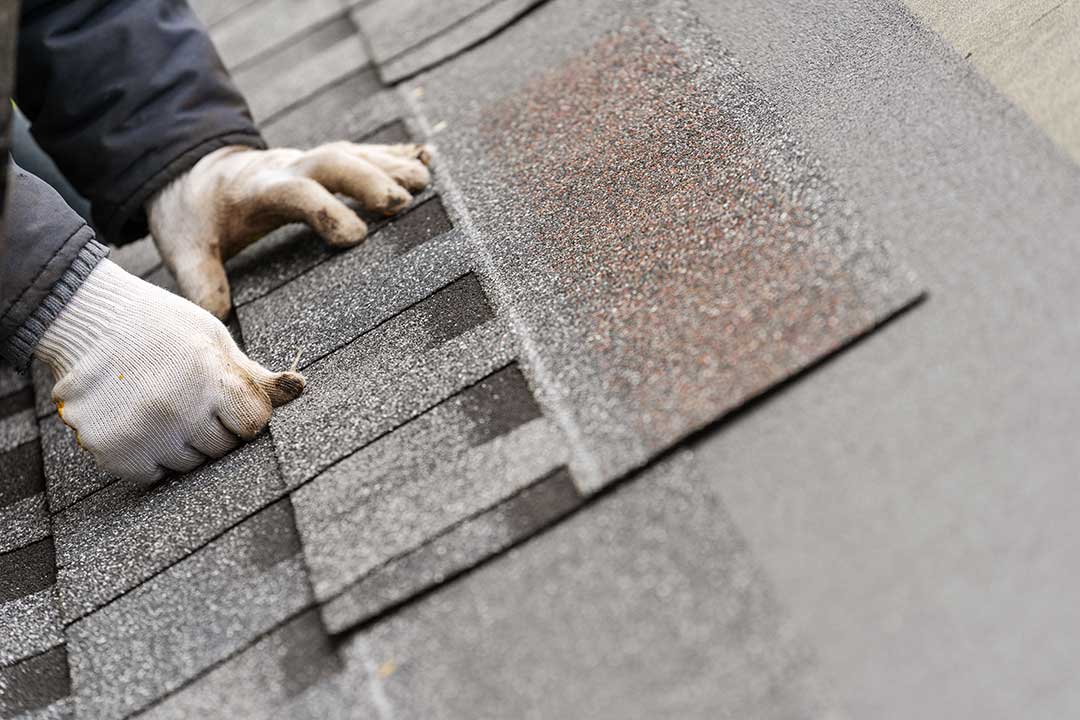
If growth is extensive, the roof is steep, shingles are brittle, or access requires a ladder near power lines, the work involves a genuine fall or electrical hazard. In those situations, roof cleaning should be handled by someone equipped and trained for the conditions.
Can household bleach be used on roof growth?
Bleach-based solutions are sometimes used for algae and moss treatment, but household bleach is not automatically safe for every roof, plant, or exterior surface. Strong mixtures can affect landscaping, metal, paint, siding, and nearby waterways. They can also create dangerous fumes when combined with other cleaners.
A product specifically labeled for the roofing material and intended use is a more controlled option. The label should be followed for dilution, application, dwell time, rinsing, and protection of surrounding surfaces. Cleaning on an overcast day with no immediate rain forecast can help prevent a solution from drying too quickly, but the roof should not remain wet in freezing conditions.
How can moss and algae growth be prevented?
Prevention focuses on sunlight, airflow, and drainage. Tree maintenance can reduce shade and keep branches from rubbing against the roof, but branches should not be cut without considering tree health and property safety.
Keep gutters and downspouts clear so water moves away from the roof and foundation. Remove leaves and small debris before they form damp piles, especially in valleys and behind roof projections. Check whether downspouts discharge water where it can splash back onto lower roof edges.
Zinc or copper strips are sometimes installed near the roof ridge to release small amounts of metal during rainfall. These materials may slow algae and moss growth on areas below them, but they are not a complete treatment. Existing moss still needs to be addressed, and the strips must be installed without compromising shingles, fasteners, flashing, or weatherproofing.
Roof ventilation and insulation should also be considered when moisture or condensation is suspected. A roof that appears to have moss may also have an underlying moisture issue that needs attention in the attic.
When does growth indicate a larger roofing problem?
Moss or algae deserves closer attention when it appears with other warning signs, including:
- Shingles that are curling, cracking, blistering, or missing.
- Granules collecting heavily in gutters or at downspout outlets.
- Water stains on ceilings or attic framing.
- Damp insulation or a musty attic odor.
- Rusted, lifted, or separated flashing.
- Sagging roof sections.
- Repeated leaks near valleys, chimneys, skylights, or roof penetrations.
A small patch of algae on otherwise sound shingles is different from moss covering deteriorated roofing. Inspection becomes more important when growth is widespread, when leaks are present, or when cleaning could disturb fragile materials.
Moss and algae are manageable, but aggressive removal can cause more damage than the growth itself. Careful identification, gentle treatment, sound drainage, and attention to shaded or damp areas provide a practical approach for protecting roofs through the wet springs, humid summers, and winter freeze-thaw cycles common in Greene.
