
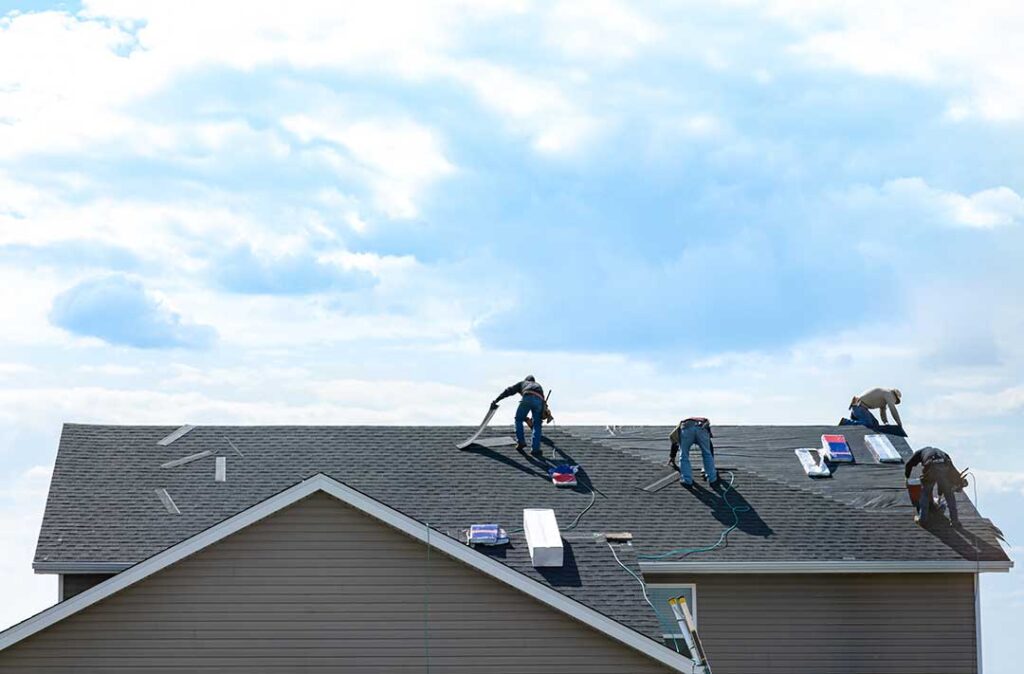
Why small roofing mistakes can become larger problems
A roof repair can fail even when the damaged area looks minor. Water may travel beneath shingles, damaged flashing can affect walls and ceilings, and a temporary patch may hide deterioration until the next storm.
For homeowners in Greene, NY, seasonal weather makes careful repair work especially important. Snow, ice, wind, freeze-thaw cycles, and summer heat can all expose weak repairs. The goal is not simply to cover visible damage, but to identify how water is entering and restore the roof’s ability to shed it.
Mistake 1: Repairing the visible spot without finding the source
The location of an interior stain is not always the location of the roof leak. Water can move along roof decking, rafters, insulation, or wall framing before it appears indoors.
A stain near a ceiling corner might result from:
- Damaged shingles higher up the slope
- Failed flashing around a chimney, vent, or roof edge
- A clogged or overflowing gutter
- Ice buildup along the eaves
- A gap around a pipe boot
- Wind-driven rain entering beneath a shingle
Patching the area directly above the stain may solve nothing if the actual entry point is elsewhere. A more reliable inspection follows the water path from the interior damage upward and outward, while also examining nearby roof penetrations and transitions.
Mistake 2: Applying roofing cement everywhere
Roofing cement can be useful for limited temporary repairs, but spreading it over a large area often creates new problems. Thick coatings may crack, separate from the roofing surface, or trap moisture beneath damaged materials.
A cement patch also makes later inspection more difficult. It can conceal loose flashing, split membrane, deteriorated wood, or a failed seal. In cold weather, water trapped beneath a patch may freeze and expand, increasing the damage.
Temporary sealant should not be treated as a substitute for replacing failed roofing components. The repair material must be compatible with the roof system and used only where it is appropriate.
Mistake 3: Reusing brittle or damaged shingles
Older asphalt shingles become less flexible over time. They may crack or break when lifted, especially during cold weather. Trying to reuse a shingle that has lost its flexibility can create additional damage around the repair area.
Replacement shingles should match the existing roof as closely as practical in size, profile, and installation method. Color differences are often unavoidable because roofing materials weather over time, but a mismatched product can create problems with fit and water flow.
A common mistake is sliding a new shingle into place without properly releasing or replacing the fasteners above it. Nails that are too high, too low, or exposed can allow water to enter.
Mistake 4: Using the wrong nails or fastening pattern
Roofing nails must be long enough to pass through the shingle and underlayment and penetrate the roof decking adequately. Nails that are too short may not hold during high winds. Nails driven through the wrong area can remain exposed or fail to secure the shingle properly.
Overdriven nails are another concern. If the nail head cuts through the shingle surface, the material may tear or lift. Underdriven nails can leave raised areas that interfere with overlapping shingles.
Fasteners should be installed according to the roofing material’s requirements. A repair that appears secure from the ground may still be vulnerable if the nails are misplaced or insufficient.
Mistake 5: Ignoring flashing around roof openings
Flashing is often responsible for leaks around chimneys, skylights, walls, valleys, vents, and roof edges. Replacing a nearby shingle without examining the flashing can leave the real cause untouched.
Common flashing mistakes include:
- Covering damaged metal with sealant instead of replacing it
- Failing to secure loose flashing
- Installing flashing that does not direct water downhill
- Leaving gaps where roof surfaces meet walls
- Neglecting the lower corners of chimneys and other vertical structures
Because flashing details vary by location, repairs should preserve the intended water-shedding sequence. Upper layers generally need to overlap lower layers so water continues moving toward the eaves rather than beneath the roof covering.
Mistake 6: Repairing a roof during unsafe conditions
Wet shingles, frost, snow, and strong wind create both fall hazards and installation problems. Cold materials may become brittle, while wet surfaces can be extremely slippery. Walking on an icy roof can also damage shingles and create hidden fractures.
Ladders require stable footing, proper positioning, and clearance from electrical hazards. A roof should not be accessed during lightning, high winds, or rapidly changing winter conditions.
Some repairs are not suitable for do-it-yourself work because they involve steep slopes, fragile roofing, significant height, structural damage, or electrical equipment near the work area. In those circumstances, safety and building requirements take priority over completing a quick patch.
Mistake 7: Overlooking ventilation and moisture buildup
A roof repair that stops a leak may still leave a moisture problem if attic ventilation is poor. Warm, damp air from the living space can condense beneath the roof deck, especially during cold weather. This may resemble a roof leak and can contribute to mold, wood decay, and damaged insulation.
Warning signs include:
- Frost or water droplets on the underside of the roof deck
- Musty attic odors
- Damp insulation
- Rusted nails
- Peeling paint near ceilings
- Repeated stains that appear without heavy rain
Bathroom and kitchen exhaust should discharge outdoors rather than into the attic. Blocking vents with insulation or storing items against ventilation openings can also reduce airflow.
Mistake 8: Neglecting gutters and roof drainage
A roof repair may fail if water continues to collect along the edge or back up beneath the shingles. Leaves, roof granules, ice, and other debris can restrict drainage.
Gutters and downspouts should direct water away from the foundation and remain securely attached. During autumn and winter, repeated freezing and thawing can pull gutters loose or create ice buildup along the eaves.
However, gutter cleaning alone does not correct every drainage problem. Sagging rooflines, improperly placed downspouts, damaged fascia, and inadequate slope may require separate attention.
Mistake 9: Covering structural damage
Soft roof decking, sagging areas, stained framing, or large sections of rot are signs that the problem may extend beyond the roof covering. Installing new shingles over weakened wood does not restore the roof’s structural support.
Structural concerns deserve prompt attention, particularly where the roof has experienced prolonged leakage, heavy snow loading, or impact from fallen branches. Warning signs include visible sagging, doors or windows that suddenly stick, cracking around ceilings, and an attic floor or roof deck that feels weak.
Mistake 10: Failing to document the repair
Keeping a simple record helps identify recurring problems. Note the date, weather conditions, location of the damage, materials used, and whether the area leaked again after rainfall or snowmelt.
Photographs taken before and after the repair can reveal whether damage is spreading. Records are also useful when comparing a short-term patch with a later roof replacement or investigating repeated moisture problems.
A repair should be reconsidered if staining returns, shingles lift again, insulation remains damp, or water appears after conditions that previously caused no trouble. Recurring symptoms often indicate that the original cause was not fully addressed.
Which roof problems need urgent attention?
Active water entering living spaces, sagging roof areas, exposed decking, missing sections of roofing, and damage near electrical wiring should be treated as urgent. Buckling shingles, widespread granule loss, and repeated leaks also indicate that the roof may need more than an isolated repair.
During an active leak, move valuables away from the affected area and place a container beneath dripping water if it is safe to do so. Avoid cutting into a wet ceiling if electrical wiring may be present. Exterior emergency coverings should be secured safely and should not be installed during dangerous weather.
Careful diagnosis, compatible materials, correct fastening, and attention to drainage are the main safeguards against failed roof repairs. In a community that experiences winter moisture, wind, and freeze-thaw conditions, a repair is most dependable when it addresses both the visible damage and the pathway that allowed water in.
