
Why do roof stains appear in Greene, NY?
Roof stains are usually caused by moisture, organic growth, runoff, or aging materials. Dark streaks, green patches, reddish marks, and isolated brown spots do not all mean the same thing, so identifying the pattern is the first step toward choosing a safe response.
In Greene, NY, roofs experience repeated wetting from rain, snow, ice, shaded conditions, and seasonal leaf buildup. Homes surrounded by mature trees or with roof sections that receive limited sunlight may develop discoloration more quickly than roofs exposed to steady airflow and direct light.
A stain is not automatically evidence of a failing roof. Some discoloration is cosmetic, while other patterns can point to trapped moisture, damaged flashing, or an active leak.
What causes black streaks on asphalt shingles?
Black or gray streaks are commonly caused by algae growing on the surface of asphalt shingles. The streaks often begin on the lower portions of roof slopes and gradually extend downward with rainwater.
Algae growth is more likely where a roof stays damp for long periods. North-facing slopes, areas beneath tree cover, and roof sections near tall walls or chimneys may receive less sunlight and dry more slowly.
Algae does not usually consume the shingles in the same way that wood-decaying fungi damage lumber. However, heavy growth can hold moisture against the roof surface and make the roof look older than it is. Dark staining may also hide granule loss, cracked shingles, or other wear that deserves closer observation.
Are green patches always moss?
No. Green growth may be moss, algae, or lichen, and each behaves somewhat differently.
Moss is soft and raised. It often appears along shingle edges, in roof valleys, and beneath overhanging branches. As moss thickens, it can lift shingle edges and interfere with water drainage.
Lichen is more firmly attached and may appear as pale green, gray, or crusty circular growth. It can be difficult to remove without disturbing the shingle surface.
Algae generally appears as flat streaks or broad dark areas rather than a thick, three-dimensional mat. A roof can have more than one type of growth at the same time.
Moss and lichen should not be scraped aggressively. Pulling or scraping can remove protective granules and weaken the shingles.
How can roof stains be cleaned safely?
The safest cleaning method depends on the roofing material, the age of the roof, and the type of stain. For common asphalt shingles, gentle treatment is generally safer than forceful cleaning.
Avoid pressure washing. High-pressure water can strip granules, force water under shingles, damage flashing, and shorten the useful life of the roof. Walking repeatedly on older or brittle shingles can also cause cracking.
For light algae staining, a roof-safe cleaning solution may loosen the discoloration over time. Any solution should be used according to the roofing material’s instructions, applied carefully, and rinsed without directing water upward beneath the shingle courses.
Important precautions include:
- Protect plants, soil, siding, windows, and outdoor surfaces from runoff.
- Avoid mixing cleaning chemicals, especially products containing bleach with acids or ammonia.
- Use a securely positioned ladder only on stable ground, and do not climb onto a wet, icy, moss-covered, or steep roof.
- Keep people and pets away from areas where cleaning solution is being used.
- Do not use abrasive brushes or metal tools on shingles.
Cleaning may improve appearance, but it will not repair missing shingles, failed flashing, soft decking, or ventilation problems.
What do brown or rust-colored stains mean?
Brown, orange, or reddish stains may come from rusting metal, exposed fasteners, chimney residue, leaf tannins, or water carrying debris across the roof. They can also develop when runoff from metal components flows over shingles.
A localized stain near a chimney, plumbing vent, skylight, or roof edge deserves closer attention. Water can travel beneath roofing materials before appearing inside the home, so the visible mark may not be directly below the entry point.
Rust-colored water marks on ceilings or walls are more concerning than surface discoloration on the shingles. They may indicate a roof leak, condensation, or a plumbing problem above the stained area.
How can a homeowner tell whether a stain is a leak?
A roof stain is more likely to be related to leakage when it is isolated, expands after rain or snowmelt, or appears near a roof penetration. Indoor warning signs include:
- Brown rings or yellow-brown patches on ceilings
- Damp insulation or musty odors in an attic
- Peeling paint near upper walls
- Drips around chimneys, vents, or skylights
- Wet roof decking or darkened rafters
- Water appearing during wind-driven rain but not ordinary rainfall
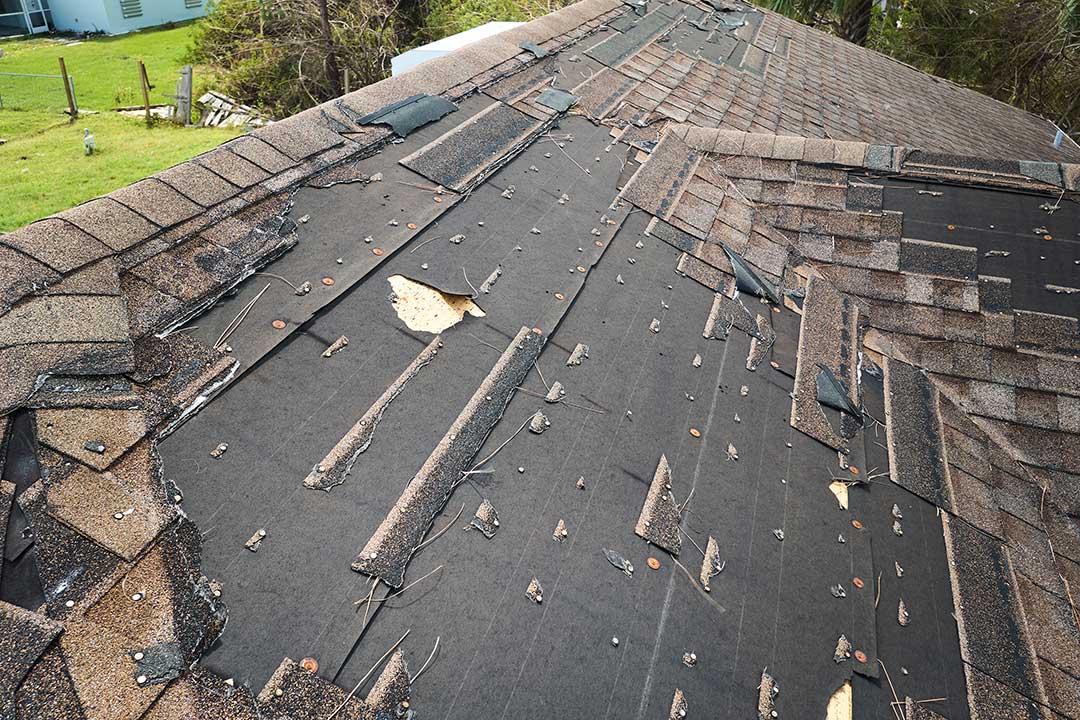
Attic inspection can help determine whether moisture is entering from the roof. Look for wet wood, rusted nails, compressed insulation, daylight through the roof covering, or streaks running down rafters.
Not every ceiling stain comes from the roof. Plumbing leaks, bathroom moisture, ice dams, and attic condensation can create similar marks. The timing and location of the moisture help distinguish among these causes.
Should moss be removed before winter?
Moss is best addressed before it becomes thick and established, particularly before repeated freeze-thaw cycles. Water held by moss can freeze, expand, and lift shingle edges. Snow and ice may then place additional stress on already loosened areas.
Branches that touch or hang directly over the roof should also be evaluated. They can scrape away granules, drop leaves into valleys, block sunlight, and provide a path for squirrels or other animals to reach roof edges.
Gutters and downspouts matter as well. Clogged drainage can cause water to back up at roof edges, contributing to staining, ice formation, and deterioration of fascia or soffits. Gutter cleaning should be performed from a stable position, not by leaning an unsecured ladder against fragile gutters.
Can roof stains be prevented?
Prevention focuses on keeping roof surfaces dry, clear, and well-drained.
Useful maintenance steps include:
- Trim branches that rub against the roof or heavily shade it.
- Keep valleys, gutters, and downspout outlets clear of leaves and organic debris.
- Check attic ventilation and insulation so warm, moist air does not condense beneath the roof.
- Inspect flashing around chimneys, vents, skylights, and roof-to-wall transitions.
- Watch for loose, lifted, cracked, or missing shingles.
- Avoid storing damp materials against exterior walls or allowing sprinklers to wet the roof.
- Recheck shaded roof sections after periods of rain, snow, or extended humidity.
Some roofing systems use algae-resistant shingles, but no roof is permanently immune to discoloration. Local shade, moisture, debris, and drainage conditions still influence how quickly stains return.
When is a roof stain a safety concern?
A stain should be treated as a safety issue when it is associated with active dripping, sagging ceilings, exposed wiring, structural weakness, extensive moss, steep slopes, ice, or unstable roofing materials.
Roof access is particularly hazardous during Greene winters and during wet spring and fall conditions. A ground-level inspection with binoculars is often safer than climbing. If the roof covering, decking, or supporting structure appears damaged, evaluation by a qualified roofing professional may be necessary to prevent falls or further property damage.
Cosmetic staining can often be monitored, but an expanding stain, active moisture, or visible roof damage should not be ignored. The pattern, location, and timing of the discoloration usually provide the clearest clues about what is happening above the ceiling.
