
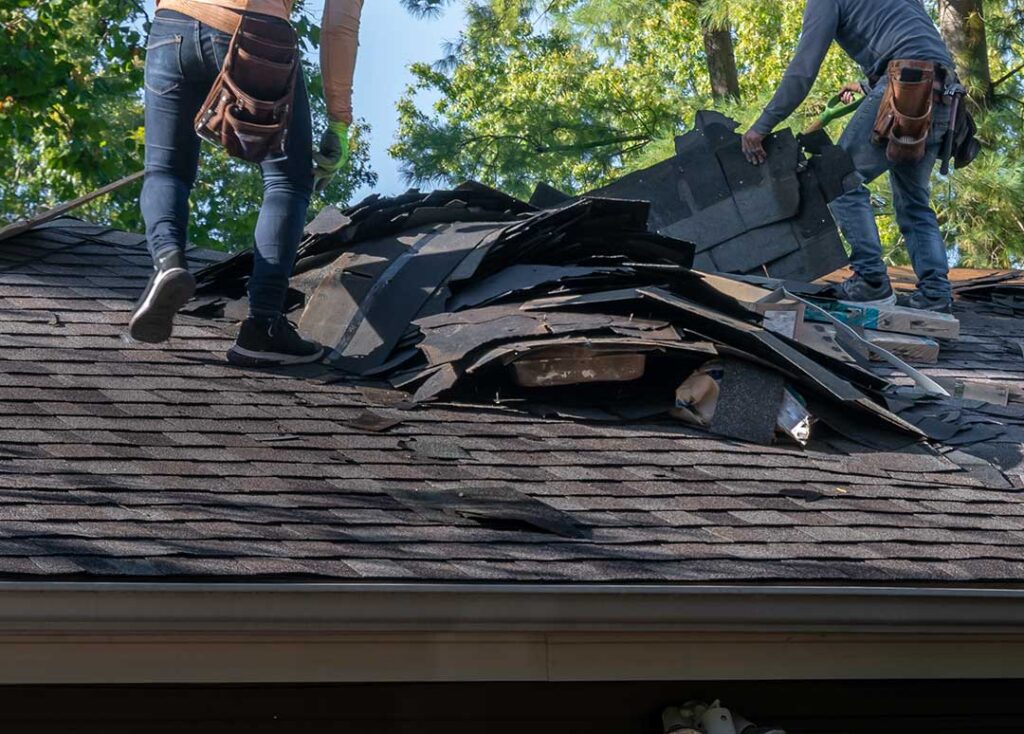
Replacing a few damaged shingles sounds simple, but matching them closely can be surprisingly difficult. Roof shingles change color over time because of sunlight, weather, algae, dirt, ice, and seasonal moisture. Even shingles from the same product line may look different after several years of exposure.
For homeowners in Greene, NY, the goal is usually not to make a small repair completely invisible. The more realistic goal is to create a durable, orderly repair that blends reasonably well with the existing roof and protects the roof deck from water.
What information is needed before choosing replacement shingles?
The most useful starting points are the shingle type, color family, profile, age, and manufacturer if known. A small piece of the existing shingle can also help identify its construction.
Look for:
- Shingle type: Most homes use asphalt shingles, but wood, composite, metal, slate, and other materials are also possible.
- Profile: Architectural shingles have a dimensional appearance, while three-tab shingles have a flatter, more uniform pattern.
- Color: Identify the dominant color as well as any mixed tones, such as brown with gray, charcoal with black, or red with muted tan.
- Approximate age: A roof installed recently is more likely to have a current replacement match than a roof installed many years ago.
- Manufacturer or product name: Packaging, leftover materials, installation records, and attic documents may provide useful clues.
- Exposure and size: Replacement shingles must cover the same area and align with the existing courses.
A photograph can help narrow the possibilities, but photographs often distort color because of lighting, camera settings, shadows, and wet surfaces. Physical samples are more dependable.
Can new shingles be matched exactly to old shingles?
Usually, an exact match is unlikely unless the roof is relatively new and the original product is still being manufactured. Even an identical shingle can look different from the rest of the roof because the existing shingles have weathered.
Sun exposure gradually fades some colors and changes the contrast between the granules. Rain and airborne particles can darken or dull the surface. In areas with frequent freeze-thaw cycles, wind, snow, and ice, the roof may also develop uneven wear from one slope to another.
A new shingle placed beside older shingles may therefore appear brighter, darker, or more saturated. This does not automatically mean the wrong product was selected.
How should the color be compared?
Color should be evaluated outdoors, in natural daylight, and from several angles. Indoor lighting can make gray shingles look blue, brown shingles look red, and dark shingles appear nearly black.
Compare samples against:
- Shingles on the same roof slope
- Shingles that receive similar sunlight
- Areas that are relatively clean and dry
- More than one section of the roof
- The roof’s overall color pattern rather than one isolated shingle
A single exposed shingle may not represent the roof’s true appearance. Asphalt roofs often use blended granules, so the visual effect comes from a mixture of colors rather than one solid shade.
It is also useful to view the sample from the ground. A close-up comparison may show minor differences that are barely noticeable from normal viewing distance.
What if the original shingle is discontinued?
Discontinued shingles are common on older roofs. Product lines change, manufacturers revise color names, and certain profiles may no longer be produced.
If the original cannot be found, the closest practical substitute should match the following characteristics:
1. Material and construction
2. Shingle profile
3. Approximate dimensions
4. Color family
5. Pattern and shadow lines
6. Required installation method
A visually similar shingle may still be unsuitable if its dimensions, thickness, or fastening area do not align with the existing roof. Matching appearance matters, but compatibility and correct installation matter more.
When only a few shingles are missing, a close color match may be acceptable. If a large section is damaged, using a newer product across one defined roof area can sometimes produce a more orderly result than scattering several slightly different shingles throughout the roof.
Should replacement shingles be taken from an inconspicuous area?
Sometimes. If a visible roof slope needs a small repair and matching material is unavailable, an existing shingle from a less noticeable area may be moved to the repair location. The older shingle can then be replaced in the less visible area with the closest available new material.
This approach may improve the appearance of the main roof slope, but it is not appropriate for every roof. Removing shingles can damage surrounding courses, disturb seal strips, or create additional weak points. Brittle shingles are especially prone to cracking during removal.
Any material moved in this way must remain compatible with the roof’s design and installation pattern. It should not be treated as a shortcut when the surrounding shingles are already fragile.
How do weather and seasonal conditions affect the match?
Roofing work is easier to evaluate and perform during moderate, dry weather. Cold temperatures can make asphalt shingles stiff and more likely to crack or break. Warm conditions make them more flexible and help factory-applied seal strips bond properly.
Greene, NY experiences seasonal changes that can affect both roof materials and repair timing. Snow, ice, wind, spring moisture, summer sun, and autumn debris may all contribute to uneven aging. A replacement shingle installed in a different season may not immediately lie or seal exactly like the older surrounding shingles.
After installation, sunlight and weather may gradually reduce the visual difference. This process is not guaranteed, but new shingles often blend more naturally after some exposure.
What mistakes cause poor shingle matches?
Several common mistakes create avoidable problems:
- Choosing only by the color name
- Comparing samples under indoor lighting
- Ignoring whether the roof uses three-tab or architectural shingles
- Matching the front slope while overlooking the roof’s other exposures
- Using a different shingle thickness or size
- Assuming a photograph provides enough information
- Installing new material over damaged underlayment or decking
- Failing to check whether nearby shingles are brittle
- Mixing products with different fastening or sealing requirements
Color is only one part of a successful match. A replacement should also fit the roof’s layout, construction, and condition.
When is patching no longer the best approach?
A few missing or wind-damaged shingles can often be treated as a localized repair. A larger area of damage may indicate that the roof has reached a point where scattered replacements will not provide a consistent or durable result.
Consider the broader condition of the roof:
- Are many shingles cracked, curled, or missing?
- Are granules collecting heavily in gutters?
- Is the seal strip failing across multiple courses?
- Are leaks appearing in more than one location?
- Has the roof experienced repeated wind or ice damage?
- Is the underlayment or roof decking showing signs of moisture?
If surrounding shingles are brittle or failing, replacing one section may disturb adjacent areas. Safety also matters. Roof surfaces can be steep, slippery, or unstable, particularly after rain, frost, or snow. Work that involves difficult access, structural damage, or fall exposure requires appropriate precautions and may warrant qualified assistance.
What is the most reliable matching process?
A dependable process is:
1. Identify the existing shingle type and profile.
2. Check leftover materials, records, or packaging for product information.
3. Compare physical samples outside in natural light.
4. Inspect the roof from the ground and at close range when safe.
5. Confirm that the replacement dimensions and installation method are compatible.
6. Check the condition of surrounding shingles before removing anything.
7. Expect a reasonable blend rather than a perfect invisible repair.
The best match balances appearance, compatibility, availability, and the remaining life of the roof. A repair that looks close but does not seal correctly is not a successful match, while a properly installed repair may remain useful even when slight color differences can be seen.
