
Roof work can sometimes be handled by a careful homeowner, but only when the task is minor, the weather is stable, and the work can be completed without exposing anyone to an uncontrolled fall. For residents of Greene, NY, seasonal conditions such as snow, ice, wind, damp surfaces, and rapid temperature changes make the safety decision especially important.
The safest do-it-yourself roof tasks are usually completed from the ground, from a properly positioned ladder, or from a low-slope roof with secure footing. Work that requires walking on a steep roof, removing large sections of roofing, repairing structural damage, or working near electrical lines is generally outside the reasonable limits of a typical homeowner project.
What roof work is usually safe to do yourself?
Minor inspection and maintenance tasks may be appropriate for a homeowner who has the right equipment and understands the risks. Examples include:
- Looking for missing or damaged shingles from the ground
- Cleaning leaves from gutters while standing securely on a ladder
- Removing small amounts of debris from a low roof using a roof rake or extension tool
- Replacing a small number of loose shingles when safe roof access is available
- Sealing a minor exposed nail or small flashing gap, provided the surrounding roof is sound
- Photographing suspected damage for closer inspection from the ground
A small repair is not automatically a safe repair. Even a single loose shingle can require walking on a slippery slope, carrying tools, and reaching near an edge. If the job cannot be completed while maintaining three points of contact or stable footing, it should not be treated as a simple DIY task.
When should a homeowner stay off the roof?
A homeowner should stay off the roof whenever the surface is wet, icy, snow-covered, frosty, unusually dirty, or visibly unstable. Morning condensation can make shingles slippery even when the roof appears dry from the ground.
Avoid roof access during or shortly after:
- Rain, freezing rain, snow, or sleet
- Strong or gusty wind
- Rapid thawing after a freeze
- Extreme heat, which can soften asphalt shingles
- Cold conditions that make shingles brittle
- Any weather that reduces visibility or balance
In Greene, winter and early spring can create hidden hazards. Ice may remain in shaded areas after the rest of the roof appears clear. Snow sliding from an upper roof section can also strike a person below. A roof that looks manageable from the yard may have weak decking, concealed ice, or a steeper pitch than it appears to have.
How high is too high for DIY roof work?
There is no single height at which every homeowner becomes unsafe, but fall risk increases sharply once a person leaves the ladder and steps onto a sloped roof. Residential construction safety guidance treats a fall of six feet or more as a serious hazard requiring appropriate fall protection.
That standard should not be interpreted as permission for a homeowner to climb onto a roof six feet above the ground with only a basic ladder. Safe roof access may require properly installed anchors, a full-body harness, guardrails, stable scaffolding, or other systems used correctly. A harness attached to an improvised object, chimney, vent pipe, or weak roof component may provide false confidence rather than protection.
Steep roofs, two-story roof edges, dormers, valleys, skylights, and roofs over hard surfaces deserve particular caution. A fall onto concrete, a deck, a railing, or frozen ground can cause severe injury even from a relatively low height.
Is ladder work safe for a homeowner?
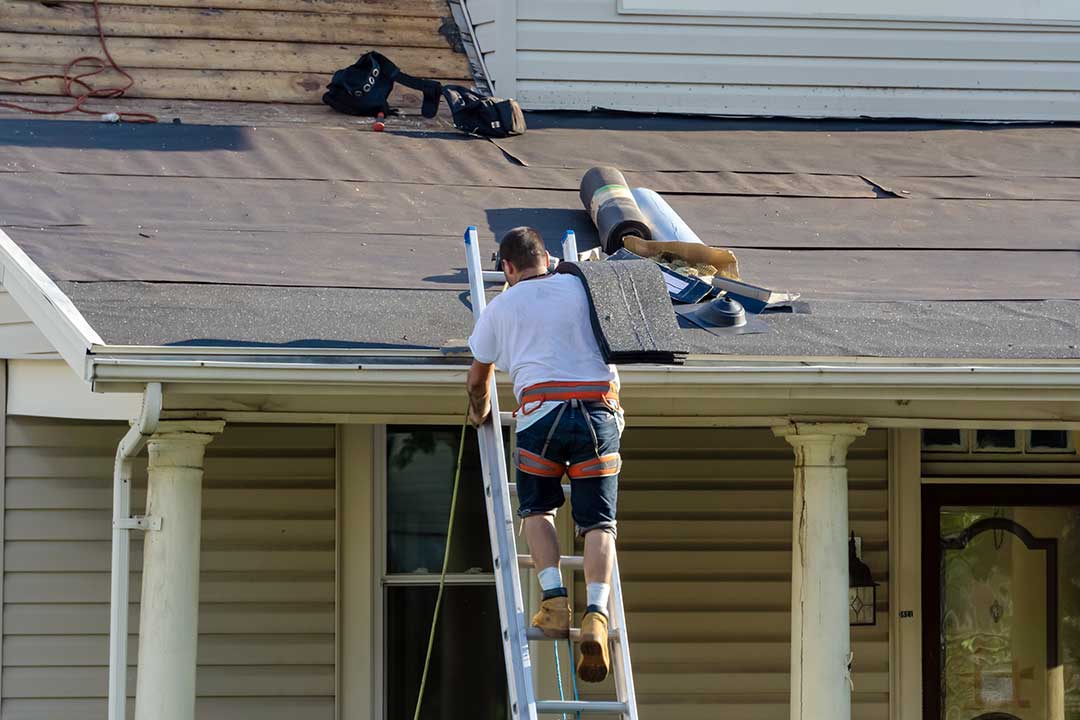
Ladder work is safer than roof work only when the ladder is correctly selected, placed, secured, and used. The ground should be level, firm, and free of ice, mud, loose gravel, and clutter. The ladder should extend far enough above the landing area to provide a secure handhold, and it should not rest against gutters or unstable trim.
Before climbing:
- Inspect the ladder for bent rails, damaged feet, loose hardware, or contamination
- Keep the base away from doors, vehicle paths, and areas where someone could move it
- Face the ladder while climbing
- Keep both hands available whenever possible
- Do not carry bulky materials while climbing
- Never stand on the top cap or the highest prohibited step
- Have another adult present when the work involves roof access
A ladder is not a work platform for long, forceful tasks. Pulling, prying, drilling, or handling bundles of shingles can shift the ladder or pull the user off balance. If a task requires substantial side-reaching, the ladder is probably not positioned safely.
Which roof repairs should not be DIY projects?
Some repairs involve hazards that are difficult to recognize until the roof is opened. These include:
- Sagging roof sections
- Soft or springy decking
- Leaks around chimneys, skylights, or roof intersections
- Widespread missing, curled, or deteriorated shingles
- Damage involving rafters, trusses, or roof framing
- Large areas of exposed underlayment
- Roof damage after a fallen tree or major storm
- Mold, rot, or water damage in the attic
- Work near overhead electrical lines
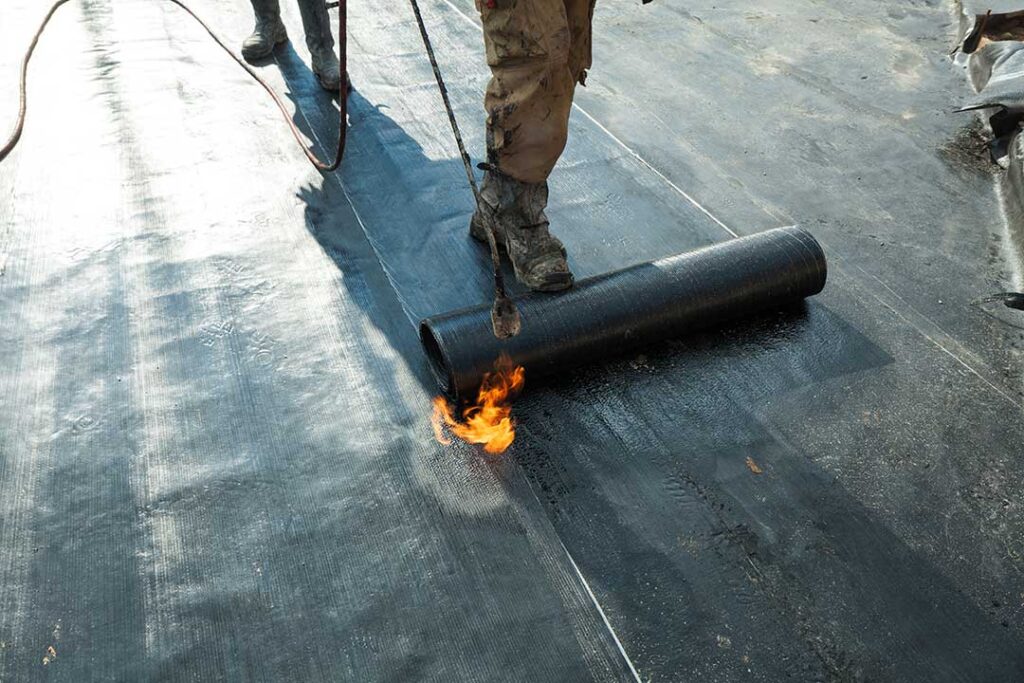
- Repairs requiring a torch, heat tool, or other open-flame equipment
A roof leak may not originate directly above the ceiling stain. Water can travel along rafters, insulation, wiring, or roof decking before appearing indoors. Applying sealant to the visible interior stain may hide evidence without correcting the entry point.
Electrical hazards require special caution. Metal flashing, ladders, gutters, and long tools can conduct electricity. Any roof work near overhead service lines should be treated as unsafe for DIY access.
What safety equipment is actually needed?
Basic household gloves and a ladder are not enough for most work performed on a sloped roof. Depending on the roof and task, appropriate protection may include:
- A properly fitted hard hat
- Slip-resistant footwear suitable for roofing surfaces
- Eye protection during cutting, scraping, or drilling
- A stable ladder with intact feet and locks
- Roof brackets or scaffolding designed for the task
- A correctly installed fall-restraint or fall-arrest system
- A second person on the ground who knows how to respond in an emergency
Fall-arrest equipment must be used with compatible anchors, connectors, harnesses, and clearance below the worker. An improperly installed system can fail or allow a person to strike the roof edge, wall, deck, or ground.
Do permits matter for roof work in Greene, NY?
Permit requirements can depend on the scope of the work, the type of roof covering, structural changes, and local enforcement procedures. Replacing a small section of covering may be treated differently from replacing the entire roof assembly or repairing structural components.
Before beginning substantial work, check with the appropriate local building authority about permits, inspections, material requirements, and disposal rules. Roof work may also need to comply with current New York residential construction requirements, particularly when an existing roof is being recovered, replaced, or altered.
Permit questions are not merely administrative. Inspection requirements can identify unsafe decking, inadequate flashing, insufficient ventilation, or other conditions that are easy to miss during a quick repair.
What is a sensible DIY decision rule?
A homeowner can reasonably consider a roof task only when all of these conditions are true:
- The weather is dry, calm, and stable
- The roof is low-slope or the work can be done without walking on the slope
- The surface and decking are known to be sound
- The task is small and clearly understood
- Safe access and fall protection are available
- No electrical, structural, fire, or hazardous-material concerns are present
- The work can be completed without rushing or overreaching
If any one of those conditions is missing, postponing the work or limiting the project to ground-level inspection is the safer choice. The goal of DIY roof maintenance is not simply to finish a repair. It is to avoid turning a minor maintenance issue into a fall, a larger leak, or hidden damage that worsens during the next season.
