
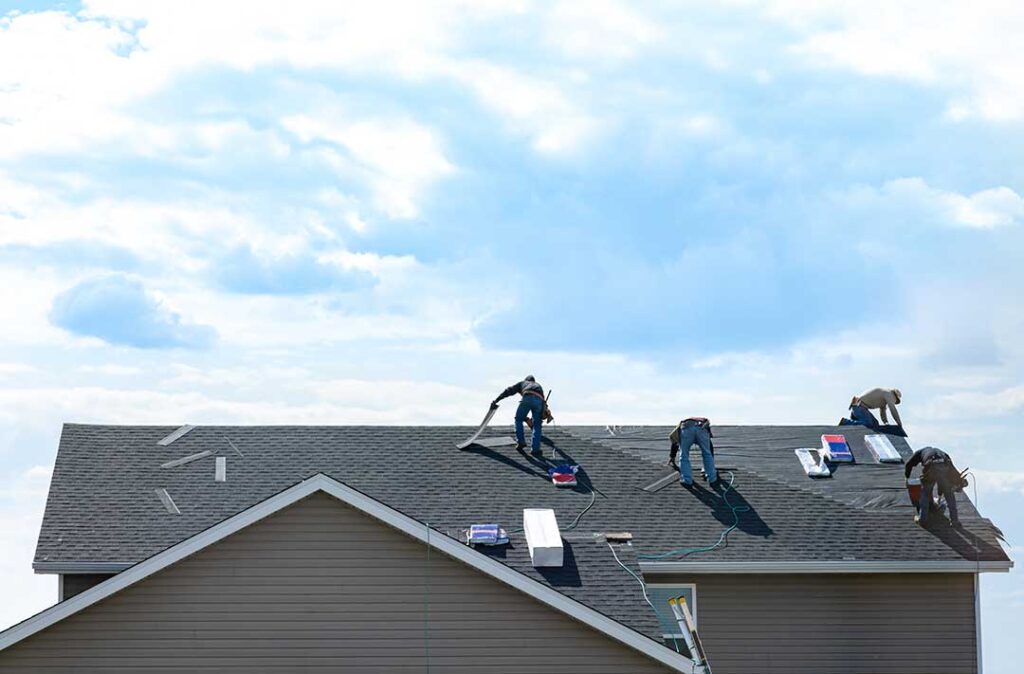
A roof leak should be treated as an active water problem, even if the drip seems minor. The safest response is to protect people, limit interior damage, collect evidence about where the water is entering, and avoid making the roof condition worse.
What should be done first after finding a leak?
Move furniture, electronics, rugs, and other belongings away from the affected area. Place a bucket or container beneath the drip, then use towels or a plastic sheet to control splashing and protect flooring.
If water is near a light fixture, ceiling fan, outlet, wiring, or electrical panel, avoid touching the area. Turn off power to the affected circuit only if the electrical panel can be reached safely without standing in water. Otherwise, leave the area and treat the situation as an electrical hazard.
A ceiling that is bulging, sagging, or visibly swollen may be holding a significant amount of water. Do not stand directly beneath it. A collapsed ceiling can release water suddenly and may bring down drywall or insulation.
Should the water stain be opened?
Usually, a water stain should not be cut open casually. If the ceiling is actively bulging, the water may need a safe release point, but making an opening without knowing what is above the ceiling can damage wiring, plumbing, or structural components.
If the ceiling begins to crack, bow sharply, or release a large amount of water, clear the room and keep people away. Ceiling damage is more urgent than an ordinary stain because it may indicate trapped water or weakened drywall.
A dry, flat stain can be left alone temporarily while the source is investigated. It still needs attention because repeated wetting can damage insulation, framing, paint, and drywall even when the visible mark appears small.
How can the source of the leak be located?
The visible drip is often not directly below the roof opening. Water can travel along roof decking, rafters, insulation, drywall, or other surfaces before appearing indoors.
Look for clues in the attic or upper part of the building if access is safe:
- Damp insulation or darkened roof sheathing
- Water marks along rafters or roof trusses
- Rusted nails or fasteners
- Wet areas near chimneys, plumbing vents, skylights, valleys, or roof edges
- Daylight showing through the roof deck
- Dripping that becomes worse during wind-driven rain
A leak that appears during rain may not be caused by a damaged shingle alone. Flashing around roof penetrations, loose vent components, clogged drainage paths, ice-related damage, and deteriorated sealants can also allow water inside.
In Greene, NY, changing weather can make the timing of a leak especially informative. Rain followed by freezing temperatures may expose weak flashing or create conditions that worsen existing roof defects. Strong wind can also push water beneath otherwise intact roofing materials.
Is it safe to inspect the roof from outside?
A ground-level inspection is generally safer than climbing onto the roof. Use binoculars if available and look for missing, lifted, cracked, or displaced roofing materials. Also check for damaged metal flashing, debris buildup, sagging rooflines, and clogged or overflowing gutters.
Avoid roof access during rain, snow, ice, high winds, or any condition that makes the surface slippery. Steep roofs, roofs with moss or algae, and roofs near overhead electrical lines present additional hazards.
Do not assume a roof is safe because it looks nearly dry. Shingles, metal, and roof coatings can remain slick after precipitation, and hidden damage may make certain areas unstable.
What temporary measures can reduce additional damage?
Temporary protection should focus on stopping water from spreading inside rather than attempting a permanent repair.
If a safe ground-level location allows it, a waterproof cover can sometimes be placed over a damaged roof area. It must be secured without creating new holes or allowing wind to lift it. A loose plastic sheet can become dangerous and may cause more damage.
Do not seal a leak from the attic with expanding foam, household caulk, or other improvised materials. These products may hide the source, trap moisture, interfere with ventilation, or make later repairs more difficult.
Do not remove large sections of roofing material during active weather. Temporary work performed in unsafe conditions can expose the interior to more water and create fall risks.
What information should be recorded?
Photos and notes can help explain what happened and identify whether the problem is spreading. Record:
- The date and time the leak was first noticed
- Weather conditions, including rain, wind, snow, or freezing temperatures
- The rooms or areas affected
- Whether the leak appears only during precipitation or continues afterward
- The size and location of ceiling stains
- Any damaged furniture, flooring, insulation, or personal belongings
- Temporary steps taken to contain the water
Photograph the interior damage before cleaning or moving affected items, when practical. Keep damaged materials until it is clear they are no longer needed for documentation.
Can a leak be ignored if it stops?
No. A leak that stops is not necessarily repaired. Water may have entered only during a particular wind direction, rainfall intensity, snow condition, or temperature change.
Some leaks are intermittent because moisture is absorbed by insulation or roof materials before reaching the ceiling. Others appear only when melting snow or ice backs up along an edge. A dry ceiling may simply mean that the weather has changed.
Hidden moisture can lead to mold growth, wood decay, damaged insulation, unpleasant odors, and deterioration around fasteners. The longer wet materials remain damp, the harder it may be to determine the original source.
When is immediate help necessary?
Urgent attention is appropriate when water is near electrical equipment, the ceiling is sagging, the roof has a large opening, or water is entering rapidly. It is also wise to treat the situation as urgent after a fallen tree limb, major wind event, fire, or visible structural damage.
Stay off the roof if it is icy, snow-covered, steep, unstable, or close to power lines. Snow and ice can conceal damaged materials and increase the risk of a fall. Heavy snow loads may also stress roof framing, especially if the roofline is visibly sagging or interior doors and windows suddenly become difficult to operate.
A small stain after a minor rain may not require emergency action, but it should still be documented and investigated promptly.
What common mistakes make roof leaks worse?
Several familiar responses can create additional damage:
- Climbing onto a wet or icy roof to inspect a small problem
- Poking through a ceiling without checking for wiring or plumbing
- Assuming the lowest indoor drip marks the exact roof opening
- Painting over a stain before the area is dry and the source is addressed
- Blocking attic ventilation with insulation or plastic
- Using roofing cement as a general-purpose fix over every suspected leak
- Waiting through repeated storms because the leak appears to have stopped
- Discarding damaged materials before documenting the condition
The immediate objective is not to make the roof look repaired. It is to protect occupants, limit water movement, preserve useful information, and prevent a temporary problem from becoming a larger building problem.
IMAGE_ALT:
Person placing a bucket beneath a ceiling leak while furniture is moved away from the dripping water.
