
Why local weather matters to a roof
In Greene, NY, a roof must handle several different stresses over the course of a year. Snow, freezing rain, wind, heavy rainfall, summer heat, and repeated temperature changes can affect the roof covering, flashing, drainage system, and underlying wood structure.
Weather damage is not always dramatic. A roof may continue to look acceptable from the ground while small problems develop around vents, chimneys, valleys, eaves, and roof edges. Understanding how each season affects the roof makes it easier to recognize early warning signs.
How winter snow and ice affect roofing
Snow adds weight to a roof, especially when several storms occur close together or when wet snow follows a lighter snowfall. The load is not always distributed evenly. Snow can collect in valleys, behind higher roof sections, near dormers, or along areas where wind creates drifts.
Ice adds another concern. During periods of melting and refreezing, water can collect at the roof edge and form an ice dam. An ice dam may block normal drainage, allowing meltwater to move beneath shingles or into soffits, walls, and ceilings.
Common winter warning signs include:
- Water stains or dampness near exterior walls and ceilings
- Icicles forming repeatedly along the same roof edge
- Sagging roof lines or interior ceilings
- Gutters pulling away from the fascia
- Shingles that appear lifted after a freeze
Ice dams are often linked to uneven roof temperatures. Heat escaping into the attic can warm portions of the roof deck, causing snow to melt while colder eaves remain frozen. Adequate attic insulation, air sealing, and ventilation can reduce this temperature difference, although they cannot prevent every ice-related problem.
Residents should avoid climbing onto an icy roof or striking ice with tools. Falling ice and damaged shingles can create greater hazards than the original buildup.
What wind does to shingles and flashing
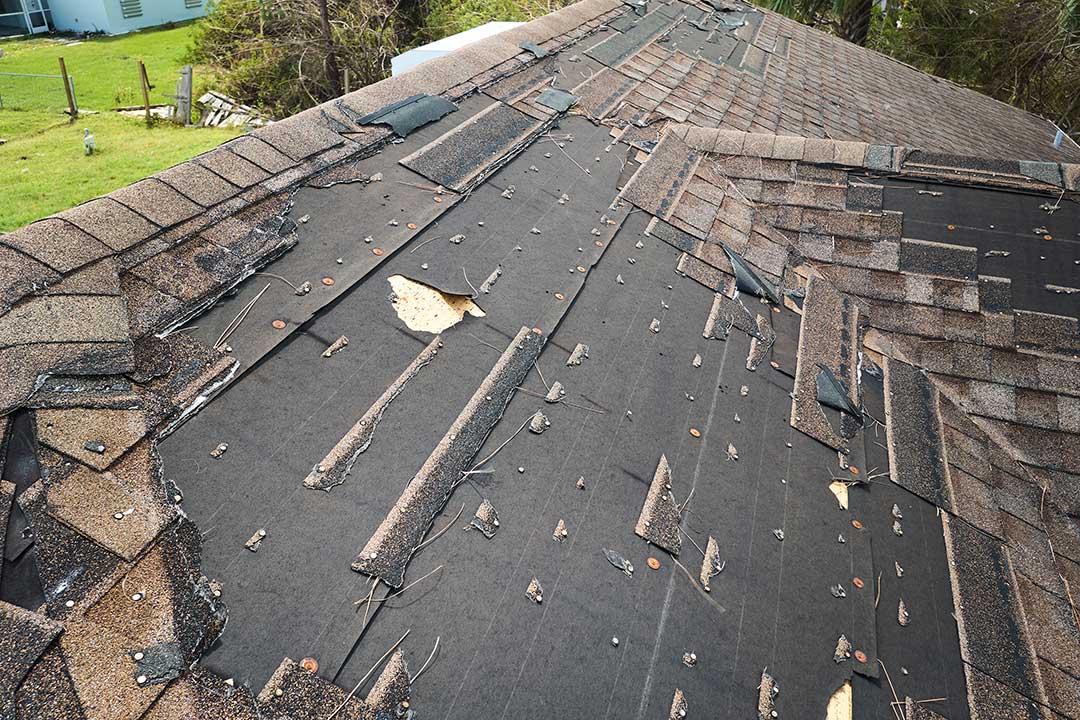
Strong wind can loosen shingles, expose fasteners, lift flashing, and damage ridge caps. Wind does not always remove an entire section of roofing. It may lift only one corner of a shingle, creating an opening that allows later rain to enter.
The roof edges and corners usually experience more wind pressure than the central field of the roof. Homes with older shingles, weakened seal strips, poorly secured flashing, or previous storm repairs may be more vulnerable.
After a windy event, look for:
- Shingles in the yard or driveway
- Dark or irregular patches on the roof
- Exposed underlayment or fasteners
- Bent metal around chimneys, walls, or vents
- Debris resting against roof penetrations
A ground-level inspection using binoculars is safer than walking on the roof. Even when no shingles are visible on the ground, hidden lifting or flashing damage may still be present.
How heavy rain finds weak points
Rain usually enters through a weakness rather than through an intact shingle surface. Common entry points include roof valleys, plumbing vents, chimneys, skylights, wall intersections, and areas where different roofing materials meet.
Heavy rain also tests the drainage system. Leaves, twigs, ice, and roof granules can restrict gutters and downspouts. Water that cannot drain properly may overflow against fascia boards, siding, windows, or the foundation.
A leak may not appear directly below the damaged area. Water can travel along roof decking, rafters, insulation, or wall cavities before reaching a ceiling. For that reason, a small ceiling stain should not automatically be treated as the exact location of the roof problem.
Rain-related warning signs include:
- New ceiling discoloration
- Peeling paint near upper walls
- Damp attic insulation
- Musty odors after storms
- Water around light fixtures or electrical components
- Granules collecting in gutters or downspout outlets
Water near electrical wiring should be treated as a safety issue. Turn off power to the affected area only if it can be done safely, and avoid touching wet fixtures or wiring.
Why temperature changes shorten roof life
Repeated expansion and contraction can gradually stress roofing materials. Shingles become less flexible in cold weather and may crack if bent or disturbed. In warm weather, materials expand; during cold nights, they contract again.
This cycle can affect sealants, flashing joints, pipe boots, and older roofing membranes. Small gaps may widen over time, particularly around areas where dissimilar materials meet.
Temperature changes also affect moisture. Warm indoor air can move into a cold attic and condense on roof decking, nails, or ventilation components. This may resemble a roof leak even when no rainwater is entering.
A useful distinction is timing:
- A leak that appears only after rain is more likely related to exterior water entry.
- Moisture or frost that appears during cold weather may involve attic air leakage or condensation.
- Damage that appears after a thaw may be connected to ice dams, blocked drainage, or accumulated snow.
How summer heat and sunlight affect roofing
Summer weather can be hard on a roof even without severe storms. Direct sunlight heats the roof surface, while dark shingles can reach much higher temperatures than the surrounding air. Over time, ultraviolet exposure can dry out asphalt-based materials and reduce flexibility.
Heat may also reveal ventilation problems. An overheated attic can increase indoor cooling demand and contribute to premature aging of shingles, roof sheathing, and insulation. Poor ventilation does not always cause immediate damage, but it can make seasonal stress more severe.
Signs of heat or sunlight exposure may include:
- Curling or brittle shingle edges
- Blistering or loss of surface granules
- Cracked sealant around roof penetrations
- A hot, damp, or poorly ventilated attic
- Uneven aging on roof sections with different sun exposure
Trees can provide useful shade, but branches that contact the roof may scrape shingles and deposit moisture-holding debris. Nearby limbs should be monitored, especially before periods of high wind.
Which roof areas need the closest attention?
Certain parts of a roof are more weather-sensitive than broad, uninterrupted slopes. Valleys collect water and snow. Eaves experience ice buildup. Rake edges face wind. Flashing protects transitions, and roof penetrations create openings that must remain sealed.
During routine observation, pay particular attention to:
- Valleys and roof intersections
- Chimneys, vents, and skylights
- Areas beneath overhanging trees
- Gutters and downspouts
- The lowest roof edges
- Attic sheathing and insulation
Older homes, additions, porches, and garages may have roof sections with different ages, slopes, or materials. These transitions can respond differently to the same weather event.
What can homeowners safely do after a storm?
A homeowner can begin with a ground-level check and an attic observation if the attic is safely accessible. Look for visible daylight, damp insulation, staining, mold-like growth, rusted fasteners, or sagging decking.
Keep gutters and downspouts clear when conditions are safe, and make sure water is directed away from the foundation. Photographing visible damage can help document changes over time.
Roof work becomes hazardous during snow, ice, high wind, lightning, or wet conditions. Structural sagging, major leaks, fallen branches, exposed electrical components, and suspected collapse risks require immediate attention and should not be handled by walking on the roof.
Weather does not damage every roof in the same way. The roof’s age, slope, materials, ventilation, drainage, surrounding trees, and previous repairs all influence how it responds. In Greene, NY, seasonal observation is especially useful because a small issue noticed after one storm may become a much larger problem after the next freeze, thaw, or heavy snowfall.
