
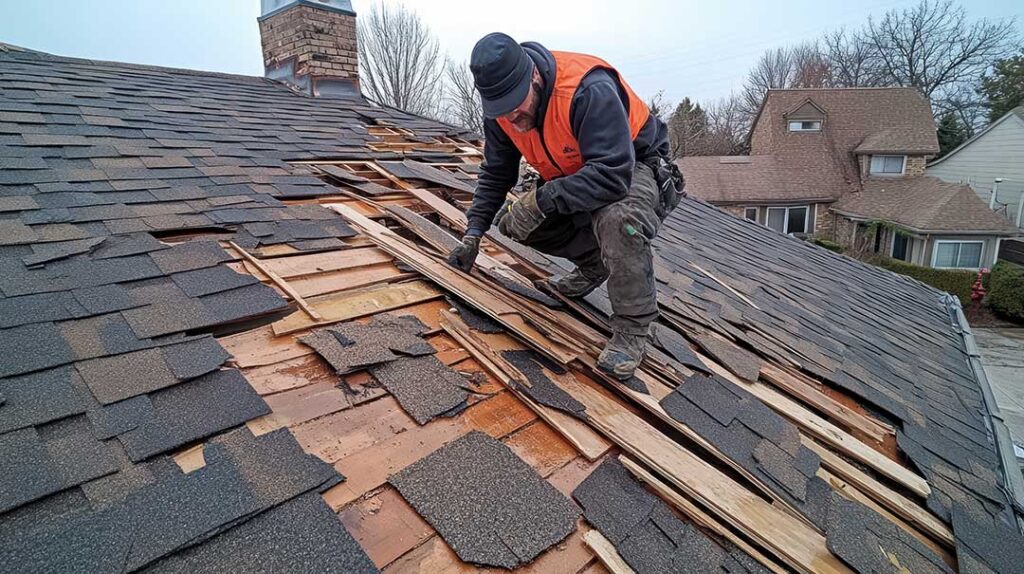
Walking on a roof is riskier than it may appear. Sloped surfaces, loose roofing materials, hidden weak spots, wet weather, and nearby power lines can turn a short inspection into a serious fall hazard. For most homeowners, the safest choice is to inspect from the ground or use a qualified roofing professional when roof access is necessary.
Is it safe for a homeowner to walk on a roof?
Sometimes, but only under limited conditions. A person should never walk on a roof that is wet, icy, snow-covered, mossy, visibly damaged, or steep enough to make balance difficult. Even a dry roof can be unsafe if the shingles are brittle, the decking underneath has softened, or the roof edge is unprotected.
A roof may also be unsafe because of conditions that are not visible from below. Water damage can weaken the plywood or boards beneath the roofing. Older homes may have areas of deteriorated decking near chimneys, valleys, flashing, roof edges, or places where leaks have occurred.
If a task can be completed from the ground with binoculars, a camera with zoom, or a ladder positioned only for viewing, that is generally safer than stepping onto the roof.
What should be checked before stepping onto a roof?
Before considering roof access, evaluate both the roof and the surrounding conditions. Do not proceed if any major hazard is present.
Check for:
- Rain, frost, ice, snow, dew, or damp shingles
- Steep slopes or multiple roof levels
- Loose, missing, curled, cracked, or brittle shingles
- Sagging areas or visible depressions
- Moss, algae, leaves, or other slippery growth
- Nearby electrical wires or service connections
- Wind strong enough to affect balance or move a ladder
- Soft ground, uneven surfaces, or obstacles around the house
- Roof edges without a safe working area
- Skylights, which may be difficult to see and can break under body weight
Greene, NY experiences seasonal changes that can affect roof access. Freeze-thaw cycles can loosen materials, spring moisture can leave surfaces slick, and autumn leaves may hide damaged shingles or roof openings. A roof that looks dry from the driveway may still be damp in shaded areas.
What footwear and clothing are safest?
Wear clean, soft-soled shoes with good traction and a secure fit. Athletic shoes with a flat, flexible sole are usually more suitable than work boots with stiff or heavily lugged soles, which may catch on materials or provide less consistent contact on shingles.
Avoid:
- Sandals, slip-on shoes, or shoes with worn soles
- Loose clothing that can catch on ladders or roof fixtures
- Tool belts that interfere with balance
- Backpacks or bulky items that shift while walking
Use both hands whenever possible. Carrying tools in one hand makes it harder to steady yourself. Tools should be secured in a pouch or raised with a rope only after a safe position has been established.
How should a person walk on asphalt shingles?
Walk slowly and deliberately, keeping the body low and the center of gravity controlled. Place each foot carefully rather than taking long steps. Avoid sudden turns, jumping, sliding, or walking backward.
On many asphalt-shingle roofs, the strongest areas are generally closer to the lower portions of the exposed shingle surfaces, where the underlying roof structure provides support. However, this should not be treated as a guarantee of safety. Shingles vary in condition, roof framing may be damaged, and the safest foot placement depends on the roof’s construction and slope.
Do not step on:
- Roof edges or gutters
- Ridge caps unless the surface is designed for foot traffic
- Valleys, where water flows and materials may be vulnerable
- Flashing around chimneys, walls, vents, or skylights
- Areas with loose or missing shingles
- Soft, sagging, or discolored sections
- Skylights or translucent roof panels
Never assume a shingle-covered area is strong simply because it appears intact. The roofing material is only the outer layer.
How can a ladder be used safely?
A ladder should be placed on firm, level ground and kept clear of mud, ice, landscaping stones, and other unstable surfaces. It should rest against a structurally sound location, not against a gutter, plastic trim, vent, or other weak component.
The ladder must extend high enough above the roof edge to provide a secure handhold during the transition. Climbing onto a roof from a ladder is one of the most dangerous moments because the person must shift weight, maintain three points of contact, and avoid pushing the ladder away from the wall.
Do not move or reposition a ladder while standing on it. Never climb with tools in both hands, and never place a ladder near overhead electrical lines. If the ladder cannot be positioned safely, roof access should not proceed.
What safety equipment is needed?
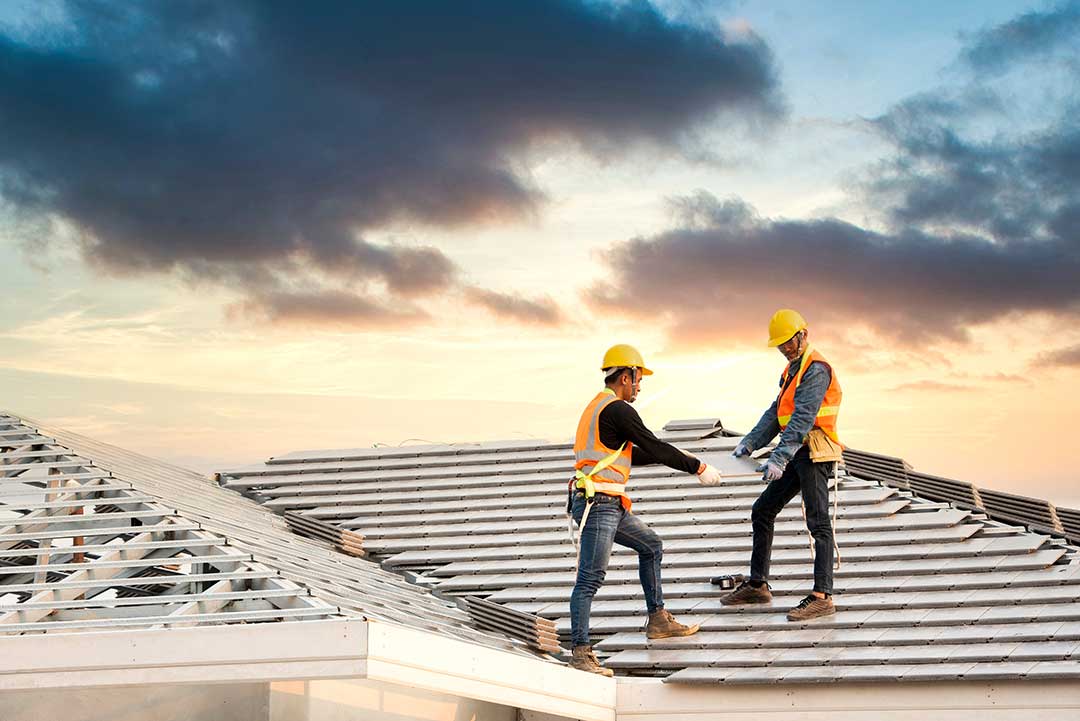
For work beyond a brief visual inspection, fall-protection equipment may be necessary. A harness is only useful when connected to an appropriate anchor and used correctly. Improvised tie-offs to chimneys, vents, plumbing pipes, gutters, or decorative features may fail.
Roof brackets, crawling boards, guardrails, and other systems must be properly selected for the roof type and installed according to their instructions. A harness without a reliable anchor can create a false sense of security.
A second person should remain nearby whenever roof access occurs. That person should know where the worker is, have a charged phone available, and be able to respond if a fall, injury, or ladder movement occurs. A person standing at the bottom of a ladder cannot safely catch someone who falls from the roof, but can help monitor access and summon assistance.
Can a roof be walked on after rain or during winter?
It is best to wait until the roof is completely dry and free of ice or snow. Wet shingles can be slippery, while frost may be difficult to see and can make foot placement unpredictable. Snow can conceal skylights, weak decking, roof edges, and uneven surfaces.
Winter roof access is especially hazardous because cold temperatures can make shingles brittle and ladders unstable. Ice may also form inside gutters or along shaded roof sections. Removing snow from a roof can create additional risks, including falling snow, hidden obstacles, and damage to the roofing surface.
How can roof problems be inspected without walking on the roof?
Many common problems can be identified from the ground:
- Missing or displaced shingles
- Dark stains on exterior walls or roof surfaces
- Sagging roof lines
- Damaged or detached gutters
- Exposed flashing
- Granules collecting in downspouts
- Water stains on attic wood or ceilings
- Daylight visible through the roof deck
- Mold-like odors or damp insulation in the attic
Binoculars can help with a closer view of roof edges, flashing, vents, and shingles. From inside the attic, use a flashlight and avoid stepping between ceiling joists unless a stable walking surface is present.
A roof inspection should stop immediately if there is evidence of structural weakness, an active leak near electrical wiring, major storm damage, or any area that feels soft underfoot. These conditions create risks that cannot be managed safely through ordinary caution alone.
What should be done after a fall or near miss?
After any fall, seek medical attention even if the injury initially seems minor. Pain, dizziness, confusion, or difficulty moving can indicate a more serious injury. Do not climb back onto the roof to retrieve tools or inspect damage.
A near miss should also be treated as a warning. Slipping, breaking through a weak area, or losing balance may indicate that the roof, ladder setup, footwear, weather, or work method is unsafe. The safest response is to stop and reassess rather than trying to finish quickly.
Roof access should be limited to situations where the conditions, equipment, and task can be controlled. For many household inspections, staying on the ground provides enough information without exposing anyone to an avoidable fall.
