
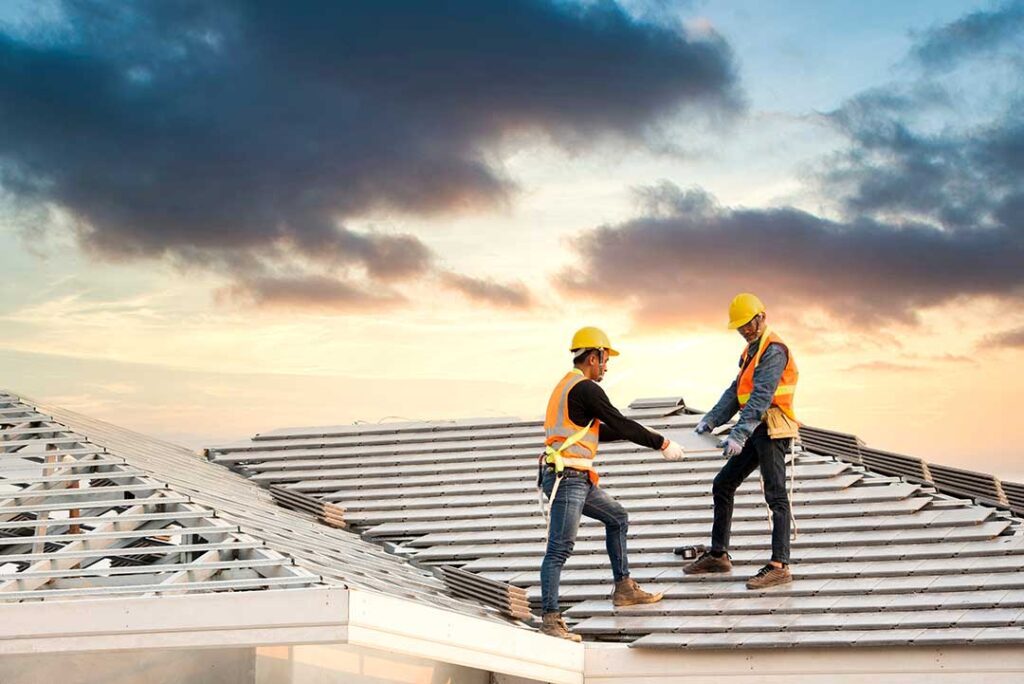
What is the difference between re-roofing and roof replacement?
Re-roofing adds a new layer of shingles over an existing layer, while roof replacement removes the old roofing materials before installing a new roof system. The two approaches can look similar from the ground, but they differ in cost, durability, inspection requirements, and how much underlying damage can be addressed.
For many homes in Greene, NY, the decision depends on the roof’s age, the number of existing shingle layers, the condition of the decking, and whether moisture has reached the attic or structural components.
What does re-roofing involve?
Re-roofing, sometimes called an overlay, places new asphalt shingles directly over an existing layer of shingles. The old shingles remain in place, so the work usually takes less time and creates less tear-off debris.
Re-roofing may be considered when:
- The existing roof has only one layer of shingles.
- The roof deck feels solid and shows no signs of sagging.
- There are no widespread leaks or wet areas.
- The existing shingles are generally flat rather than curled, buckled, or badly deteriorated.
- The roof has enough remaining service life to justify adding another layer.
Re-roofing is not a way to repair damaged sheathing, rotten roof edges, inadequate flashing, or hidden moisture problems. Because the old layer stays in place, the condition beneath the shingles is only partly visible.
The finished roof may also have a slightly uneven appearance if the original shingles are badly worn. New shingles can conceal minor surface irregularities, but they cannot correct problems caused by poor roof structure or damaged decking.
What does a full roof replacement involve?
A full replacement removes the existing shingles and underlayment so the roof deck and flashing can be inspected. Damaged wood or other deteriorated materials can then be repaired before new roofing is installed.
A replacement generally includes several components:
- Removal of old shingles and underlayment
- Inspection of the roof decking
- Replacement of damaged sheathing where needed
- Installation or repair of flashing around penetrations and roof edges
- New underlayment and leak-protection materials
- New shingles or another approved roofing material
- Attention to ventilation at the soffits, ridge, or other designed openings
This approach provides a clearer view of the roof’s actual condition. It also makes it easier to correct installation problems, such as inadequate flashing, exposed fasteners, improperly sealed penetrations, or insufficient ventilation.
Which option lasts longer?
A full replacement usually provides the more predictable long-term result because the underlying roof system can be inspected and rebuilt as needed. Re-roofing can still perform well when the existing roof is in suitable condition, but its lifespan depends heavily on the layer underneath.
A new shingle layer does not erase the age of the original roof. If the existing roof is already near the end of its useful life, re-roofing may postpone a full replacement rather than eliminate the need for one.
Climate also affects performance. Greene experiences cold winters, freeze-thaw cycles, wind, rain, and snow conditions that can expose weak flashing, poor ventilation, and water entry points. Ice buildup along roof edges may also place stress on shingles and drainage paths. A roof that appears acceptable in summer may reveal more serious problems after repeated winter moisture and temperature changes.
When is re-roofing usually not appropriate?
Re-roofing is generally unsuitable when the existing roof has major damage or already contains multiple shingle layers. Adding more material can increase weight and may not comply with applicable building requirements.
A full replacement is usually more appropriate if the roof has:
- Persistent or widespread leaks
- Soft, spongy, or sagging areas
- Rot around eaves, valleys, chimneys, or roof penetrations
- Numerous missing, cracked, curled, or blown-off shingles
- Water stains or damp insulation in the attic
- Mold-like growth caused by ongoing moisture
- Damaged or improperly installed flashing
- More than one existing shingle layer
- A history of repeated patching
A few isolated leaks do not automatically mean the entire roof needs replacement. However, repeated repairs in different areas can indicate that the roof is deteriorating as a system rather than suffering from one isolated defect.
How can a homeowner tell whether the roof deck is damaged?
The roof deck is the structural surface beneath the shingles. It is often made from plywood or oriented strand board and supports the underlayment and roofing materials.
Signs of possible deck damage include:
- Sagging visible from the attic or outside
- Dark stains or water marks on the underside of the sheathing
- Soft areas that yield under careful inspection
- Rusted or protruding fasteners
- Musty odors
- Damp insulation
- Light visible through unintended openings
- Ceiling stains that return after repairs
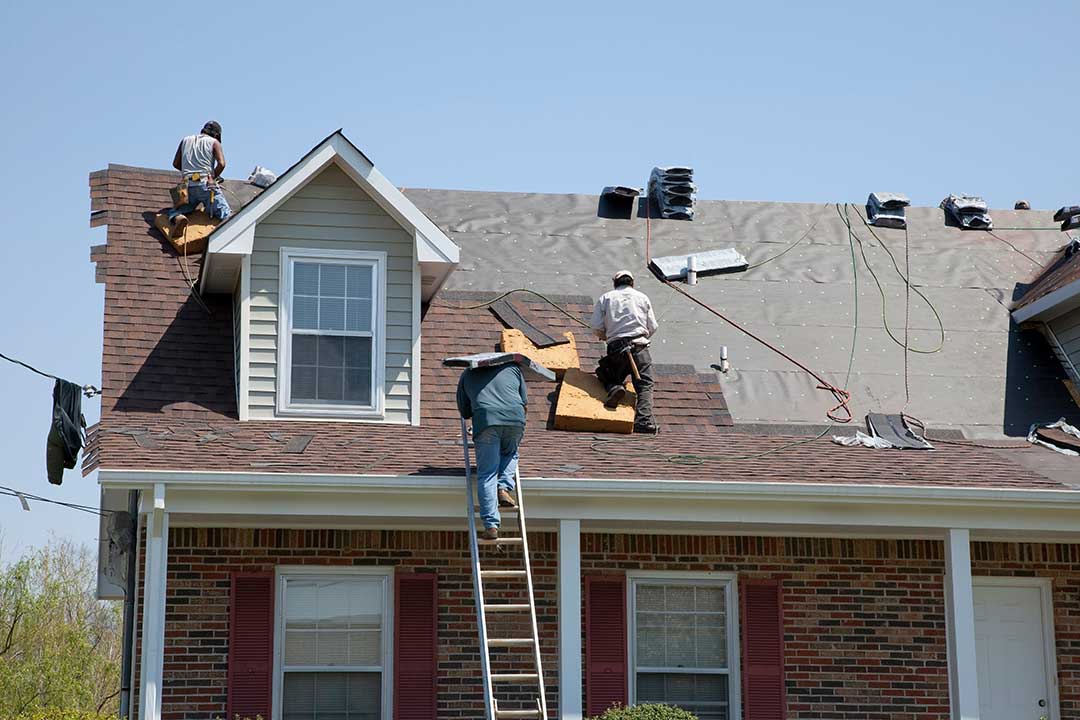
A ceiling stain does not always identify the exact leak location. Water can travel along rafters, sheathing, insulation, or framing before appearing indoors. For that reason, the visible stain may be several feet away from the actual entry point.
Walking on a roof can be dangerous, especially when shingles are wet, icy, steep, or weakened. Attic observations from a stable location are safer, but structural concerns and active leaks may require evaluation by someone qualified to work safely on roofs.
Does re-roofing cost less than replacement?
Re-roofing often costs less initially because it avoids much of the tear-off, disposal, and decking exposure involved in a full replacement. The savings can be meaningful, but the lowest upfront cost does not always represent the lowest total cost over the life of the roof.
A full replacement may require additional work if damaged wood, flashing, ventilation, or trim is discovered. Those added repairs address conditions that re-roofing may leave hidden.
Before choosing the less expensive option, it is useful to ask:
- How old is the current roof?
- How many layers are already installed?
- Are there active leaks or attic moisture?
- Is the roof deck known to be sound?
- Are flashing and ventilation performing properly?
- Would another layer make future repairs more difficult?
- Are local permit or code requirements involved?
Building rules can vary by jurisdiction and may address the number of roof layers, structural loading, ventilation, flashing, and underlayment. Requirements should be verified before work begins rather than assumed from a neighboring property.
Can a roof be re-roofed over any type of shingles?
No. Re-roofing is most commonly associated with asphalt shingles and may not be suitable over every roofing material or roof design. The condition, profile, and installation pattern of the existing shingles also matter.
A steep roof, complex roofline, shallow-slope section, or area with unusual drainage may require a different approach. Roofing materials are designed for specific slope ranges, exposure conditions, and installation methods. Placing a new layer over an unsuitable base can create problems with water shedding, fastening, or appearance.
Roof penetrations deserve special attention. Vents, chimneys, skylights, plumbing stacks, and attached structures can all create leak paths. A re-roofing project that does not properly address these areas may leave the most vulnerable parts of the roof unchanged.
How should Greene homeowners compare the two choices?
The practical distinction is simple: re-roofing covers the existing system, while replacement rebuilds the system after exposing what is underneath.
Re-roofing may make sense for a relatively young, single-layer asphalt roof with limited surface wear and no evidence of structural or moisture damage. Full replacement is usually the more dependable choice when the roof is old, has multiple layers, leaks repeatedly, or shows signs of deck or flashing failure.
A careful decision should consider more than the visible shingles. Roof age, attic conditions, drainage, ventilation, flashing, snow and ice exposure, and the condition of the wood beneath the roof all affect whether a new layer is a reasonable short-term improvement or whether the roof system needs to be rebuilt.
