
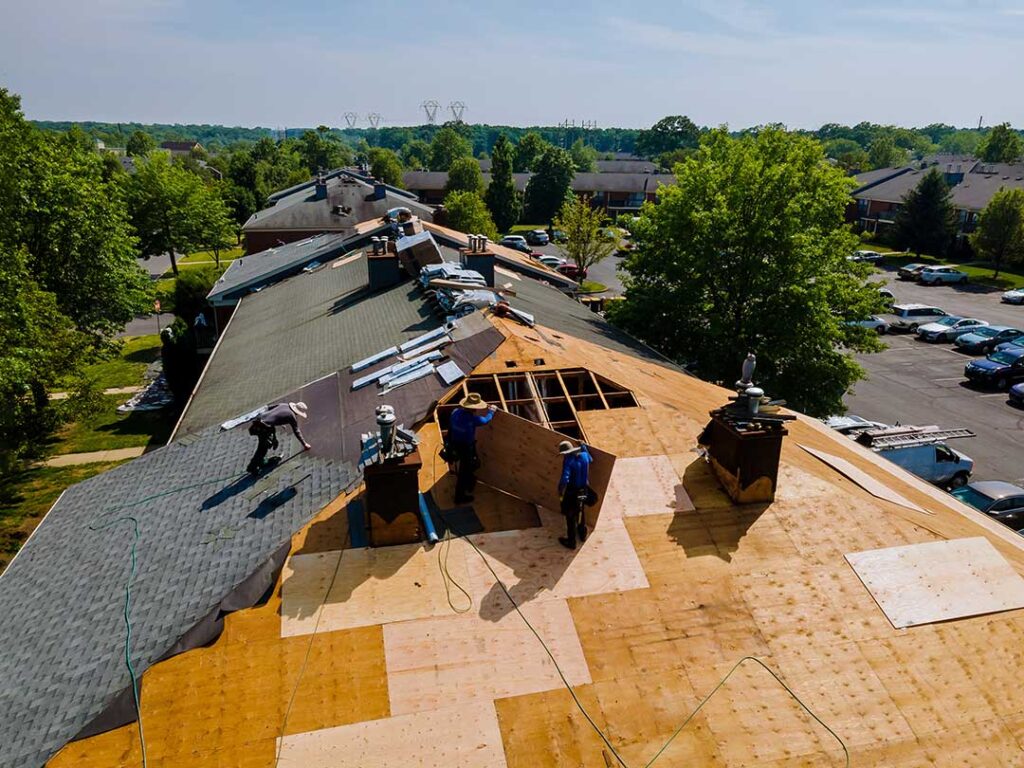
Roof repairs often fail because a small problem is treated too quickly, with the wrong materials, or without understanding how water moves across the entire roof system. In Greene, NY, seasonal temperature changes, snow, wind, ice, and heavy rain can expose those mistakes within weeks or months.
Knowing which repair habits cause trouble can help homeowners avoid leaks, wasted materials, interior damage, and unsafe do-it-yourself work.
What is the most common roof repair mistake?
The most common mistake is repairing only the visible symptom instead of identifying where water entered the roofing system.
A ceiling stain, for example, may appear below a plumbing vent, roof valley, chimney, or damaged flashing. Water can travel along roof decking, rafters, insulation, or drywall before becoming visible indoors. Patching the area directly above the stain may leave the actual entry point untouched.
Before making a repair, look for:
- Missing, cracked, lifted, or curled shingles
- Loose metal flashing around penetrations and roof edges
- Damaged pipe boots
- Open seams near valleys or wall intersections
- Exposed fasteners
- Granules collecting in gutters or at the base of downspouts
- Moisture, staining, or soft wood in the attic
A leak that appears only during wind-driven rain may also originate several feet away from the indoor stain.
Why is using roofing cement as a permanent fix a problem?
Roofing cement can temporarily seal a small opening, but it is not a universal substitute for replacing damaged materials or correcting poor drainage.
Heavy applications of cement can trap moisture, crack during freeze-thaw cycles, and make later repairs more difficult. Dark patches may also hide damaged shingles or deteriorated flashing.
A temporary seal may be reasonable in an emergency when water is actively entering the home. It should be treated as temporary, especially before winter weather. The lasting repair usually requires removing the affected material, checking the underlying surface, and installing compatible replacement components.
Applying sealant over wet or dirty surfaces is another common error. Adhesives and roof coatings generally bond poorly to dust, algae, loose granules, frost, and damp materials.
What happens when new shingles are installed over damaged shingles?
Covering old shingles can conceal problems rather than solve them. If the existing roof has soft decking, trapped moisture, widespread curling, or multiple leaking areas, a second layer may make inspection and future repairs more difficult.
Extra layers can also add weight and create an uneven surface. Shingles may not lie flat over curled or buckled material, leaving gaps where wind and water can enter.
Before adding another layer, the roof should be evaluated for:
- Decking that is soft, swollen, or deteriorated
- Multiple layers of existing roofing
- Sagging areas
- Widespread granule loss
- Poor attic ventilation
- Moisture trapped beneath the current shingles
Local winter conditions make hidden moisture especially concerning. Water that enters a roof assembly can freeze, expand, and enlarge small openings.
Why is matching materials so important?
Using the wrong replacement material can create a weak spot even when the repair looks acceptable from the ground.
Shingles vary in size, thickness, exposure, fastening requirements, and weather resistance. Flashing metals can also react with one another or with nearby roofing materials. A replacement shingle that does not align with the existing courses may leave exposed seams or an uneven drainage path.
Repairs should account for:
- The existing shingle type and dimensions
- Proper nail placement
- Compatible underlayment
- Correct flashing size and shape
- Whether surrounding materials are too brittle to disturb safely
- The age and remaining service life of the roof
Color matching is mostly cosmetic. Proper integration is more important than making the patch look identical.
What is wrong with using too few fasteners?
Too few fasteners can allow shingles, flashing, and other components to lift during strong winds. Nails placed too high, too low, or through the wrong part of a shingle may not secure the material as intended.
Overdriven fasteners create a different problem. A nail driven too deeply can cut into the shingle surface and reduce its holding strength. Underdriven nails may leave raised heads that interfere with the shingles above.
Every fastener should be seated properly without damaging the roofing material. Fasteners should also be long enough and corrosion-resistant enough for the roofing assembly.
Loose shingles should not simply be nailed down over deteriorated surfaces. If the shingle is brittle, split, or missing its bond, replacement may be more reliable than adding nails.
Why should roof repairs not be made in unsafe weather?
Wet, icy, snowy, or windy conditions make roof work more dangerous and can also reduce repair quality.
Wet shingles are slippery. Cold temperatures can make shingles brittle and less likely to seal properly. Frost and snow can conceal damaged areas, while wind can make handling materials unpredictable.
A repair should be postponed when:
- The roof surface is icy or covered with snow
- Rain is entering the work area
- Wind makes walking or handling materials unsafe
- Temperatures are too low for materials to flex or seal properly
- The roof is steep, unstable, or difficult to access
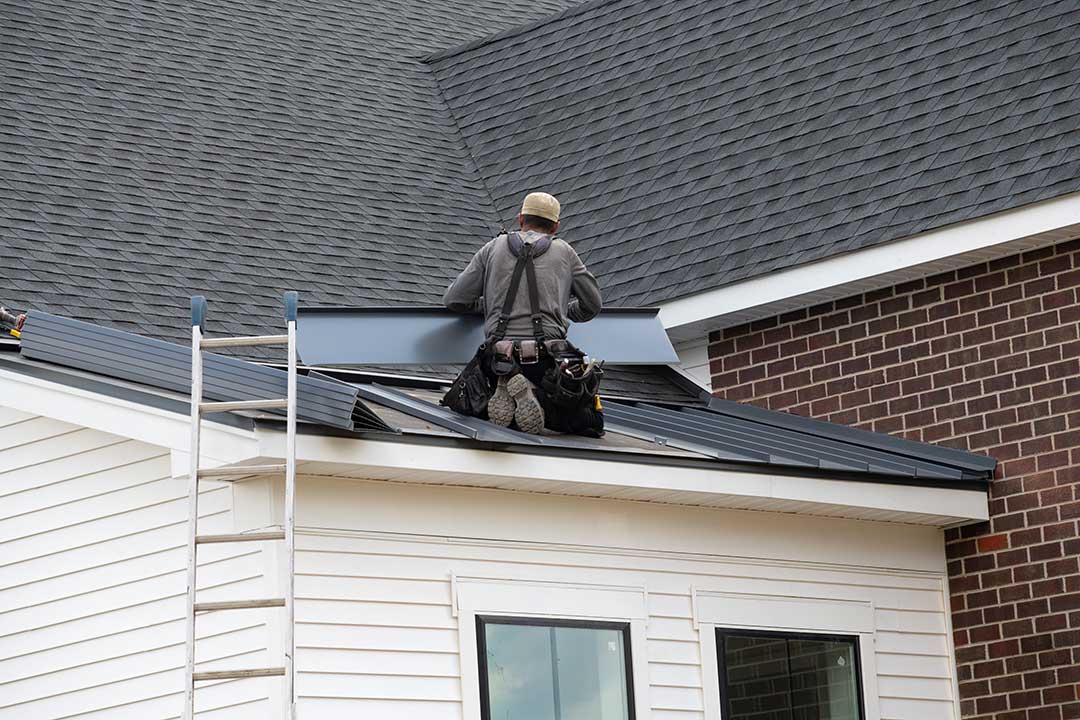
Ladders also require stable footing and proper placement. Falls are among the most serious risks associated with roof maintenance, and a small leak is not worth unsafe access.
Can cleaning gutters prevent roof damage?
Gutter cleaning can reduce some roof-related problems, but it cannot correct every drainage issue.
Blocked gutters and downspouts can cause water to back up beneath roof edges, damage fascia, and contribute to basement or foundation moisture. However, removing leaves does not repair sagging gutters, poor slope, disconnected downspouts, damaged drip edges, or inadequate drainage capacity.
Gutters should be checked after autumn leaf drop and again after major storms. Look for:
- Water spilling over the front edge
- Standing water in the gutter
- Separated joints
- Loose hangers
- Downspouts discharging too close to the foundation
- Ice buildup along the roof edge
In snowy seasons, do not chip aggressively at ice dams. Forceful removal can damage shingles and flashing. Ice at the roof edge can also signal heat loss, inadequate ventilation, or blocked drainage.
Why is attic ventilation often overlooked?
A roof repair may not last if the attic remains excessively damp or hot.
Poor ventilation can contribute to condensation, mold growth, swollen decking, rusted fasteners, and premature shingle aging. In winter, warm indoor air that reaches the attic can condense on cold roof surfaces. In summer, trapped heat can accelerate material deterioration.
Ventilation problems should be considered when a roof has:
- Frost or water droplets on the underside of the roof deck
- Damp insulation
- Musty odors
- Rust around nails
- Peeling paint near attic areas
- Repeated ice buildup despite clear gutters
Adding vents without considering intake airflow may not solve the problem. The entire attic ventilation pattern matters, along with air sealing around light fixtures, wiring, plumbing penetrations, and access panels.
When should a roof repair be treated as an urgent issue?
Immediate attention is warranted when water is actively entering the living space, the ceiling is bulging, electrical fixtures are wet, large sections of roofing have lifted, or structural wood appears damaged.
Place containers under drips, move furniture and electronics away from the affected area, and avoid touching wet electrical equipment. If part of the ceiling is sagging, keep people away from that area because wet drywall can become heavy and collapse.
For minor damage, careful inspection and properly matched materials may prevent a small problem from becoming a larger one. For steep, unstable, structurally damaged, or hazardous roofs, safety and building-code requirements take priority over do-it-yourself repairs.
Preventive checks after strong wind, heavy rain, and winter weather are especially useful for area households. Finding a loose flashing edge or damaged shingle early is usually less disruptive than waiting until water reaches insulation, framing, or interior finishes.
