
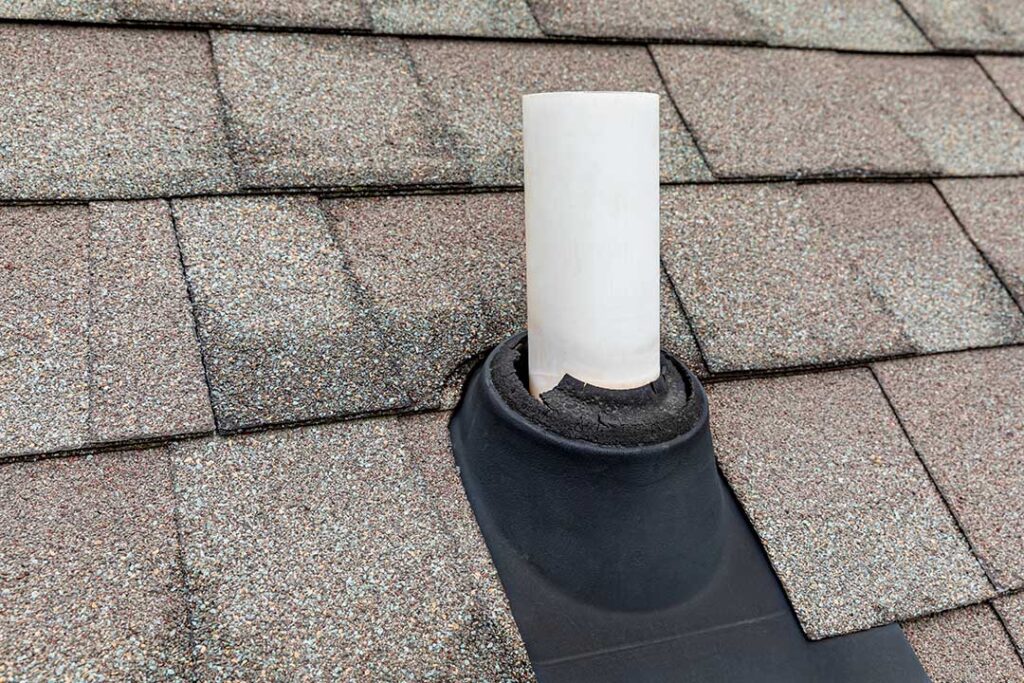
What is roof decking?
Roof decking is the structural layer installed over a home’s rafters or trusses and beneath the underlayment and shingles. It creates the broad, continuous surface that supports the roofing system and transfers the weight of roofing materials, snow, and maintenance activity to the framing below.
Most residential roof decking is made from plywood or oriented strand board, often called OSB. Older homes may contain solid wood boards installed with small gaps between them. The material and installation method can vary with the age, design, and construction history of the house.
Roof decking is easy to overlook because it is normally hidden. However, its condition affects the roof’s ability to remain flat, resist moisture, hold fasteners, and support the outer roofing layers.
How is the decking different from the other roof layers?
A roof is a system made of several layers, and each has a different job.
- Roof framing: Rafters or trusses form the underlying skeleton and determine the roof’s shape and slope.
- Roof decking: Panels or boards cover the framing and provide structural support.
- Underlayment: A water-resistant layer placed over the decking helps protect against moisture that gets beneath the shingles.
- Flashing: Metal or flexible protective material directs water away from roof edges, valleys, chimneys, walls, and other penetrations.
- Roof covering: Shingles, metal panels, or another exterior material sheds most rain and snow.
- Ventilation components: Intake and exhaust openings help control heat and moisture in the attic.
The decking is not the same as underlayment. Underlayment can help limit water intrusion, but it is not intended to replace sound structural panels. Likewise, shingles should not be expected to hide weakened or deteriorated wood indefinitely.
Why can roof decking deteriorate?
The most common cause of decking damage is repeated moisture exposure. A small leak around a flashing detail, roof penetration, valley, or damaged roofing area may allow water to reach the wood. If the moisture remains trapped or the leak continues, the decking can soften, stain, swell, delaminate, or develop fungal decay.
In Greene, NY, seasonal weather creates several conditions that can expose weaknesses in a roof system. Freeze-and-thaw cycles can enlarge small openings, while snow and ice can add weight and increase the consequences of poor drainage. Wind-driven rain may reach areas that remain dry during ordinary rainfall. Spring moisture and summer humidity can also make attic ventilation and leak control significant factors in preserving wood.
Other causes of deterioration include:
- Condensation forming on the underside of the decking
- Long-term roof leaks that were never fully corrected
- Improperly sealed plumbing or ventilation penetrations
- Ice buildup along roof edges
- Roof framing movement or settlement
- Fasteners installed into already weakened wood
- Repeated roof layers that add weight and conceal old damage
Not every dark mark means the decking has failed. Surface staining may be old and dry, while softness, crumbling edges, swelling, or visible separation are more concerning signs.
What are the signs of damaged decking?
Some signs can be noticed from inside the attic, while others become visible only after the roofing material is removed.
From the attic, look for:
- Brown or rust-colored water stains
- Soft, spongy, or visibly weakened wood
- Sagging between rafters or trusses
- Mold-like growth associated with ongoing dampness
- Damp insulation beneath a roof area
- Daylight entering through locations that should be sealed
From the exterior or interior living space, warning signs may include a wavy roof surface, ceiling stains, recurring damp spots, or shingles that appear uneven because the surface beneath them is no longer flat.
A single stain does not always show the exact location of the roof opening. Water can travel along rafters, decking, insulation, or framing before appearing inside the home. That is why tracing a leak often requires examining both the attic and the roof surface.
Does every roof leak require replacement of the decking?
No. A minor, localized leak does not automatically mean that large sections of decking must be replaced. If the wood remains solid, flat, and capable of holding fasteners, it may continue to serve its purpose after the leak source is corrected and the surrounding roofing layers are renewed.
Replacement becomes more likely when the decking is soft, structurally weakened, swollen, delaminated, badly split, or unable to hold roofing fasteners securely. Areas with extensive decay may also create a safety concern for anyone walking on the roof.
The correct decision depends on the condition of the wood, the extent of the leak, the spacing and condition of the framing, and the roofing material being installed. Covering damaged decking with new shingles may conceal the problem temporarily but does not restore the underlying support.
How is roof decking inspected?
A proper inspection usually combines several observations rather than relying on one test. An attic inspection can reveal water staining, sagging, condensation, and damaged insulation. An exterior review can identify roof areas that may be allowing water entry. During roofing work, the decking can be examined directly after the old covering is removed.
A careful evaluation considers:
- Whether the wood is dry or actively damp
- Whether damage is limited to the surface or extends through the panel
- Whether the panel edges are swollen or separated
- Whether fasteners can still hold securely
- Whether the framing beneath the panel is sound
- Whether ventilation or insulation conditions are contributing to moisture
Roof surfaces can be hazardous, especially during wet, icy, or windy conditions. Homeowners can often inspect accessible attic areas safely from a stable surface, but walking on a questionable roof or testing weak wood by hand can create a fall or collapse risk.
What happens when damaged decking is found?
Damaged sections are generally removed back to sound material, and replacement panels are secured to the roof framing. The replacement must be properly supported, fitted, and fastened so the roof surface remains stable and suitable for the roofing material.
The underlying leak or moisture source also needs attention. Replacing wood without correcting the flashing, ventilation, drainage, or roof-covering problem can allow the same damage to return.
In some cases, only a small area near a penetration or roof edge is affected. In others, widespread deterioration may indicate a long-standing leak, condensation problem, or aging roof system. The visible repair area may not reflect the full extent of hidden moisture damage.
How can homeowners help protect the decking?
Routine observation can help identify problems before they spread. Check the attic after major storms and during seasonal changes for new stains, damp insulation, or unusual odors. Keep roof drainage paths clear of leaves and debris where they can be reached safely, and watch for damaged flashing, missing roofing materials, or areas where water does not drain normally.
Indoor humidity also matters. Excess moisture from bathrooms, kitchens, dryers, or poor attic ventilation can condense on cold roof decking during the heating season. Exhaust fans should discharge outdoors rather than into the attic, and insulation should not block designed ventilation pathways.
For area households, prompt attention to small leaks is especially useful before winter weather, repeated freezing, or heavy snow places additional stress on the roof system. Roof decking is hidden, but its condition is closely tied to the durability and safety of everything installed above it.
