
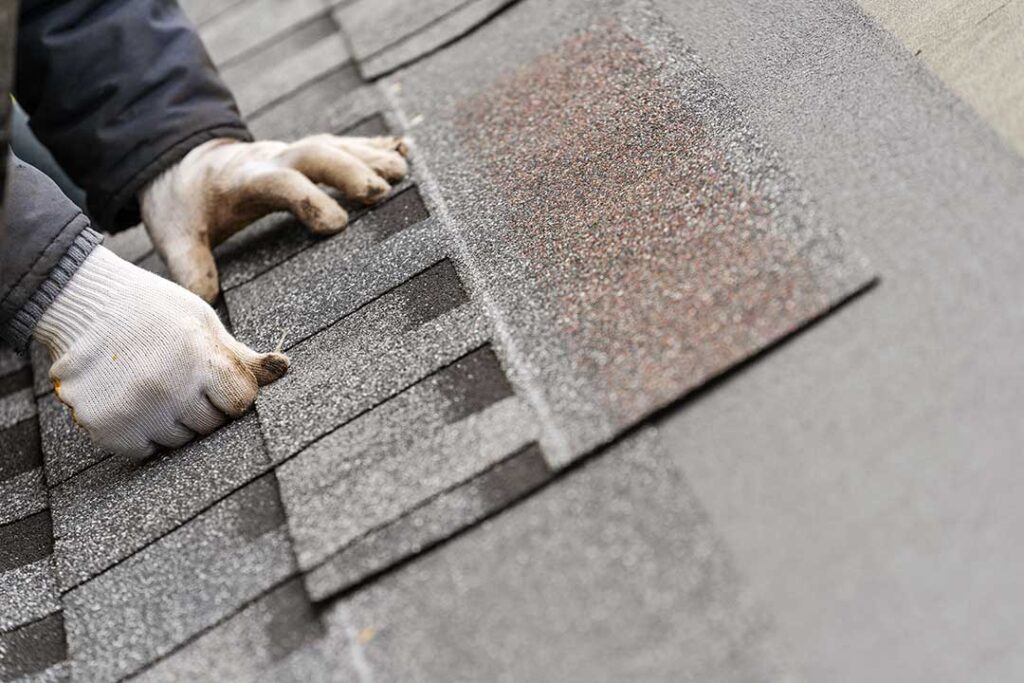
Hail damage is not always dramatic. A roof may still look intact from the ground while individual shingles, metal components, flashing, vents, or gutters have been weakened by impact. In Greene, NY, the safest approach is to inspect from the ground first, document anything unusual, and avoid walking on the roof unless conditions are safe and the surface can be assessed properly.
What does hail damage look like on a roof?
Hail damage often appears as small, irregular impact marks that affect the protective surface of roofing materials. On asphalt shingles, the most common signs are exposed or loosened granules, dark spots, bruising, cracks, and areas that look flatter or smoother than the surrounding shingles.
Fresh damage may be easier to see from an angle or in bright, indirect light. Some marks are subtle because the shingle remains in place even though the underlying mat has been fractured.
Look for:
- Round or irregular dents on shingles
- Missing granules collected in gutters or downspouts
- Dark bruised areas that feel soft or spongy
- Cracked, split, or displaced shingles
- Exposed fiberglass mat beneath the shingle coating
- Fresh granule piles near roof edges or downspouts
- Damage to ridge caps, vents, flashing, or metal edging
A single mark does not always prove that hail caused the damage. Age, foot traffic, falling branches, wind, and normal weathering can produce similar symptoms. The pattern and location of the marks provide useful clues.
How can hail damage be checked safely from the ground?
A ground-level inspection can reveal many warning signs without creating a fall hazard. Use binoculars or a phone camera with a zoom feature to examine roof slopes, ridge caps, vents, and the edges of shingles.
Walk around the property and compare different roof sections. Hail usually affects surfaces that face upward, while vertical walls and sheltered areas may show less impact. Damage may be concentrated on one slope rather than evenly distributed across the entire roof.
From the ground, check for:
- Shingles that appear lifted, curled, or missing
- Uneven patches in an otherwise consistent roof surface
- Dents in metal vents, gutters, downspouts, flashing, or chimney coverings
- Fresh debris around the foundation or in landscaping
- Granules gathered below downspouts
- New leaks, ceiling stains, or damp attic insulation
Do not rely only on the roof’s appearance. Hail can damage the weather-resistant surface without immediately creating an interior leak.
What does hail damage look like on asphalt shingles?
Asphalt shingles may show impact bruising even when they are not visibly cracked. A bruised shingle can have a circular depression, a soft spot, or a darker area where the mat beneath the surface has been compressed.
A useful visual comparison is to examine a questionable area beside an undisturbed section. Hail impacts often appear as isolated marks with a random pattern. Manufacturing defects and ordinary aging tend to produce broader, more consistent changes.
Granule loss is another clue, but it should be interpreted carefully. Some granules naturally loosen as shingles age, especially near roof edges and valleys. Hail-related granule loss is more suspicious when it appears in concentrated patches or is accompanied by visible impact marks.
Avoid pressing hard on a shingle to test it. Excessive pressure can worsen an existing defect, and a roof surface may be slippery even when it appears dry.
Can hail damage affect metal roofing and other materials?
Yes. Metal roofing may develop dents, chipped coatings, exposed fasteners, bent flashing, or damaged seams. Small dents may be cosmetic, but damage near seams, penetrations, fasteners, or panel edges can allow water to enter.
Hail may also affect:
- Ridge vents and powered roof vents
- Plumbing vent collars
- Skylight coverings
- Chimney flashing
- Gutters and downspouts
- Aluminum trim and fascia
- Exterior air-conditioning components
- Window screens, siding, and painted surfaces
Damage to several exterior materials during the same storm can help establish that the roof marks were caused by hail rather than ordinary aging. However, the absence of dents on siding or gutters does not rule out roof damage.
How soon can hail damage cause a roof leak?
A hail-damaged roof may leak immediately, weeks later, or not until another period of heavy rain, snow, or strong wind. The timing depends on the location and severity of the impact.
A damaged shingle may continue shedding water temporarily if the surrounding layers remain intact. Problems become more likely when hail has cracked the shingle mat, displaced a shingle, damaged flashing, or exposed fasteners.
After a suspected storm, check ceilings, upper walls, attic spaces, and insulation for:
- Brown or yellow water stains
- Damp wood or insulation
- Musty odors
- Peeling paint
- Drips around roof penetrations
- Moisture appearing after rain
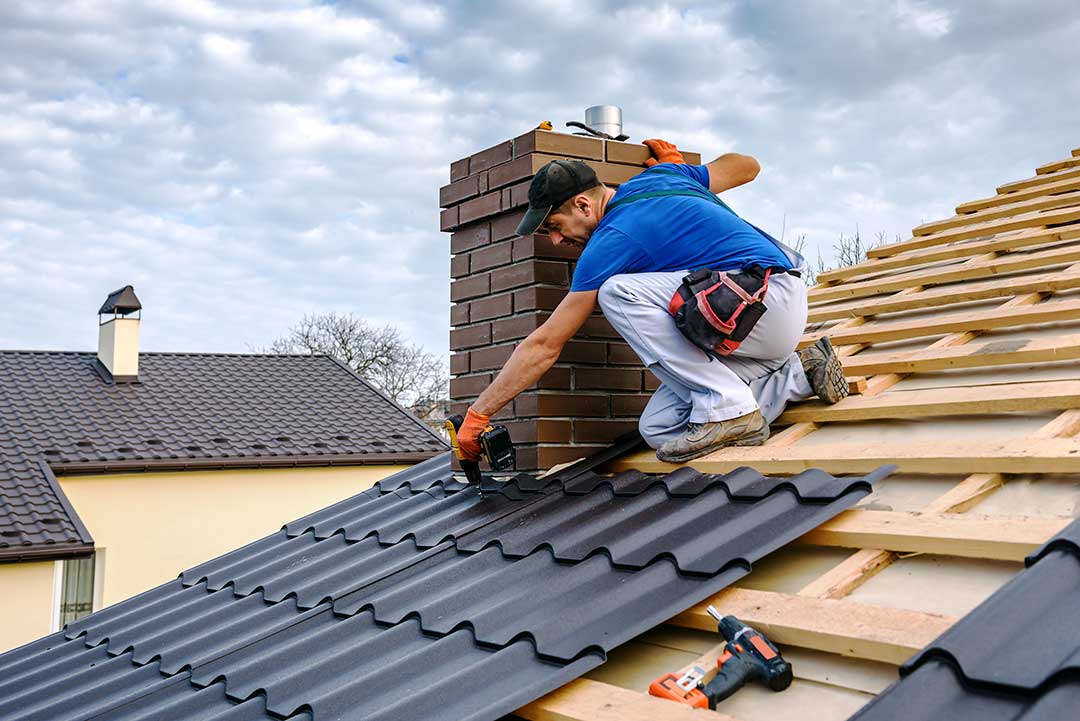
If water is entering near electrical fixtures, keep clear of the area and address the electrical hazard before investigating further.
Does hail damage always require roof replacement?
No. Hail damage does not automatically mean the entire roof must be replaced. The appropriate response depends on the number of affected areas, the condition and age of the roof, the type of material, and whether the damage compromises water resistance.
Minor cosmetic dents on some metal surfaces may not affect performance. By contrast, widespread bruising, exposed underlayment, cracked shingles, or damaged flashing can reduce the roof’s ability to protect the building.
A roof evaluation may be warranted when damage is difficult to distinguish from normal wear, when a leak is present, or when walking on the roof would be unsafe. A qualified roofing inspector can assess elevated or steep surfaces without requiring a homeowner to take unnecessary risks.
What should homeowners do after a hailstorm?
Begin with documentation rather than immediate repairs. Photograph roof sections from the ground, record the date of the storm, and note any interior moisture or exterior damage. Keep damaged pieces or debris if they can be collected safely, but do not climb onto the roof to retrieve them.
Temporary steps may include:
- Moving valuables away from a known leak
- Placing a container under active dripping
- Covering vulnerable belongings with plastic
- Clearing only easily reachable debris from ground-level areas
- Checking that downspouts are not blocked by fallen material
Do not cover a roof with a tarp unless it can be done without climbing or creating a wind hazard. Improperly placed tarps can damage shingles, trap moisture, or become airborne.
Greene homes experience changing conditions through the year, including heavy rain, freeze-thaw cycles, snow, and occasional severe thunderstorms. Those conditions can make a small storm-related defect more significant over time. Prompt documentation and careful observation help separate a recent impact from older weathering and make it easier to monitor whether the roof remains watertight.
How can hail damage be distinguished from normal roof aging?
Normal aging usually develops gradually and across larger portions of the roof. Common signs include widespread fading, brittle edges, curling, surface cracking, and general granule loss.
Hail damage is more likely when there are:
- Localized impact marks
- Randomly spaced bruises
- Fresh granules below particular roof sections
- Dents in exposed metal
- Damage that corresponds with a recent storm
- Similar impact marks on several outdoor surfaces
Older damage may be difficult to date. A careful inspection should consider the roof’s installation age, previous repairs, past storms, and the condition of nearby materials rather than relying on one visual clue.
