
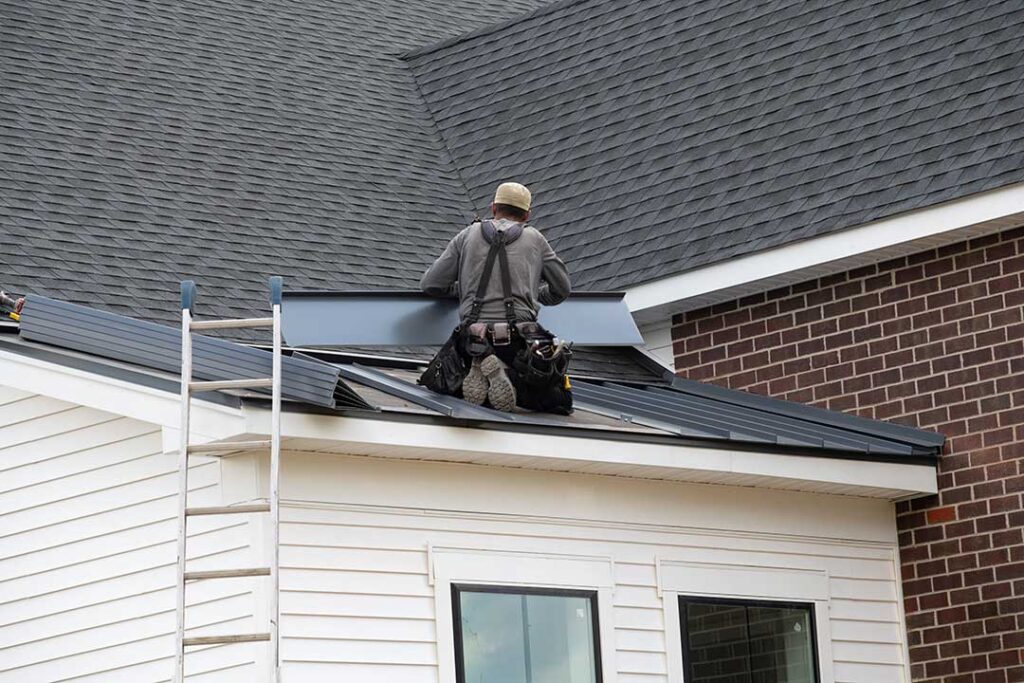
What is a roof cricket?
A roof cricket is a small, raised structure built on a roof to divert water around an obstruction, most commonly a chimney. It usually has a peaked or sloped shape that sheds rain and melting snow toward the sides instead of allowing water to collect behind the obstruction.
A cricket is not the same as a roof ridge, dormer, or ordinary roof slope. It is a specifically shaped area of framing and roofing installed behind an obstruction where water could otherwise become trapped.
Roof crickets are often found behind:
- Masonry chimneys
- Large plumbing or mechanical penetrations
- Rooftop equipment
- Wide skylights
- Other structures that interrupt the main flow of water
On a sloped roof, the cricket may look like a small triangular ridge rising behind the chimney. On a low-slope roof, it may be a tapered structure designed to direct water toward drains or roof edges.
Why is a roof cricket important?
A cricket helps prevent water from pooling, slowing down, or backing up against an obstruction. Without one, a chimney or other wide structure can create a pocket where rainwater and melting snow remain on the roof longer than they should.
That trapped moisture can contribute to:
- Deteriorated shingles or membrane roofing
- Loose or damaged flashing
- Rot in roof decking and framing
- Water stains on ceilings or walls
- Mold or musty odors in attic areas
- Freeze-thaw damage around masonry
- Leaks that appear far from the original problem
In Greene, NY, this drainage function matters during periods of rain, snowfall, and repeated winter thawing. Snow that melts during the day can refreeze at night, especially around roof obstructions. A properly shaped cricket reduces the amount of water held against the uphill side of the structure.
How does a cricket work behind a chimney?
A chimney interrupts the roof’s normal drainage path. Water traveling down the roof reaches the chimney and must move around it. If the chimney is relatively narrow, properly installed flashing may be sufficient. If it is wider, a cricket gives the water a more gradual path around the obstruction.
The upper, pointed portion of the cricket divides the flow of water. Water moves down each sloped side rather than collecting in a flat area behind the chimney. The cricket must be integrated with the surrounding roof covering and flashing so that water is directed over, not beneath, the protective layers.
A cricket generally works together with several other components:
- Step flashing along the sides of the chimney
- Counterflashing set into the masonry or attached securely to the chimney
- Base flashing at the lower edge
- Underlayment beneath the roof covering
- Properly sealed transitions at corners and changes in slope
The shape alone does not guarantee protection. Poor flashing, cracked mortar joints, exposed fasteners, or deteriorated roofing can still allow water into the building.
Is a roof cricket required on every home?
No. A cricket is not necessary behind every chimney or roof penetration. Its usefulness depends on the size and shape of the obstruction, the roof slope, the drainage pattern, and the roofing system.
A narrow chimney on a steep roof may drain adequately with properly designed flashing. A broad chimney on a low-slope roof is more likely to benefit from a cricket because water moves more slowly and has fewer opportunities to escape.
Building requirements can also vary according to the type of construction and the applicable code provisions. Existing homes may have been built under earlier requirements, while new construction or major roof alterations may be subject to current standards. The need for a cricket is best considered as part of the complete roof and flashing design rather than as an isolated feature.
What is the difference between a cricket and a saddle?
The terms “cricket” and “saddle” are often used interchangeably, especially when describing the structure behind a chimney. In practical roofing language, both usually refer to a raised, sloped feature that diverts water around an obstruction.

Some people use “saddle” for the entire structure behind a chimney and reserve “cricket” for a more formally framed or engineered version. The exact wording can vary among roofers, architects, building officials, and regional construction trades.
The important issue is not the label. The key questions are whether the feature creates positive drainage, connects correctly to the roof covering, and has durable flashing at every transition.
Can a roof cricket prevent ice dams?
A cricket can reduce localized water buildup, but it cannot prevent all ice dams. Ice dams form when heat escaping through the roof melts snow on warmer roof areas and the water refreezes near colder eaves.
A cricket may help move water away from a chimney or other obstruction, reducing the chance that melting snow will remain trapped in that location. However, attic insulation, air sealing, roof ventilation, roof geometry, and weather conditions all affect ice formation.
A chimney cricket should not be treated as a substitute for proper attic moisture control. If ice repeatedly forms in the same area, the cause may involve heat loss, blocked drainage, inadequate ventilation, or a combination of conditions.
What problems suggest a cricket or its flashing needs attention?
Water damage near a chimney does not always mean the cricket itself is missing. The issue may be damaged flashing, failed sealant, cracked masonry, deteriorated roofing, or moisture entering higher on the roof and traveling before it becomes visible.
Warning signs include:
- Brown or yellow ceiling stains near the chimney
- Damp insulation or darkened roof decking in the attic
- Peeling paint on walls or ceilings
- Rusted metal components
- Loose shingles near the chimney
- Cracked mortar or gaps at flashing joints
- Water appearing after wind-driven rain
- Drips or stains that occur during snowmelt
The timing of the leak can provide useful information. A leak during heavy rain may point to flashing or drainage problems. A leak during warm winter weather may involve melting snow, ice buildup, or water trapped behind the chimney.
Because roof leaks can involve steep surfaces, unstable snow, and hidden structural damage, inspection from the ground and attic is safer than climbing onto the roof without proper equipment.
What should homeowners understand about roof crickets?
A cricket is a drainage feature, not a decorative roof element. Its purpose is to guide water around an obstruction and reduce the amount of moisture held against vulnerable flashing and roofing materials.
For residents of Greene, NY, the condition of the cricket should be considered along with the entire roof system. Seasonal snow, rain, wind, and freeze-thaw cycles can expose weaknesses that remain unnoticed during dry weather.
During routine observation, look for standing water, displaced roofing materials, cracked flashing, and interior staining. If a roof obstruction has no visible drainage path behind it, that does not automatically prove a defect, but it does identify an area that deserves closer attention during roof maintenance or replacement planning.
IMAGE_ALT:
Sloped roof with a raised cricket directing water around a brick chimney after light snowfall.
